NASA sent a black fungus and three mutants around the Moon; all grew during Artemis I’s 25-day flight as researchers tested DNA repair and melanin
Source Entity
Latest News: Todays Latest News Headlines from India & World | Hindustan Times | Hindustan Times
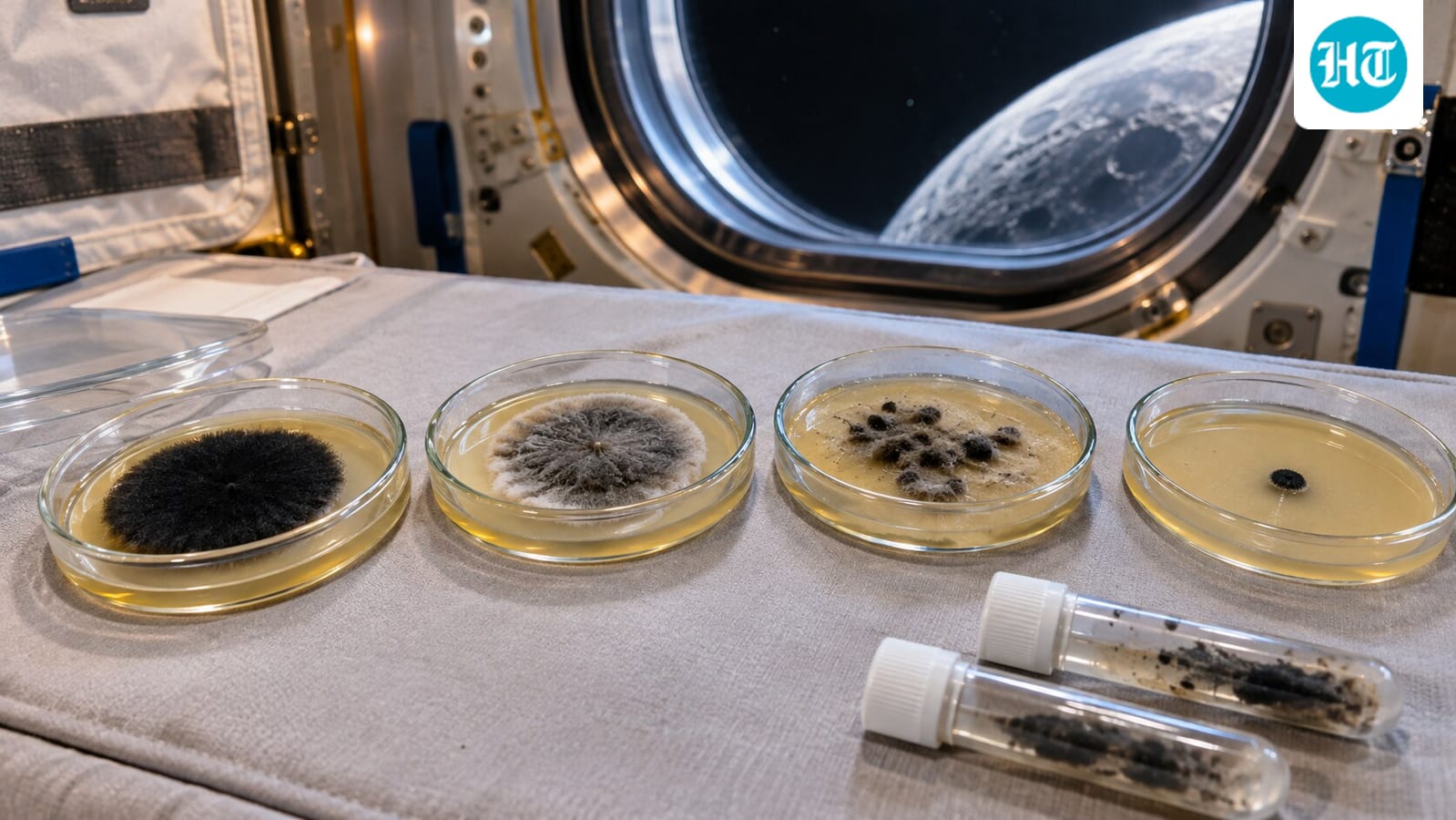
NASA's Artemis I mission successfully tested the resilience of Aspergillus niger fungi in deep space. The study of wild-type and mutant strains provides critical data on DNA repair and radiation protection for future lunar exploration.
Fungal Resilience in Deep Space: The Artemis I Experiment
In a landmark study during the 2022 Artemis I mission, NASA sent a variety of Aspergillus niger fungal samples on a 25-day journey around the Moon. This experiment was not merely a biological curiosity but a calculated effort to understand how life survives in the extreme radiation environments of deep space. By testing one wild-type strain alongside three specific mutants—kusA, uvsC, and fwnA—researchers sought to isolate the biological mechanisms responsible for surviving cosmic stressors.
Understanding the Mutants: DNA Repair and Melanin
The selection of fungal strains was highly strategic. The kusA and uvsC mutants were chosen specifically because they are defective in critical DNA repair pathways. By observing how these strains fared compared to the wild-type, scientists could quantify the exact impact of space radiation on cellular integrity. Simultaneously, the fwnA mutant, which lacks the ability to produce melanin, allowed researchers to test the hypothesis that this dark pigment serves as a biological shield against radiation, potentially mimicking the protective functions it provides in human skin.
The Challenge of the Deep Space Environment
Space is inherently hostile to biological life. Once spacecraft exit the protective bubble of Earth’s magnetic field, they are exposed to significantly higher levels of ionizing radiation. The U.S. Naval Research Laboratory notes that missions traveling to the Moon expose subjects to roughly double the radiation levels found on the International Space Station. This environment presents a significant hurdle for long-term human spaceflight, making the study of organisms with natural DNA repair capabilities essential for developing future life-support and shielding protocols.
Implications for Artemis and Beyond
The success of the experiment, which saw all 20 samples grow despite the harsh conditions of the flight, provides a positive baseline for biological endurance in deep space. NASA rated the experiment as excellent, signaling that fungi are robust test subjects for future lunar and planetary missions. The ability to monitor how these samples repaired their DNA in real-time offers a glimpse into the biological safeguards required for astronauts venturing into deep space.
Future Trends in Astrobiology
This research paves the way for deeper integration of biological studies into space mission architectures. Understanding how melanin and complex DNA repair mechanisms function in high-radiation environments could lead to new synthetic biology applications or enhanced protective materials for crewed spacecraft. As NASA continues to advance the Artemis program, the data gathered from these fungal strains will remain a foundational piece of the puzzle in ensuring the safety of life beyond Earth's orbit.
Verification Required?