Human-enhanced tsunami hazard in large lakes
Source Entity
Hacker News
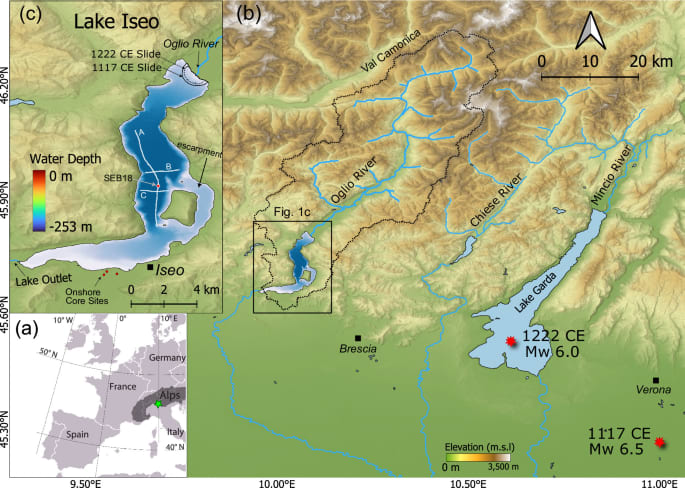
Human activity in the Lake Iseo catchment has tripled sediment flux since the Roman period. This increased deposition has heightened the risk of human-enhanced tsunami hazards in the lake.
The Anthropogenic Impact on Lacustrine Stability
Recent scientific investigations into Lake Iseo, situated at the terminus of the Val Camonica in the Italian Alps, have unveiled a concerning correlation between centuries of human land-use and geological instability. The lake, fed by the Oglio River, serves as a critical basin for sediment accumulation. While natural processes typically dictate delta formation, the evidence suggests that anthropogenic intervention has drastically altered the sedimentation rate, inadvertently creating conditions ripe for hazardous geological events.
Historical Context of Land-Use Change
The transformation of the Lake Iseo catchment is not a modern phenomenon but a process spanning millennia. Since the Roman period, the surrounding valleys have been subjected to intensive deforestation, agriculture, and pastoralism. These activities stripped the landscape of its natural vegetative cover, which previously acted as a stabilizer for the steep alpine slopes. As the soil lost its protective root systems, hillslope erosion accelerated, leading to an increased volume of sediment being transported into the lake.
The Mechanics of Sediment Flux
Data indicates that the sediment flux into Lake Iseo has risen threefold compared to background levels recorded during the earlier Holocene epoch. This surge in deposition is directly attributable to the human footprint documented through extensive paleoenvironmental and archeological studies. As the Oglio River carries this excessive load into the lake, it constructs a rapidly expanding delta that is structurally distinct from natural, undisturbed delta formations.
The Risk of Human-Enhanced Tsunamis
In lacustrine environments, the structural integrity of a delta is paramount. When sediment accumulates at an accelerated rate, the delta front can become oversteepened and unstable. This creates a high risk of submarine landslides. Should a significant portion of this human-induced delta collapse, it has the potential to trigger a tsunami within the lake. This phenomenon, categorized as a 'human-enhanced tsunami hazard,' highlights how indirect environmental modification can lead to direct geological threats to surrounding communities.
Broader Implications for Alpine Geography
The situation at Lake Iseo serves as a microcosm for broader environmental concerns across the European Alps. Many alpine lakes face similar pressures from historical land-use changes. As climate change increases the frequency of extreme weather events, the risk of triggering these destabilized sediment deposits becomes even greater. Understanding the historical baseline of these landscapes is essential for modern disaster risk reduction and infrastructure planning.
Future Outlook and Scientific Necessity
Moving forward, it is clear that geological hazard assessments must integrate human history into their predictive models. The case of Lake Iseo demonstrates that 'natural' hazards are often heavily mediated by past human activity. Future research should prioritize monitoring the structural stability of these human-modified deltas to mitigate potential catastrophic wave events. Recognizing the long-term legacy of land-use changes is the first step in protecting vulnerable lakeside populations from the invisible dangers lurking beneath the water's surface.