Meet Bowen Wang: Seventh grader wins $3,500 for AI aftershock prediction too
Source Entity
TOI WORLD DESK
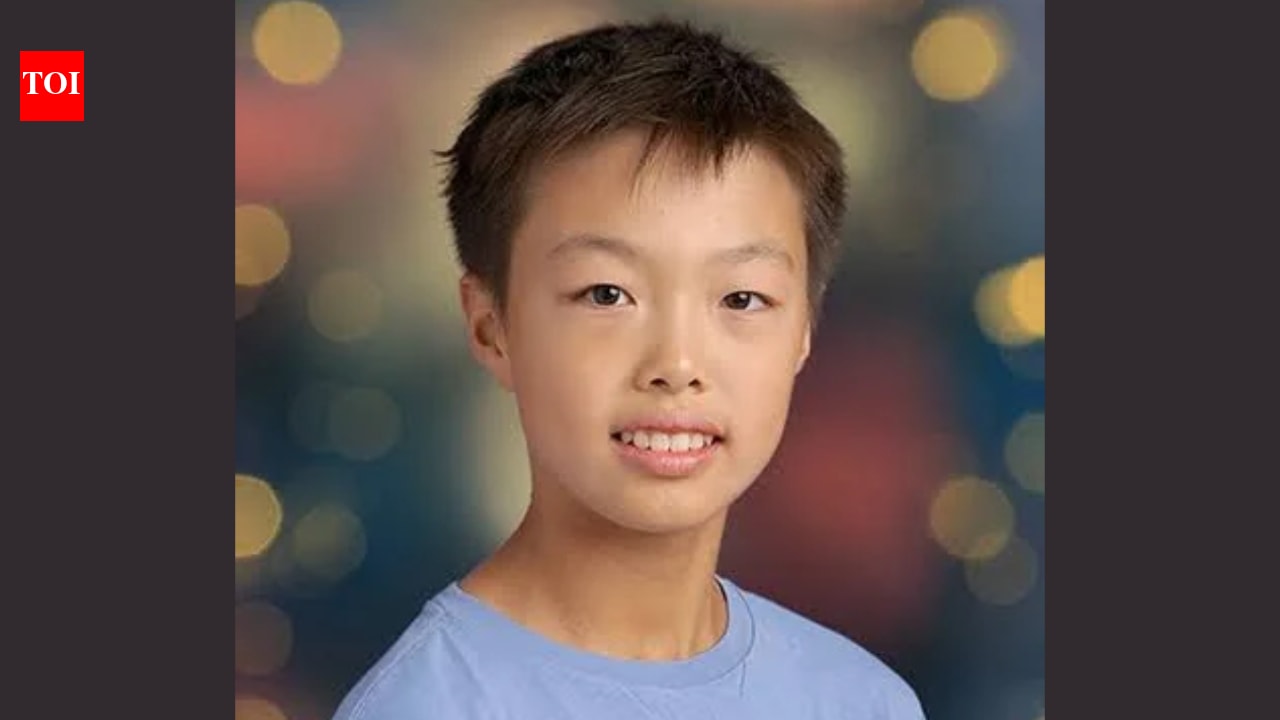
Young researchers Bowen Wang and Seiji Iigaya have been honored with top prizes at the 2026 Thermo Fisher Scientific Junior Innovators Challenge. Their winning projects demonstrate the power of integrating advanced technology into earthquake modeling and acoustic physics.
Innovation at the 2026 Junior Innovators Challenge
The 2026 Thermo Fisher Scientific Junior Innovators Challenge, organized by the Society for Science, has once again spotlighted the remarkable potential of middle school students in the STEM landscape. Among the winners in Washington, D.C., Bowen Wang and Seiji Iigaya stand out for their sophisticated applications of computational modeling to solve complex real-world problems. Their achievements reflect a growing trend of young researchers leveraging data science to bridge the gap between theoretical physics and practical utility.
Aftershock Oracle: AI in Seismology
Bowen Wang, a seventh grader from San Carlos, California, earned the First Place Technology Award for his creation, the 'Aftershock Oracle.' By utilizing decades of historical data provided by the United States Geological Survey (USGS), Wang developed an AI-driven tool capable of predicting the location, frequency, and intensity of earthquake aftershocks. This project not only showcases technical prowess but also aligns with Wang's future aspirations in civil engineering and sustainable design, highlighting how early exposure to seismic data can shape the next generation of infrastructure experts.
Acoustic Dynamics and Computational Modeling
Seiji Iigaya, a 14-year-old student from Tenafly, New Jersey, demonstrated the interdisciplinary potential of STEM by bridging the arts and physics. His research focused on the acoustic properties of violin strings, specifically how subtle bow movements translate into expressive tones. By using Python to model the dynamics of vibrating strings, Iigaya provided a scientific framework for understanding musical resonance. His recognition with the First Place Science Award underscores the importance of analytical rigor in the humanities, proving that computational methods can quantify artistic nuance.
Broader Implications for STEM Education
The success of these students highlights the evolving nature of science fairs, which have moved beyond basic demonstrations to include complex machine learning and mathematical modeling. The $3,500 prizes awarded to both winners, alongside the additional grant awarded to Iigaya’s school, serve as essential catalysts for local research initiatives. Such funding ensures that the momentum generated at national competitions like the Junior Innovators Challenge can be sustained in local classrooms.
Future Trends in Junior Research
Looking forward, the work of Wang and Iigaya suggests a shift toward highly specialized, data-heavy research projects among younger students. As access to open-source data and programming languages becomes more democratized, middle schoolers are increasingly able to tackle problems that were previously reserved for university-level studies. This trend suggests a future where early-career researchers are better prepared to address global challenges, from climate-related engineering tasks to the physics of complex systems.
Conclusion
The 2026 Junior Innovators Challenge serves as a barometer for the health of youth scientific inquiry in the United States. By rewarding students who successfully apply computational logic to seismology and acoustics, the Society for Science continues to foster a pipeline of talent capable of navigating the intersection of technology and society. The contributions of Bowen Wang and Seiji Iigaya are indicative of a promising future for scientific discovery driven by young, innovative minds.