Countdown progressing for ISRO’s crucial GSLV-F18 launch carrying navigation satellite NVS-03
Source Entity
India Latest News: Top National Headlines Today & Breaking News | The Hindu
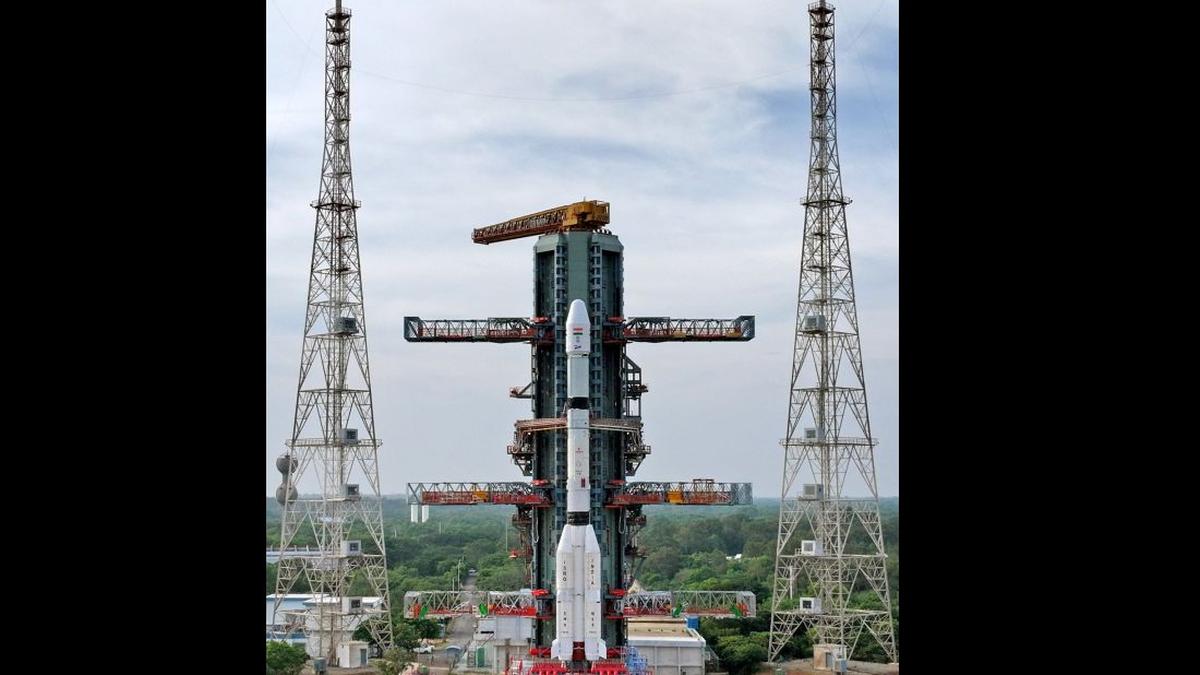
ISRO has commenced the 24-hour countdown for the GSLV-F18 mission to launch the NVS-03 navigation satellite. This mission is critical for restoring the stability of India's indigenous NavIC constellation following past technical setbacks.
Strengthening India’s Celestial Navigation: The GSLV-F18 Mission
The Indian Space Research Organisation (ISRO) is currently in the final stages of preparations for one of its most critical missions in recent years. The GSLV-F18 rocket is set to lift off from the second launch pad at the Satish Dhawan Space Centre (SDSC-SHAR) on October 30, 2026, at 11:51 p.m. This launch marks a pivotal moment for the NVS-03 navigation satellite, a vital component of India's indigenous navigation system, NavIC.
Historical Context: The Strategic Necessity of NavIC
The development of NavIC, which stands for Navigation with Indian Constellation, is deeply rooted in national security and strategic autonomy. The program was initiated in May 2006, following the hard lessons learned during the 1999 Kargil War. During that conflict, India faced significant challenges when access to foreign GPS data was restricted by the United States. Recognizing the vulnerability of relying on foreign-controlled systems, India committed to building an independent, indigenous satellite-based navigation system to cover the Indian landmass and its surrounding regions.
Technical Challenges and the Path to Restoration
The constellation has faced significant turbulence in its operational history. Reliability concerns have stemmed from repeated failures of onboard atomic clocks, which are essential for providing precise time and location data. Furthermore, the previous attempt to bolster the system, the NVS-02 mission, failed to reach its intended orbit, leaving the constellation weakened. The NVS-03 launch is therefore viewed as a corrective measure, intended to restore the functional integrity and robustness of the NavIC network.
Beyond Location: The Role of Atomic Clocks
NavIC serves a purpose far broader than simple location tracking. The atomic clocks onboard these satellites are foundational to maintaining precise time synchronization for critical infrastructure. Modern sectors such as banking, stock exchanges, and the armed forces rely heavily on nanosecond-level accuracy. The importance of this is underscored by the government's 2025 initiative to transition Indian Standard Time away from foreign GPS toward a domestic system supported by five atomic clocks located in Guwahati, Bengaluru, Ahmedabad, Faridabad, and Bhubaneswar.
The Future of Indigenous Positioning
As the countdown progresses, the success of the GSLV-F18 mission is essential for the transition toward full domestic reliance on NavIC. By establishing a separate ground-based clock network and ensuring a stable orbital constellation, India is positioning itself to decouple its economic and military operations from external systems. This mission is not merely a technical flight; it is the culmination of two decades of effort to ensure that the nation’s technological pulse is entirely sovereign and self-sustaining.
Verification Required?