Seabirds racing home over the ocean can get jet-lagged
Source Entity
John Timmer
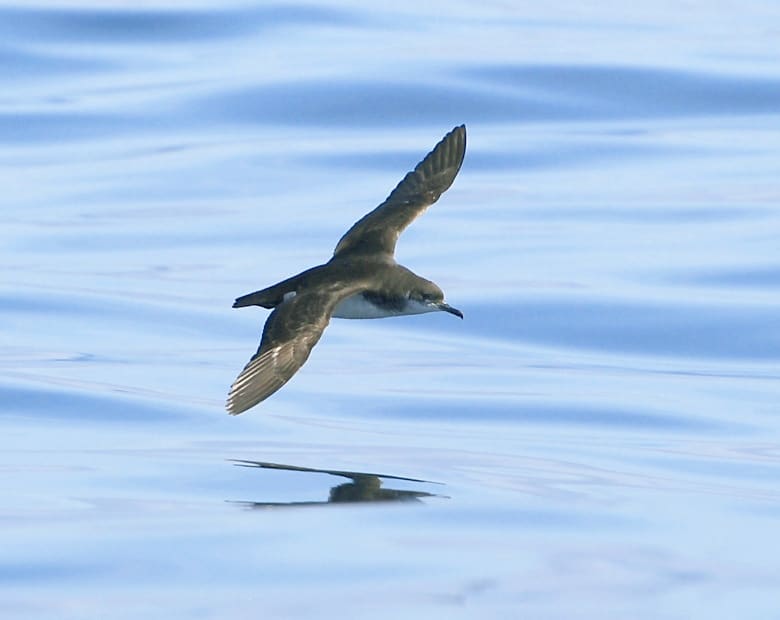
A new study reveals that Manx shearwaters experience jet lag while navigating across time zones during long-distance flights. This internal clock disruption impacts their ability to use the sun as a compass, potentially affecting their navigational accuracy.
The Biological Toll of Long-Distance Migration
Recent research published in the journal Science has unveiled a fascinating physiological challenge faced by Manx shearwaters: the phenomenon of jet lag. While humans often associate this internal clock disruption with international air travel, this study indicates that it is a natural byproduct of the rapid, long-distance movements performed by these seabirds. As they traverse the North Atlantic, covering hundreds of kilometers daily, their internal circadian rhythms struggle to synchronize with the shifting solar time, leading to significant biological consequences.
The Mechanics of Avian Navigation
Central to this discovery is the relationship between the birds' internal clocks and their reliance on solar navigation. Manx shearwaters, which are characterized by their long wings and distinct black-and-white plumage, utilize the position of the Sun as a primary compass to guide their flights. When these birds cross multiple time zones, their internal "body clock" remains out of sync with the local solar time. Because their navigation is tethered to this internal timing, the resulting jet lag creates a measurable skew in their directional accuracy.
Ecological Implications of Navigational Error
Patrick Lewin, a behavioral and sensory ecologist at the University of Oxford and the study's lead author, emphasizes that this is not merely a minor physiological inconvenience. For a species that relies on precise orientation to find feeding grounds and return to nesting sites, a skewed compass can have profound implications. If a bird's perception of time is misaligned with the sun's position, the path it takes home may deviate from the most efficient route, leading to increased energy expenditure and potential delays in reaching critical resources.
Understanding the Circadian Rhythm in Nature
This study challenges the anthropocentric view of jet lag, suggesting that circadian rhythms are highly sensitive to rapid longitudinal displacement across the animal kingdom. By demonstrating that seabirds can effectively 'jet-lag' themselves, the research underscores the intricate balance between internal biological timing and external environmental cues. It highlights how evolutionary adaptations for long-distance flight must contend with the fundamental physics of the Earth’s rotation.
Future Trends in Behavioral Ecology
As researchers continue to monitor migratory species, this finding opens new doors for understanding how climate change and shifting habitats might further impact avian navigation. If birds are forced to alter their flight paths or speeds, the pressure on their internal timing mechanisms may intensify. Future studies will likely focus on how these shearwaters compensate for such errors and whether they possess secondary navigational systems that can override or recalibrate their sun-based compass when their internal clocks are compromised.
Conclusion
The case of the Manx shearwater serves as a poignant reminder of the hidden challenges inherent in the natural world. The interplay between physical endurance and biological timing is essential for the survival of migratory species. By mapping the impact of jet lag on these birds, scientists are gaining a clearer picture of the complex sensory apparatus that allows seabirds to navigate the vast, featureless expanses of the ocean, even when their own internal clocks are working against them.