Scared of Mojtaba? Israel drops nuclear-level allegation on Iran, Ahmadinejad immediately reappears
Source Entity
Latest News: Today's Latest News Headlines from India & World | Hindustan Times | Hindustan Times
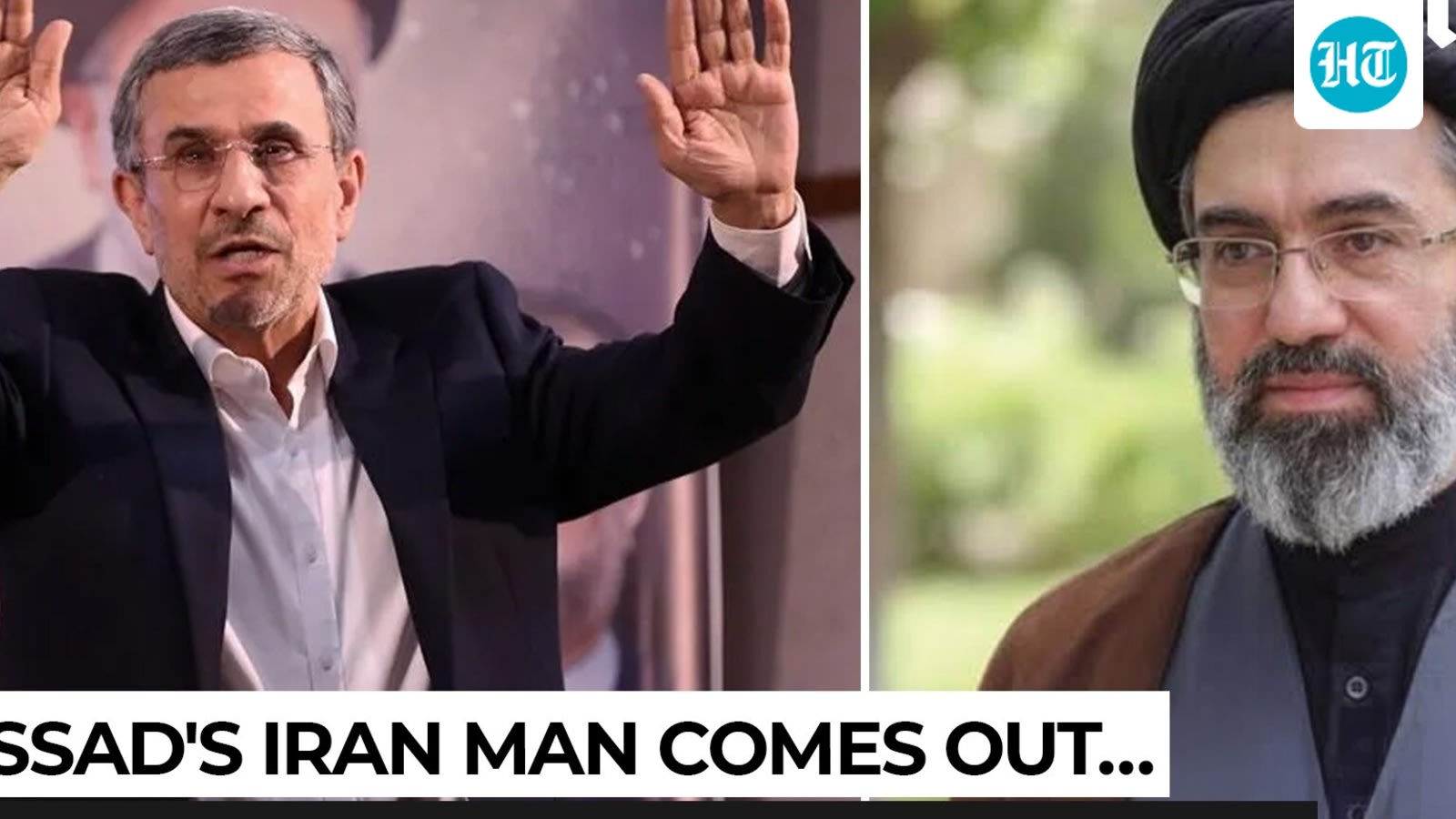
Former Iranian President Mahmoud Ahmadinejad has publicly reappeared at a high-level Expediency Council meeting in Tehran to signal his continued standing within the Iranian establishment, following explosive claims by the Israeli newspaper Haaretz that he had been recruited by Mossad.
The Geopolitical Chess Match: Ahmadinejad, Mossad, and the Iranian Establishment
The recent resurfacing of former Iranian President Mahmoud Ahmadinejad at a high-level meeting of the Expediency Council is more than a routine political appearance; it is a calculated piece of political theater. Coming on the heels of a bombshell report by the Israeli newspaper Haaretz, which alleged that Ahmadinejad had been recruited by the Mossad, his presence at the Economic Commission session on July 11 serves as a visceral rebuttal. In the high-stakes environment of Tehran's leadership, where accusations of espionage can lead to severe consequences, a public appearance at a council meeting is the most potent way to signal that one still possesses the trust—or at least the tolerance—of the regime's inner circle.
Analyzing the 'Nuclear-Level' Allegation
The claim that a former head of state, especially one as historically antagonistic toward Israel as Ahmadinejad, could be an asset for the Mossad is what observers describe as a 'nuclear-level' allegation. Historically, Ahmadinejad's presidency was defined by fiery rhetoric regarding the Holocaust and the legitimacy of the Israeli state. For the Mossad to allegedly recruit such a figure would represent one of the greatest intelligence coups in history, aimed not just at gathering information, but at psychologically destabilizing the Iranian leadership by suggesting that even their most fervent hardliners can be turned.
The Strategic Timing of the Expediency Council Meeting
The timing of Ahmadinejad's appearance on July 11 is critical. By participating in the Economic Commission of the Expediency Council, Ahmadinejad was not merely attending a meeting; he was demonstrating his active role in the state's governing machinery. The Expediency Council is a powerful body that mediates disputes between the Parliament and the Guardian Council, meaning that his invitation to share policy views and governing experience suggests that he has not been marginalized or placed under house arrest following the Haaretz report. This move was designed to neutralize the narrative of betrayal before it could gain traction within the Iranian security apparatus.
Historical Context and the Persona of Ahmadinejad
To understand the gravity of this event, one must consider Ahmadinejad's trajectory. Once the face of Iranian defiance on the world stage, his relationship with the Supreme Leader and other clerical elites has been strained in recent years due to his populist leanings and occasional challenges to the established order. This existing friction creates a vulnerability that foreign intelligence agencies often exploit. The Haaretz report likely leveraged this known tension to lend credibility to the claim that Ahmadinejad might be open to external cooperation as a means of regaining influence or securing a future outside the current regime's constraints.
Implications for Iran-Israel Intelligence Warfare
This episode highlights the ongoing 'shadow war' between Iran and Israel, where information is weaponized as much as physical assets. Whether the Mossad recruitment claim was a factual intelligence finding or a strategic leak intended to sow paranoia and distrust within Tehran's leadership, the effect remains the same. By forcing Ahmadinejad to publicly prove his loyalty, the report succeeded in creating a moment of instability. The subsequent strong denial from Ahmadinejad's office on July 14, labeling the claims as 'completely false,' is the final step in a standard damage-control cycle used by Iranian officials to close the loop on foreign intelligence operations.
Conclusion: A Cycle of Denial and Distrust
In summary, the sequence of events—from the Haaretz publication to the Expediency Council meeting and the final official denial—underscores the volatility of Iranian internal politics. While Ahmadinejad's appearance suggests he remains a viable part of the political landscape, the mere existence of such high-level allegations indicates the depth of the intelligence penetration and psychological warfare currently characterizing the Iran-Israel conflict. Moving forward, this event will likely lead to increased scrutiny of former officials and a tightening of security protocols within the Expediency Council to prevent actual or perceived foreign infiltration.
Verification Required?