The Teaser Period: Why the AI Boom Is Hitting a Reset Wall
Source Entity
Hacker News
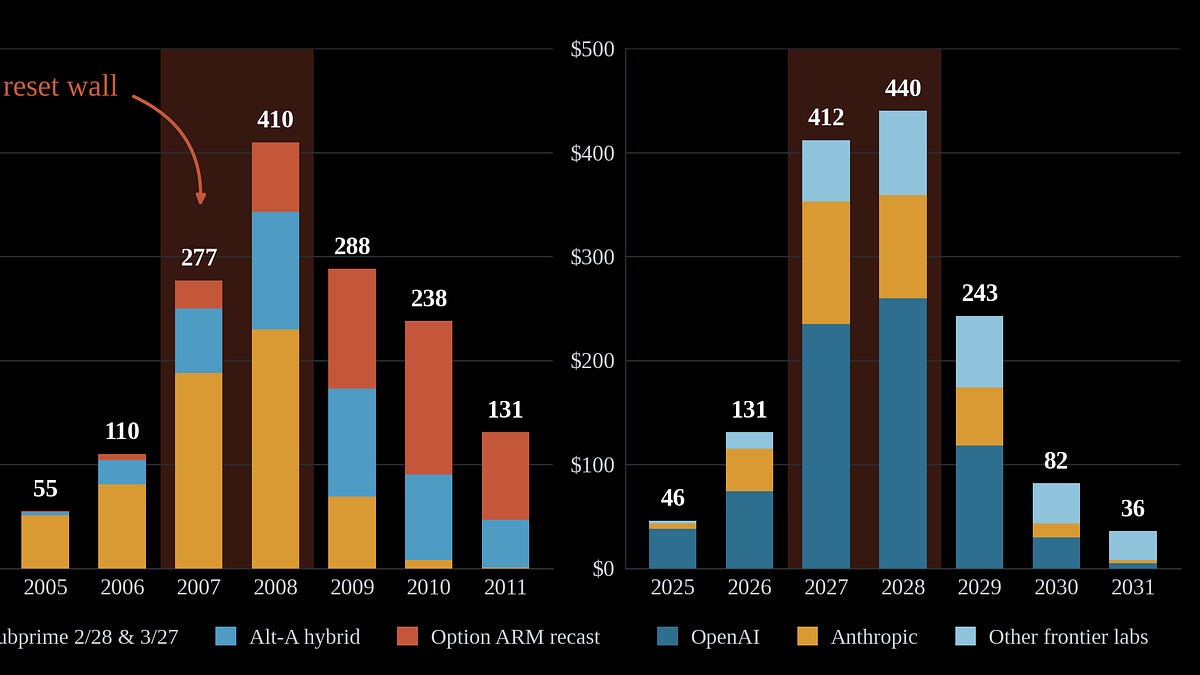
The current AI market boom is exhibiting warning signs similar to the 2006 subprime mortgage crisis. Investors are cautioned that the initial 'teaser' phase of AI adoption may soon face a painful reset as underlying economic realities catch up.
The Illusion of Prosperity: Parallels to 2006
In the summer of 2006, the American financial landscape appeared remarkably stable. Home prices had climbed consistently for nearly a decade, delinquency rates were at historic lows, and the securitization machine was operating at peak efficiency. Much like the current enthusiasm surrounding artificial intelligence, the market sentiment was one of unwavering confidence. Trading desks across Wall Street viewed the mortgage market as a bedrock of stability, dismissive of any suggestion that a systemic seizure was imminent. This historical period serves as a sobering reminder that market euphoria often masks underlying structural vulnerabilities.
The Anatomy of the 2/28 ARM Reset
Central to the 2006 crisis was the '2/28 ARM,' a subprime mortgage instrument that featured a low, fixed introductory rate for two years. During this 'teaser' period, the loans performed flawlessly: borrowers met their obligations, servicers collected payments, and bondholders received their expected coupons. The entire complex—housing, mortgages, and securitization—appeared to be in perfect harmony because the financial burden of the loan had not yet been fully realized by the borrower.
The AI Boom as a Financial Teaser
Today, the AI sector is mirroring this 'teaser' period. Much like the subprime borrowers of the mid-2000s, many companies and investors are currently enjoying the initial benefits of AI integration, where costs are manageable and the promise of efficiency is high. However, just as the 2/28 ARM was destined to reset to a payment 30% to 50% higher, the AI industry is approaching a threshold where the true costs of infrastructure, energy consumption, and model maintenance will begin to exert significant downward pressure on profit margins.
Structural Risks and Market Resets
When the introductory rates on 2/28 ARMs expired, the resulting payment shock triggered a cascade of defaults that destabilized the global economy. In the context of the AI boom, the 'reset' refers to the inevitable transition from speculative investment to proven profitability. As companies move beyond the pilot phases of AI adoption, they will face the reality of high operational expenditures that were previously obscured by venture capital funding and speculative exuberance. This transition threatens to create a 'reset wall' for firms that have not built sustainable revenue models.
Predicting Future Trends
Based on historical precedent, it is likely that the market will soon see a bifurcation between AI companies that can provide tangible, high-margin ROI and those that are merely living off the 'teaser' period of low-cost capital and high-growth narratives. The companies that survive this reset will be those that have focused on core utility rather than speculative scaling. Investors should prepare for a period of volatility as the market corrects for the over-valuation of AI capabilities that have yet to be battle-tested in a high-interest, high-cost environment.
Conclusion: Learning from History
The fundamental lesson from 2006 is that markets often mistake the calm before the storm for structural health. The current AI boom is currently in a state of high-performance, low-friction growth, but the underlying mechanisms of cost and value are shifting. By recognizing the patterns of the mortgage crisis—specifically the risks associated with deferred financial burdens—stakeholders can better navigate the upcoming reset and identify the true value drivers in the artificial intelligence landscape.