Why AI food looks like that
Source Entity
Robert Hart
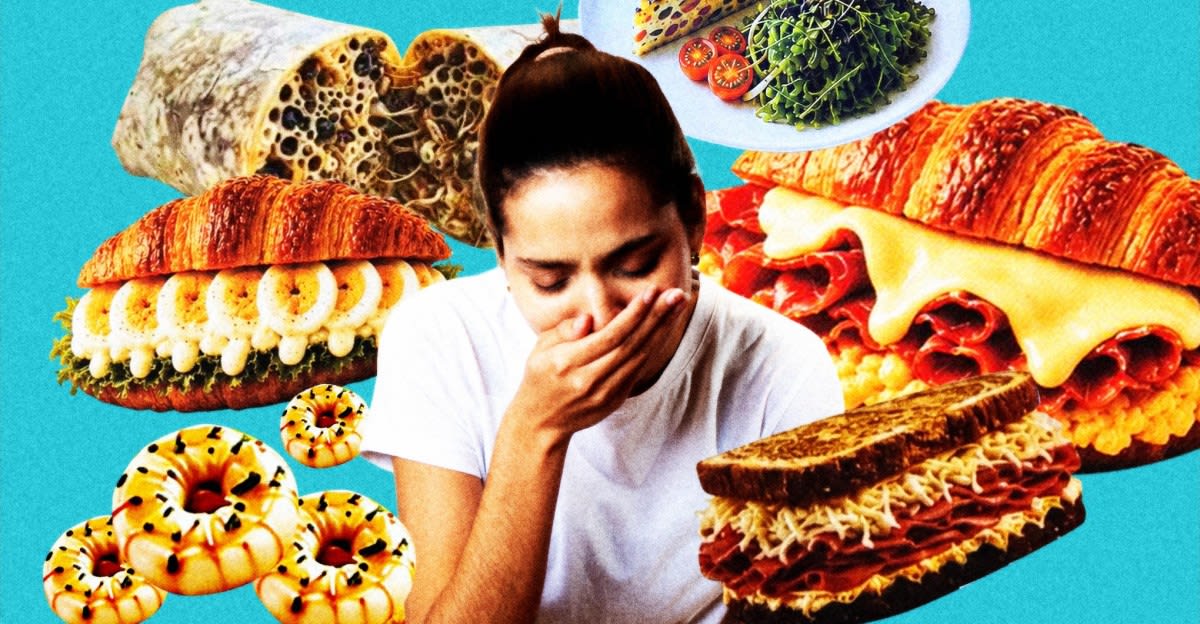
Restaurants are increasingly using AI-generated imagery to showcase their menus, resulting in uncanny, unappetizing, and physically impossible food depictions. This trend stems from the technical limitations of diffusion models and a disconnect between algorithmic aesthetics and human culinary expectations.
The Uncanny Valley of Culinary Marketing
In recent months, a troubling trend has emerged in the hospitality industry: the replacement of authentic food photography with AI-generated imagery. Restaurant owners, seeking cost-effective and visually striking ways to update their menus, are turning to generative models to create promotional assets. However, customers are increasingly reporting a visceral sense of unease when viewing these menus, noting that the food appears 'eerily flawless,' perfectly symmetrical, and strangely smooth. This phenomenon is not merely a matter of personal taste; it represents a fundamental clash between algorithmic output and the human expectation of edible reality.
Technical Limitations and Diffusion Models
The root of this visual dissonance lies in the underlying architecture of current image generators, specifically diffusion models. These systems function by starting with pure noise—akin to static on a screen—and iteratively refining it into a coherent image based on training data. While powerful, these models are notoriously weak when it comes to rendering thin, continuous, or terminating structures. This limitation leads to the common 'AI slop' seen in advertisements: wormlike noodles, stringy chicken, or pastries that appear to melt into construction-like materials.
The Aesthetics of the 'Pleasing' Algorithm
Beyond technical failures, there is a systemic issue with the datasets used to train these models. AI models are often fed a diet of images curated for a narrow, idealized aesthetic. Because these models prioritize a 'pleasing' look based on mathematical averages rather than culinary accuracy, they often produce images that lack the texture and irregularities that define real food. A burrito might be rendered with cheese so perfectly bubbly and melty that it ceases to look like a meal and begins to resemble avant-garde art, triggering a psychological rejection in the viewer.
The Psychological Impact on Diners
Humans possess a sophisticated, evolutionary-driven ability to identify food that is safe and appetizing. When we look at a menu, our brains anticipate specific textures and physical properties. When an image violates these expectations—such as a donut made of shrimp or ice cream that looks like solid plastic—it creates cognitive dissonance. Customers may not immediately be able to articulate why an image feels 'wrong,' but the visceral reaction remains, often leading to a loss of trust in the establishment's culinary competence.
Broader Implications for the Restaurant Industry
This trend poses a significant threat to the authenticity of the dining experience. When a restaurant relies on AI to 'spruce up' its menu, it essentially prioritizes a synthetic aesthetic over the reality of the food being served. The disconnect between a hyper-polished, AI-generated image and the actual dish delivered to the table creates a 'bait-and-switch' scenario that can damage brand reputation. As AI tools become more accessible, the industry must decide whether the convenience of automated imagery is worth the alienation of customers who value visual honesty.
Future Trends and Conclusion
Looking ahead, we can expect a growing demand for 'authentic' marketing as a counter-reaction to the deluge of AI-generated content. While AI may continue to evolve, the fundamental challenge of replicating the complex, organic nature of food remains a hurdle for diffusion models. For the hospitality sector, the most effective strategy may be a return to professional food photography, which captures the nuance and character that algorithms currently fail to replicate. Ultimately, the 'sameness' problem serves as a stark reminder that in the world of food, reality is far more appetizing than any synthetic approximation.
Multiple Citing Sources