The Raspberry Pi Interactive Timeline · 2006–2026
Source Entity
Hacker News
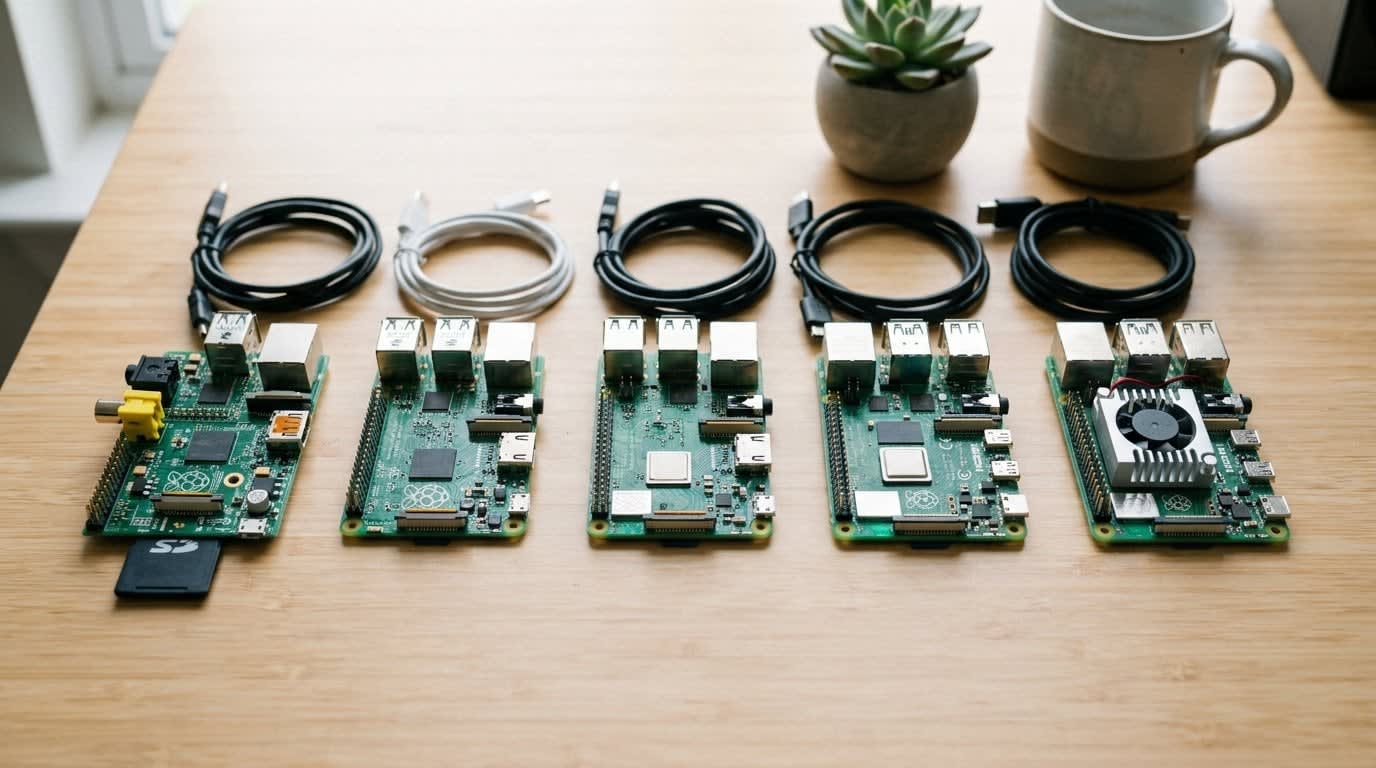
The Raspberry Pi has evolved from a niche educational tool in 2012 to a global powerhouse with 68 million units sold. Its legacy as Britain's best-selling computer is rooted in its accessible design and Python-centric philosophy.
The Evolution of the Raspberry Pi: A Decade of Innovation
The Genesis of a Computing Phenomenon
The Raspberry Pi journey began long before its commercial debut, but the pivotal moment arrived on February 29, 2012, with the launch of the Model B. Priced at an accessible 35 US dollars, the device was designed to democratize computing and spark interest in programming among students and hobbyists. The launch was so successful that it overwhelmed the infrastructure of its primary distributors, Farnell and RS Components, signaling that the project had tapped into a massive, previously underserved market for affordable, programmable hardware.
Naming Conventions and Philosophical Roots
The name "Raspberry Pi" carries a dual heritage that reflects the company's identity. The "Raspberry" prefix pays homage to the storied tradition of British tech companies utilizing fruit nomenclature, following in the footsteps of pioneers like Acorn and Apricot. The "Pi" suffix holds a more functional significance, denoting the platform's early and enduring commitment to the Python programming language. By positioning Python as the recommended language from day one, the foundation ensured that the hardware was not just a piece of plastic and circuitry, but an educational gateway.
Scaling to Record-Breaking Heights
By March 2025, the impact of the Raspberry Pi on the global technology landscape became undeniable. With approximately 68 million units sold as reported in the annual filings of Raspberry Pi Holdings, the platform has officially cemented its status as the best-selling British computer in history. This milestone is not merely a quantitative achievement; it represents a fundamental shift in how engineers, educators, and DIY enthusiasts approach prototyping and embedded systems.
Broader Implications for Tech Education
The success of the Raspberry Pi has had a profound ripple effect on the global educational sector. By providing a low-cost, high-utility computer, the organization bridged the gap between theoretical computer science and physical computing. This accessibility has empowered a generation of developers to experiment with robotics, home automation, and server management without the high barrier to entry typically associated with proprietary computing hardware.
Future Trends and Legacy
As the Raspberry Pi project looks beyond 2026, its trajectory suggests a continued dominance in the single-board computer market. The platform's success demonstrates that sustainable growth in technology can be achieved through open-ended design and community support rather than closed ecosystems. Moving forward, the challenge for the organization will be to maintain its educational ethos while scaling to meet the increasingly sophisticated demands of modern industrial and domestic applications.
Conclusion
From its initial launch in 2012 to its current position as a global leader in hardware, the Raspberry Pi has fundamentally altered the technological landscape. Its history—defined by high demand, strategic naming, and massive adoption—stands as a testament to the power of accessible computing. With 68 million units in circulation, the Raspberry Pi remains a cornerstone of modern digital literacy and technical innovation.