Award-Winning AI Literature
Source Entity
Hacker News
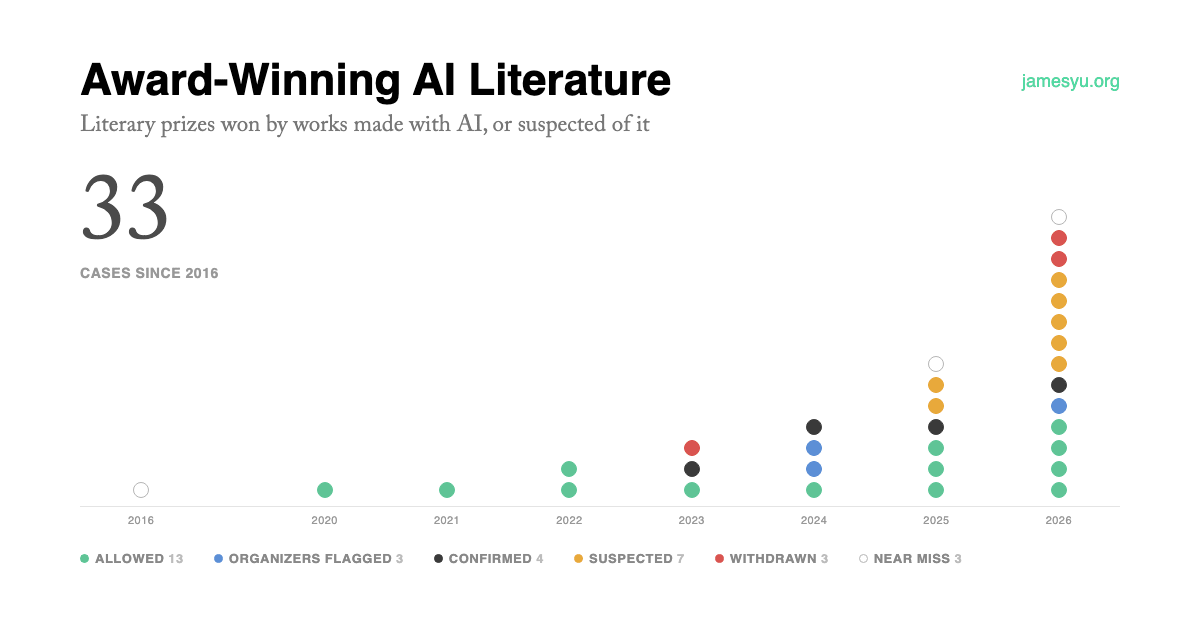
Recent literary awards, specifically the Nikkei Hoshi Shinichi Literary Award, have begun recognizing works created with AI assistance. This shift marks a significant evolution in the intersection of human creativity and machine-generated content.
The Dawn of Algorithmic Authorship
The landscape of contemporary literature is undergoing a profound transformation as artificial intelligence integrates into the creative writing process. The recognition of AI-assisted works, such as Kamome Ashizawa’s Are You There? and Toh Katagiri’s The Last Painter, by the Nikkei Hoshi Shinichi Literary Award, serves as a bellwether for this transition. These accolades highlight a move away from the traditional model of the solitary author toward a collaborative paradigm between human intuition and machine-generated efficiency.
The Hoshi Shinichi Precedent
The Hoshi Shinichi Literary Award has been at the forefront of this shift, consciously allowing AI participation in its competition. In 2022, Kamome Ashizawa’s victory demonstrated a controlled use of technology; while she generated over 100 stories using AI in a three-week span, the award-winning entry was noted for being primarily human-authored with supplemental AI input. This distinction is critical, as it establishes a threshold for what constitutes 'assisted' versus 'generated' content in a formal literary context.
Defining the Boundaries of Authorship
The 2025 win by Toh Katagiri for The Last Painter introduces a more complex narrative. With reports suggesting that every sentence of the work was written by AI, the industry is forced to grapple with the definition of authorship itself. When a machine handles the structural and syntactic heavy lifting, the role of the human shifts from 'writer' to 'editor' or 'curator.' This evolution challenges the traditional romantic notion of the writer as a creator of original prose from scratch.
Methodological Transparency and Ethical Challenges
A recurring issue within these award processes is the lack of standardized transparency. While organizers acknowledge the use of AI, the specific methodologies—such as the prompts used, the models involved, or the degree of human post-processing—remain opaque. Fellow finalists in the 2025 competition noted the ambiguity regarding Katagiri’s specific usage, suggesting that the literary community is still struggling to establish a common language for documenting AI intervention.
Future Trends in Literary Competition
As AI becomes more sophisticated, we can expect a bifurcation in literary awards. On one hand, prizes will likely emerge that celebrate pure human craftsmanship; on the other, awards like the Hoshi Shinichi will continue to refine their criteria to accommodate the burgeoning 'co-pilot' era of creative writing. The future of literature will not necessarily be defined by the exclusion of AI, but by how human authors curate, prompt, and refine the output of these powerful linguistic models to achieve artistic merit.
Conclusion: A New Creative Horizon
The integration of AI into literary circles is not merely a technological novelty but a fundamental reimagining of creative output. While these early awards generate debate regarding authenticity and the 'soul' of literature, they also provide a necessary framework for navigating a future where humans and machines collaborate to produce narrative art. As these standards evolve, the focus will likely shift from the tool itself to the intent and vision of the human who directs it.