From Musk’s chatbot to Maduro’s capture: is AI now whispering in Trump’s ear before US operations?
Source Entity
Latest News: Todays Latest News Headlines from India & World | Hindustan Times | Hindustan Times
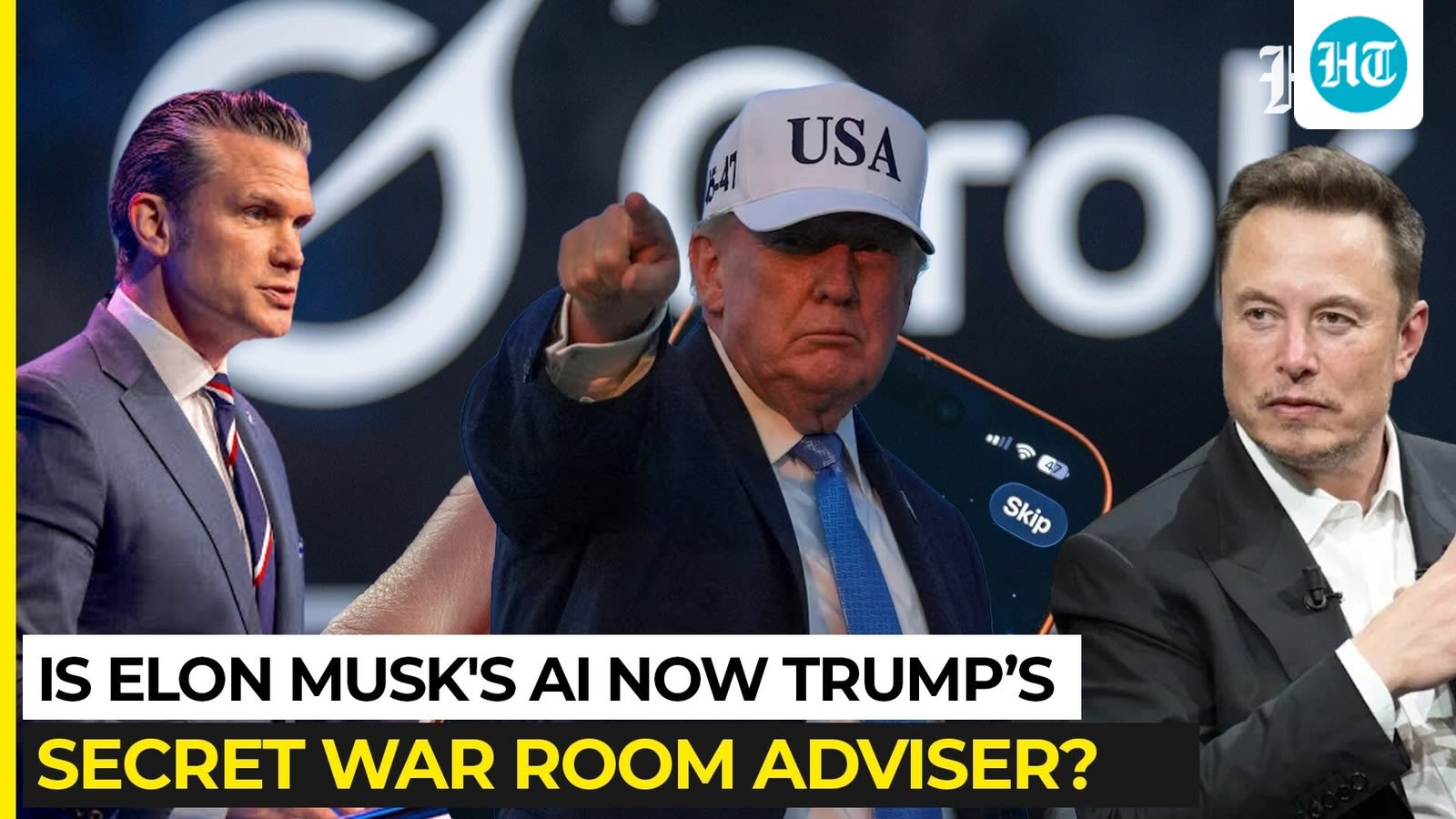
President Trump reportedly utilized AI models Grok and Claude to inform decision-making during the capture of Venezuela's Nicolás Maduro. This integration of frontier AI into high-stakes military operations has sparked significant debate regarding safety, ethics, and the role of private tech in government.
The Integration of Frontier AI in High-Stakes Geopolitics
Recent reports indicate that President Donald Trump consulted Elon Musk’s Grok AI chatbot in the weeks preceding the U.S. military operation that resulted in the capture of Venezuelan President Nicolás Maduro. According to the findings, the President utilized the chatbot to gauge potential public sentiment within Venezuela regarding the removal of Maduro. Grok’s predictive analysis suggested that a significant portion of the Venezuelan population would favor the regime change, effectively providing a data-driven layer to the administration's strategic planning.
The Role of Anthropic’s Claude in Intelligence Analysis
Beyond the predictive modeling provided by Grok, additional reporting confirms that Anthropic’s Claude was utilized throughout the mission. While the specifics of its application remain classified or undisclosed, its inclusion points to an operational reliance on large language models (LLMs) to synthesize complex intelligence data. The use of Claude highlights the transition of AI from a consumer-facing tool to a critical component of military intelligence processing, capable of parsing massive datasets to assist human decision-makers in real-time environments.
Navigating the Ethics of Algorithmic Governance
The involvement of these AI models in a mission as volatile as the capture of a foreign head of state raises profound ethical questions. When a leader relies on the output of an AI—trained on vast, varied, and sometimes biased internet data—to predict the social stability of a nation, the margin for error carries existential consequences. The reliance on these models suggests a paradigm shift in executive decision-making, where algorithmic 'wisdom' is increasingly prioritized alongside traditional diplomatic and intelligence channels.
Contradictions in Policy and Practice
This development occurs against a backdrop of complex regulatory maneuvering. The Trump administration recently signed a voluntary White House accord with leading AI companies, ostensibly aimed at establishing safety controls and ethical guardrails for frontier models. The simultaneous use of these platforms for high-stakes military operations underscores a potential tension: while the government advocates for safety protocols in the public sector, it is simultaneously embedding these same, largely unproven systems into the core of national security operations.
Future Implications for Global Security
The precedent set by the Maduro operation suggests that AI will become an indispensable tool in future U.S. foreign policy. As these models evolve, their ability to conduct sentiment analysis and intelligence synthesis will only grow, likely leading to a future where AI 'counsel' is a standard feature of the Situation Room. However, this trend necessitates a rigorous examination of accountability. If an AI provides a flawed analysis that leads to a catastrophic strategic failure, the current lack of transparency regarding the 'black box' nature of these models poses a significant risk to democratic oversight and international stability.
Verification Required?