NSA Ajit Doval holds talks with Saudi foreign minister on energy security and West Asia situation
Source Entity
Latest News: Today's Latest News Headlines from India & World | Hindustan Times | Hindustan Times
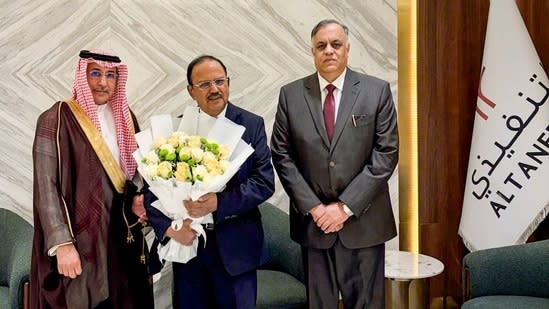
National Security Advisor Ajit Doval met with Saudi Foreign Minister Prince Faisal bin Farhan in Riyadh to discuss energy security and the protection of critical maritime corridors. The high-level talks address the escalating regional tensions in West Asia and their impact on global supply chains.
Strategic Engagement in Riyadh: Strengthening India-Saudi Ties
National Security Advisor (NSA) Ajit Doval’s recent visit to Riyadh, where he held substantive discussions with Saudi Foreign Minister Prince Faisal bin Farhan, marks a significant diplomatic effort to stabilize bilateral relations amidst a volatile geopolitical climate. The visit, which began with a formal reception by Deputy Minister for Political Affairs Saud Al-Sati and Indian Ambassador Suhel Khan, underscores the deepening trust and strategic alignment between New Delhi and Riyadh. By prioritizing high-level engagement, both nations are signaling a shared commitment to addressing the complex security challenges currently facing the West Asian region.
The Nexus of Energy and Maritime Security
A central pillar of the dialogue between Doval and Prince Faisal was the strengthening of energy security and the protection of maritime corridors. As one of the world's largest consumers of energy, India relies heavily on the stability of shipping routes that originate in the Persian Gulf. The focus on maritime corridors is particularly pertinent given that any disruption in these waters can cause immediate volatility in global oil prices and supply chains, directly impacting India’s economic stability and industrial output.
Navigating West Asian Geopolitical Tensions
The timing of this visit is critical, as it coincides with heightened tensions in West Asia. The ongoing conflict involving the US and Iran has introduced significant uncertainty regarding the safety of key shipping lanes and the continuity of energy supplies. By engaging in direct, high-level consultations, India and Saudi Arabia are positioning themselves as proactive stakeholders in regional stability, seeking to mitigate the risks posed by these broader geopolitical frictions.
Diplomatic Synergy and Bilateral Relations
Beyond immediate security concerns, the meeting served as a venue for reviewing the broader spectrum of bilateral relations. The rapport between India and Saudi Arabia has evolved significantly, moving from a primarily buyer-seller energy relationship to a multifaceted strategic partnership. This evolution is vital for India, as it seeks to diversify its economic dependencies and ensure that its national security interests are integrated into its foreign policy outreach across the Middle East.
Future Implications and Strategic Outlook
Looking forward, the collaboration between New Delhi and Riyadh on maritime and energy security is likely to serve as a template for India's engagement with other Gulf Cooperation Council (GCC) nations. As the security environment in West Asia remains fragile, the ability of India to maintain open channels of communication with key regional players like Saudi Arabia will be essential. The success of these diplomatic efforts will depend on the ability of both nations to translate these high-level discussions into actionable frameworks that ensure the security of transit routes and the predictability of energy markets.
Conclusion
In summary, NSA Ajit Doval’s visit represents a calculated and necessary step in safeguarding India's strategic interests in a turbulent era. By addressing energy security and the protection of maritime corridors directly with Saudi leadership, India is reinforcing its role as a stabilizing force in the region. The ongoing dialogue between the two nations is not merely a response to temporary crises but a long-term investment in the security of the global energy architecture.
Verification Required?