AMD's revenue climbs 50% and data center sales doubled, but the stock is down
Source Entity
US Top News and Analysis
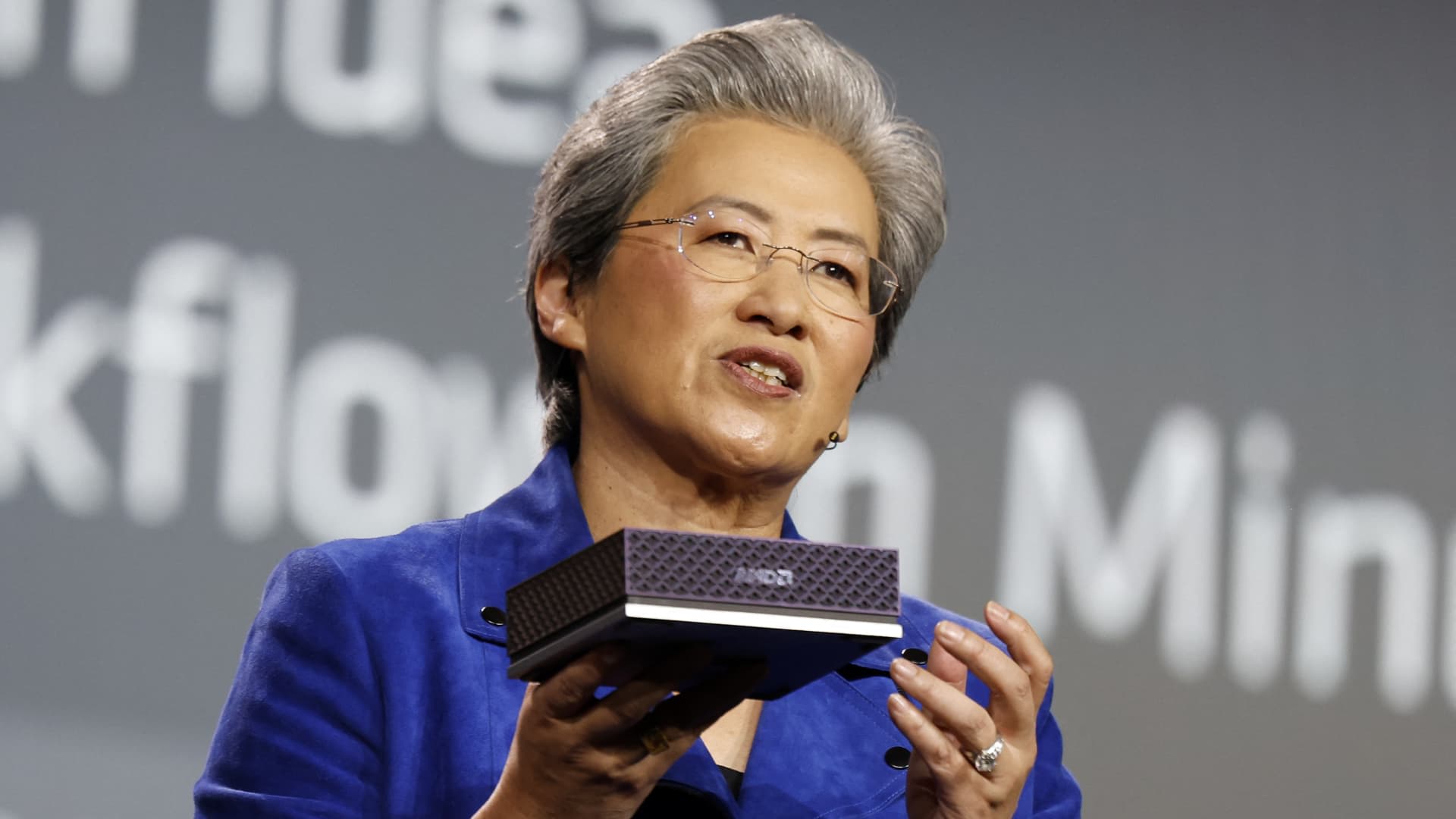
AMD reported record-breaking revenue of $11.54 billion, fueled by a 107% surge in data center sales driven by AI demand. Conversely, the gaming division saw a 31% decline due to slowing console and hardware sales, leading to a mixed reaction in the company's stock performance.
AMD's Strategic Shift: The AI-Driven Data Center Boom
Advanced Micro Devices (AMD) has released its latest earnings report, revealing a significant transformation in its revenue composition. While the company achieved a record-breaking $11.54 billion in revenue—a 50% increase year-over-year—the underlying drivers of this growth showcase a clear pivot. The company’s data center unit has become the primary engine of its financial success, reporting $6.7 billion in revenue, which marks a staggering 107% jump from the $3.2 billion recorded in the same period last year.
The AI Catalyst
This explosive growth is fundamentally tied to the insatiable global demand for artificial intelligence infrastructure. By successfully scaling its central processing unit (CPU) and graphics processing unit (GPU) offerings, AMD has positioned itself as a critical supplier for the AI-heavy workloads defining the current tech landscape. The fact that data center revenue rose from $5.8 billion in Q1 to $6.7 billion in the current quarter underscores a consistent, upward trajectory in enterprise and cloud-provider spending on AI capacity.
The Decline of the Gaming Segment
In stark contrast to the data center boom, AMD’s gaming division faces significant headwinds. Revenue for this segment fell by 31% to $779 million compared to the previous year. This decline is largely attributed to a cooling market for major gaming hardware, including the Xbox Series X/S, the PlayStation 5, and the Steam Deck. Factors such as persistent component shortages and strategic price adjustments have created a challenging environment for consumer-grade gaming hardware, causing this segment to take a backseat to the company's enterprise-focused initiatives.
Market Expectations vs. Reality
Despite beating analyst expectations—with an adjusted EPS of $1.66 against an estimated $1.62 and revenue of $11.54 billion against a predicted $11.28 billion—AMD’s stock performance saw a slump in extended trading. This reaction highlights the complex nature of modern semiconductor market valuations. Investors are increasingly looking beyond quarterly beats, focusing instead on long-term sustainability and the ability of hardware manufacturers to maintain momentum in a highly competitive AI chip market.
Broader Implications and Future Trends
Looking ahead, AMD’s reliance on the data center segment suggests that its future valuation will be increasingly tethered to the growth of cloud computing and AI model training. While gaming remains a significant part of the company's legacy, the divergence between these two sectors indicates that AMD is prioritizing high-margin enterprise clients. If the demand for AI capacity continues to outpace the recovery of the consumer electronics market, we can expect AMD to continue shifting its resource allocation further toward data center infrastructure, potentially redefining the company’s identity from a traditional consumer chipmaker to an AI-infrastructure powerhouse.