America has few good options for a “massive attack” on Iran
Source Entity
Latest News: Todays Latest News Headlines from India & World | Hindustan Times | Hindustan Times
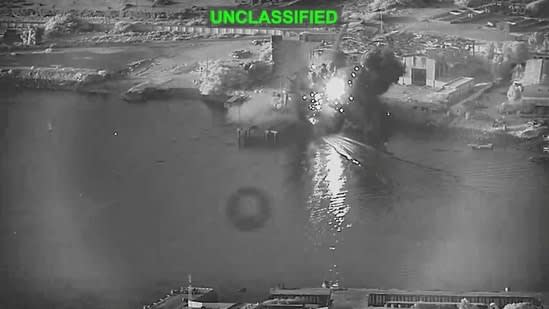
The United States has engaged in a sustained aerial campaign against Iranian military assets to secure the Strait of Hormuz. Despite recent strikes on infrastructure, the conflict risks escalating into a prolonged 'forever war' with limited strategic outcomes.
The Strategic Impasse in the Persian Gulf
Recent military developments in the Middle East have seen a significant escalation between the United States and Iran, characterized by a series of targeted American strikes on critical Iranian infrastructure. Since July 7th, Central Command has executed hundreds of sorties aimed at degrading Iran’s coastal air defenses, missile depots, and logistical nodes. The explicit strategic objective behind this campaign is to neutralize threats to commercial shipping within the Strait of Hormuz, a critical global maritime chokepoint.
The Anatomy of the Escalation
The intensity of this conflict is underscored by the recent cycle of violence, which saw 13 consecutive nights of American bombing met by 12 Iranian attacks on vessels transiting the Persian Gulf. This tit-for-tat exchange effectively paralyzed shipping through the Strait, demonstrating the vulnerability of global energy and trade routes to localized military disruption. The current 48-hour lull in American airstrikes represents the first pause in nearly two weeks, creating a fragile window for assessing the efficacy of the previous operations.
The Risks of a 'Forever War'
The current military approach faces a daunting reality: tactical success in destroying missile depots or air defenses does not necessarily translate into long-term regional stability. Experts suggest that even if the United States continues to expand its target list to encompass broader critical infrastructure, the risk of entering a 'forever war' remains high. The structural nature of Iran’s defense posture, which relies heavily on asymmetric warfare and dispersed capabilities, suggests that traditional aerial bombardment may have diminishing returns.
Challenges to Nuclear Non-Proliferation
Beyond the immediate maritime security concerns, the broader context of this conflict involves Iran’s nuclear program. There is growing concern that renewed assaults on Iranian infrastructure may not be sufficient to curb their nuclear ambitions. Instead, such military pressure might inadvertently incentivize Tehran to accelerate its nuclear development as a deterrent against further conventional attacks, creating a dangerous feedback loop that complicates diplomatic efforts.
Future Trends and Strategic Outlook
Looking ahead, the situation remains precarious. The United States faces a narrow path where military force must be balanced against the risk of regional contagion. Future trends suggest that if the current kinetic campaign fails to restore maritime security, the U.S. may be forced to choose between a wider, more costly engagement or a shift toward intensified economic and diplomatic containment. Ultimately, the absence of a clear exit strategy for these 'massive attacks' poses a significant challenge to American foreign policy objectives in the region.
Conclusion
In summary, the ongoing military confrontation in the Persian Gulf highlights the limitations of kinetic force in solving deep-seated geopolitical tensions. While the strikes have successfully targeted specific Iranian logistical capabilities, the potential for a protracted conflict suggests that a strictly military solution to the security of the Strait of Hormuz is unlikely to provide a sustainable or permanent resolution.
Verification Required?