"No SIR In 2014, 2019 Or 2024, You Still Lost": Amit Shah To Rahul Gandhi
Source Entity
NDTV News Search Records Found 1000
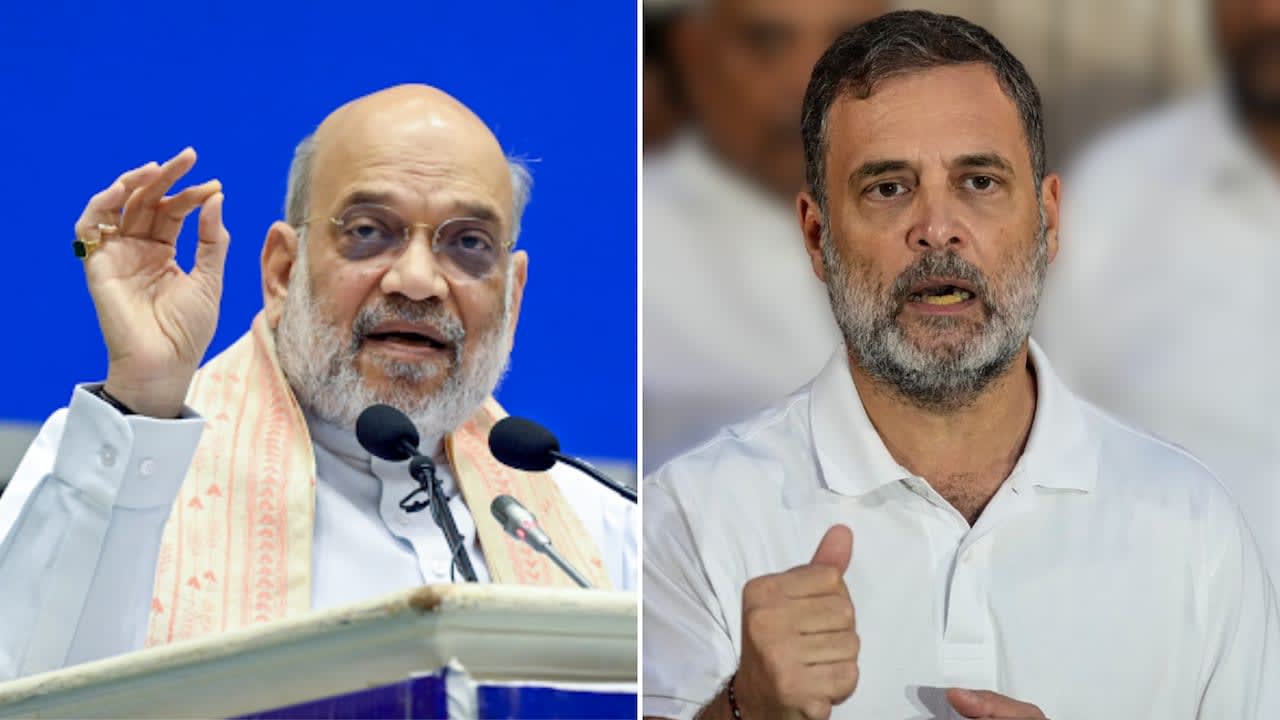
Union Home Minister Amit Shah has sharply criticized Rahul Gandhi, accusing him of fostering a culture of parliamentary disruption and anarchy. Shah's remarks, delivered during a rally in Karnal, dismiss Gandhi's political impact by highlighting the Congress leader's repeated electoral losses in 2014, 2019, and 2024.
The Escalating Rhetoric: Shah vs. Gandhi
Union Home Minister Amit Shah recently intensified his critique of Congress leader Rahul Gandhi during a high-profile rally in Karnal, Haryana. Leading the Bharatiya Janata Party’s 'Loktantra Bachao, Arajakta Hatao' (Save Democracy, Remove Anarchy) march, Shah characterized the current state of opposition politics as a deliberate attempt to undermine the sanctity of India's legislative processes. This confrontation marks a continuation of the long-standing ideological and political friction between the two prominent national figures.
Parliamentary Conduct and the 'Culture of Ruckus'
At the heart of Shah’s accusations is the claim that Rahul Gandhi has systematically replaced substantive debate with a 'culture of ruckus' in Parliament. By allegedly prioritizing boycotts and disruptions over legislative discourse, the Home Minister argues that the Congress party is obstructing the functioning of the country's supreme democratic institution. Shah’s rhetoric suggests that this behavior is not merely tactical but a fundamental shift in how the opposition engages with the ruling mandate.
Electoral Legitimacy and Historical Context
Beyond parliamentary procedural issues, Shah directly challenged Gandhi’s political relevance by referencing the electoral outcomes of 2014, 2019, and 2024. By framing these three consecutive general elections as definitive losses for the Congress leader, Shah seeks to delegitimize the opposition's current protest strategies. This narrative serves to remind the public and the political establishment of the BJP’s sustained electoral dominance over the past decade, positioning the Congress as a party unable to secure a popular mandate despite its vocal opposition.
The 'Anarchy' Narrative
During his address at the Karnal rally, which spanned from Sector 12 to Dayanand Chowk, Shah warned that the nation’s 80-year-old democracy would not be swayed by what he termed as 'tactics' or 'tricks.' By labeling these opposition actions as 'anarchy,' the Home Minister is attempting to frame the political discourse around the preservation of democratic stability. This strategy aims to contrast the BJP’s governance model with what it describes as the chaotic approach of its opponents.
Future Implications for Indian Politics
The harshness of this exchange signals a volatile political climate as both parties prepare for ongoing legislative and electoral battles. Shah’s promise of a 'fitting reply' suggests that the BJP intends to continue its aggressive counter-offensive against the opposition's protest tactics. As the discourse becomes increasingly polarized, the role of Parliament as a venue for consensus-building faces significant pressure, potentially leading to further gridlock in the coming sessions.
Conclusion: A Deepening Divide
In summary, the confrontation in Karnal encapsulates the deep-seated animosity defining modern Indian politics. Through the lens of the 'Loktantra Bachao' march, the BJP is solidifying its narrative that the opposition is obstructing national progress. Whether this approach effectively neutralizes the opposition’s influence or further galvanizes their base remains a central question for the future of India's democratic landscape.
Multiple Citing Sources
Verification Required?