‘Red Line’ march brings Amsterdam to standstill as Gaza outrage spills onto streets
Source Entity
SUBHADRA SRIVASTAVA
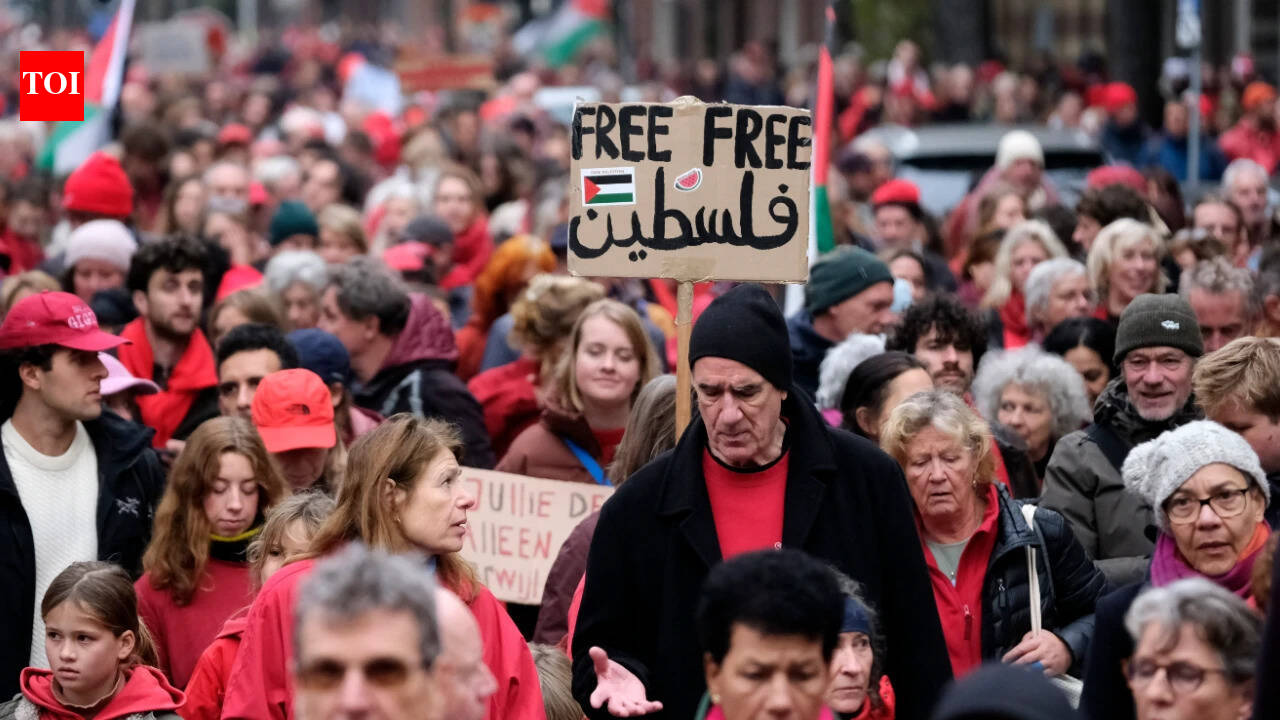
Over 200,000 protesters gathered in Amsterdam for the 'Red Line' march, demanding the Dutch government implement stricter trade sanctions and halt arms exports to Israel. The demonstration highlights growing public pressure on European nations regarding the ongoing military campaign in Gaza.
The 'Red Line' March: Amsterdam's Unprecedented Protest
On Sunday, the streets of Amsterdam were transformed as more than 200,000 people converged in a massive demonstration known as the 'Red Line' march. Organized in part by the Dutch branch of Amnesty International, the event brought the city to a standstill, serving as a powerful visual and political statement against the current military campaign in Gaza. Participants donned red clothing to signify the 'red lines' they believe the Dutch government has failed to enforce regarding international humanitarian standards.
Demands for Policy Reform
The core objective of the demonstrators was to compel the Dutch government to shift its diplomatic and economic stance toward Israel. Organizers explicitly demanded that the Netherlands implement tighter trade restrictions and, most critically, cease all weapons exports to Israel. By framing the conflict as a potential genocide, the protesters sought to pressure policymakers into aligning national trade policies with the growing international discourse surrounding human rights violations in the region.
The Role of Civil Society and Organizations
Amnesty International Netherlands played a pivotal role in mobilizing the crowd, leveraging its organizational capacity to draw a significant turnout. The participation of 200,000 individuals represents one of the largest displays of public sentiment in the Netherlands regarding the Middle East conflict in recent memory. This mass mobilization underscores the influence of non-governmental organizations in shaping domestic political agendas and forcing foreign policy issues to the forefront of the public consciousness.
Broader Implications for Dutch Foreign Policy
The sheer scale of the 'Red Line' march forces the Dutch government to navigate a precarious diplomatic landscape. While the Netherlands has historically maintained strong ties with Israel, the intensity of public outcry poses a challenge to the status quo. The government now faces increased scrutiny regarding its role in the global arms trade and the ethical implications of its bilateral economic agreements during periods of intense military conflict.
Future Trends and Political Pressure
Looking ahead, this event is likely to serve as a bellwether for future protests across Europe. As public awareness of the conditions in Gaza persists, governments across the continent may find it increasingly difficult to ignore calls for sanctions and arms embargoes. The Amsterdam march demonstrates that the 'Red Line' movement is not merely a localized event but part of a broader, sustained effort to use democratic assembly to influence international geopolitical outcomes.
Conclusion
The 'Red Line' march in Amsterdam stands as a testament to the power of public dissent. By successfully bringing 200,000 people to the streets, organizers have effectively moved the conversation from abstract policy debates to a visible, undeniable demand for legislative action. Whether this will result in immediate changes to Dutch trade policy remains to be seen, but the event has undeniably set a new benchmark for public engagement on the issue of the war in Gaza.