After creating history for India and amid a gap year before college, what is next for Anahat?
Source Entity
JYOTIRMOY HALDER
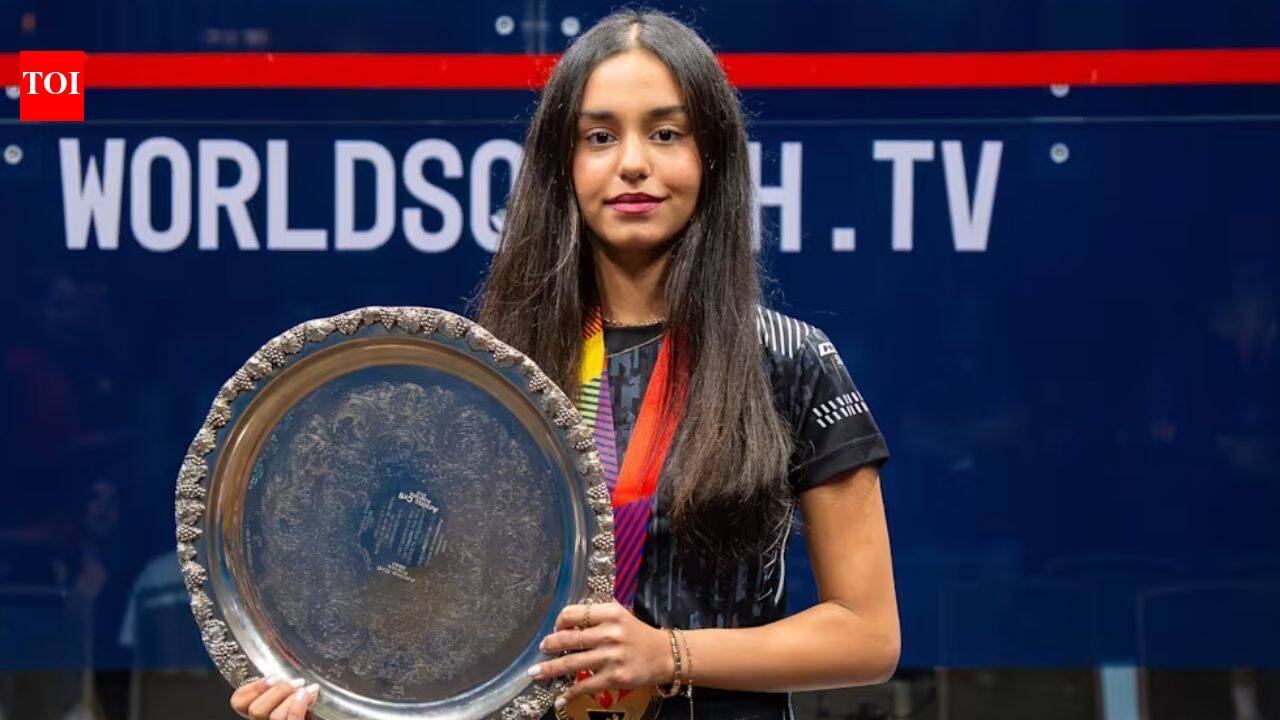
Anahat Singh has become India's first-ever World Junior Squash champion, ending a 16-year streak of Egyptian dominance. The 18-year-old is now shifting her focus toward future milestones, including the Asian Games and the 2028 Los Angeles Olympics.
A Historic Milestone for Indian Squash
At just 18 years old, Anahat Singh has achieved what no other Indian squash player has accomplished before: winning the World Junior Squash Championship. Her victory is not merely a personal triumph but a watershed moment for Indian sports. By securing this title in her fifth and final attempt, she has successfully dismantled a formidable 16-year streak of Egyptian dominance, a nation that has historically held a near-hegemonic grip on world squash rankings and junior titles. This win marks the first time an Indian has claimed a singles world title in the sport, signaling a shift in the global competitive landscape.
Navigating the Pressure of Expectation
Despite the intense media spotlight and the heavy burden of being a national pioneer, Anahat maintains a remarkably grounded perspective. In the wake of her victory, she has expressed a need to process the magnitude of her achievement, noting that the reality of her win will likely only sink in once she reunites with her family and friends. By prioritizing normalcy—such as spending time with cousins and watching movies—she demonstrates a mature approach to mental health, effectively insulating herself from the external hype that often derails young athletes.
The Role of Mentorship and Support Systems
Anahat’s rapid ascent is bolstered by a robust support structure. Her relationship with mentor Saurav Ghosal, a veteran of the sport, has been instrumental in refining her tactical approach. Furthermore, she credits her parents and coaching staff for providing the necessary emotional stability during high-pressure matches. This collaborative environment is essential, as the transition from junior to senior circuits often exposes gaps in physical and mental preparation that only seasoned guidance can bridge.
Strategic Goals: From Asian Games to LA28
With her junior career concluding on such a high note, Anahat is already pivoting toward the senior professional circuit. Her immediate focus involves preparation for the Asian Games, a critical platform for measuring her readiness against established regional competitors. Beyond the regional stage, her long-term vision is firmly fixed on the 2028 Los Angeles Olympics. With squash now integrated into the Olympic program, Anahat’s trajectory suggests she could be a cornerstone of India’s medal aspirations on the global stage.
The Gap Year and Future Outlook
Currently in a gap year before starting college, Anahat is utilizing this time to fully commit to her professional development. This period is vital for an athlete at her level, allowing for rigorous training cycles that would otherwise be interrupted by academic commitments. As she balances the transition into adulthood with the demands of an elite athlete, her ability to stay focused on incremental progress rather than the weight of history will be the defining factor in her continued success.
Conclusion
Anahat Singh’s victory is more than a trophy; it is a catalyst for the future of Indian squash. By proving that the Egyptian dominance is not insurmountable, she has paved the way for a new generation of players to believe in their potential on the world stage. As she eyes the road to the LA Olympics, her disciplined approach and commitment to mental clarity position her as one of the most promising young talents in international sports today.
Multiple Citing Sources