Key takeaways as Andy Burnham becomes PM
Source Entity
BBC News
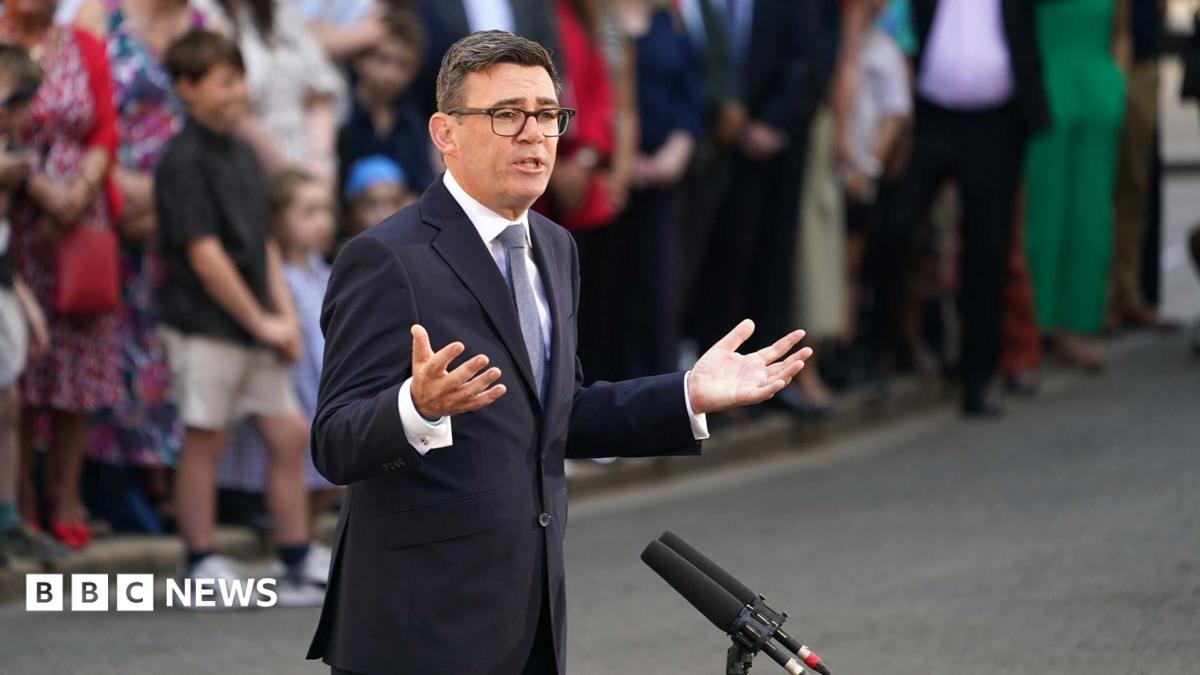
Andy Burnham has been appointed as the new UK Prime Minister following the resignation of Keir Starmer. Burnham has signaled a major shift in policy, appointing John Healey as Chancellor and promising immediate cost-of-living relief.
A New Era: Andy Burnham Takes the Helm
In a seismic shift for British politics, Andy Burnham has officially assumed the role of Prime Minister, succeeding Keir Starmer following his resignation. The transition, marked by a formal audience with King Charles at Buckingham Palace, signals a departure from the previous administration's trajectory. Burnham, often referred to as the 'King of the North,' rose to this position after winning the Makerfield by-election, having notably sat out the 2024 general election. His ascension comes during a period of significant internal disorganization within the Labour Party, following poor local election performances.
The 'Circuit-Breaker' Strategy
Upon arriving at 10 Downing Street, Burnham wasted no time in articulating his vision for the country. He explicitly called for a 'circuit-breaker for Britain,' framing his premiership as an opportunity to implement the most significant political changes in four decades. By distancing himself from the previous administration—symbolized by the removal of former loyalists like Rachel Reeves—Burnham is attempting to forge a distinct identity that addresses the frustrations that plagued his predecessor.
Immediate Economic Relief
Central to Burnham's early agenda is the appointment of John Healey as Chancellor of the Exchequer. This cabinet reshuffle is the first step in a broader strategy to stabilize the economy. Burnham has explicitly promised that his government will make immediate announcements this week aimed at providing 'breathing space' for citizens struggling with the ongoing cost-of-living crisis. This tactical pivot suggests a government focused on tangible, short-term relief as a foundation for long-term reform.
The 10-Year Vision
Beyond immediate fiscal interventions, Burnham has committed to unveiling a comprehensive 10-year 'new plan for Britain' later this year. This long-term strategy is intended to define the national direction and provide a roadmap for the country’s future. By setting a decade-long horizon, the new administration is attempting to move past the reactive governance that characterized the final months of the Starmer era, instead aiming to foster a sense of stability and renewed national purpose.
Political Implications and Future Outlook
Burnham’s rise represents a unique narrative in modern British politics—an outsider who returned to the fold to lead the party through a crisis. His ability to navigate the internal party contest following Starmer’s departure indicates a significant shift in the power dynamics of the Labour Party. As he moves forward, the success of his administration will likely hinge on his ability to balance these ambitious 40-year structural changes with the urgent, day-to-day economic needs of the electorate. Whether this 'circuit-breaker' approach can effectively consolidate his support remains the defining question of his early term.
Multiple Citing Sources