Can Burnham's casual style survive contact with No 10?
Source Entity
BBC News
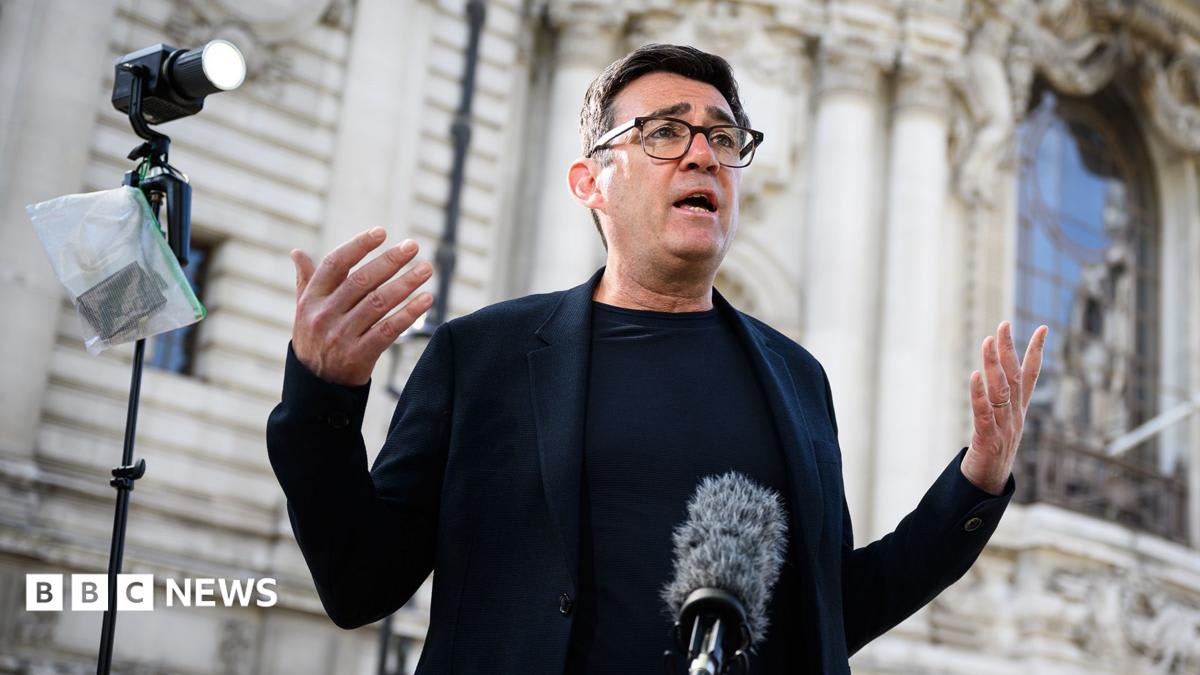
As Andy Burnham prepares to become the 59th British Prime Minister, he faces intense scrutiny over his informal political brand and policy agenda. Opposition leader Kemi Badenoch has already challenged his leadership, labeling his plans as vague and questioning his ability to handle difficult governance.
The Transition of Andy Burnham: Style and Substance
As Andy Burnham prepares to assume the office of the 59th Prime Minister of the United Kingdom this Monday, the political landscape is buzzing with speculation regarding his persona and his policy trajectory. Burnham, currently recognized as the "King of the North" and the Mayor of Greater Manchester, brings a complex reputation to Downing Street. Described by associates as a "gig-goer," an Everton season ticket holder, and a "centrist dad," he represents a break from the traditional, buttoned-up archetype of British leadership.
The Politics of Presentation
In the realm of high-stakes politics, aesthetics are rarely just about clothing; they are a manifestation of political intent. History demonstrates this clearly, from Harold Wilson’s pragmatic Gannex coat, which signaled his connection to the working class, to Margaret Thatcher’s high-shoulder suits and iconic handbags, which were carefully curated to project iron-willed authority. Burnham’s casual, approachable style—often associated with his "centrist dad" persona—will inevitably face the rigorous scrutiny of the Prime Ministerial office. Experts like Professor Rob Ford note that while male politicians often escape the intense sartorial critique faced by their female counterparts, the transition to the top job forces a shift in how a leader is perceived by the public and the media.
A Complex Political Character
Defining the "real" Andy Burnham is a task that has occupied many, with descriptions ranging from a "ruthless plotter" who orchestrated shadow revolts to a "people pleaser" with "airy fairy" plans. His background as a Cambridge graduate, former cabinet minister, and poetry lover adds layers to his public image. However, critics have frequently labeled him a "flip-flopper," suggesting that his political identity is fluid. As he prepares for the premiership, he must reconcile these disparate labels while leading a nation that is currently polarized.
The Challenge from the Opposition
Conservative leader Kemi Badenoch has already set the tone for the upcoming parliamentary sessions, framing Burnham as a leader who lacks a clear grasp of the nation’s priorities. In a pointed critique, Badenoch challenged his "most significant change moment in 40 years" pledge, vowing that the Conservative Party will not provide him with a "blank cheque." She has signaled that the opposition intends to hold him accountable, arguing that his platform of devolving power and cross-party cooperation may falter when faced with the necessity of making tough, unpopular decisions.
Policy Goals and Governance Hurdles
Burnham’s stated agenda includes a significant shift toward decentralization, aiming to transfer power from Westminster to local authorities. While this aligns with his history as a regional mayor, the implementation will test his ability to navigate the internal politics of the Labour Party. Badenoch’s skepticism centers on whether Burnham has the fortitude to "face down" his own MPs when faced with difficult legislative tasks. The tension between his desire to end "point-scoring" in Westminster and the reality of an aggressive opposition suggests that his honeymoon period may be brief.
Conclusion: The Road Ahead
As the 56-year-old takes the reins of government, the convergence of his personal brand and his legislative ambition will define his early tenure. Whether he can successfully transition from the "King of the North" to a unifying national leader remains the central question. His success will depend not only on his ability to deliver on his five key pledges but also on his capacity to survive the scrutiny of a political system that is currently skeptical of his "airy fairy" approach to governance.