Antares raises $470M to build nuclear reactors for the U.S. military
Source Entity
Tim De Chant
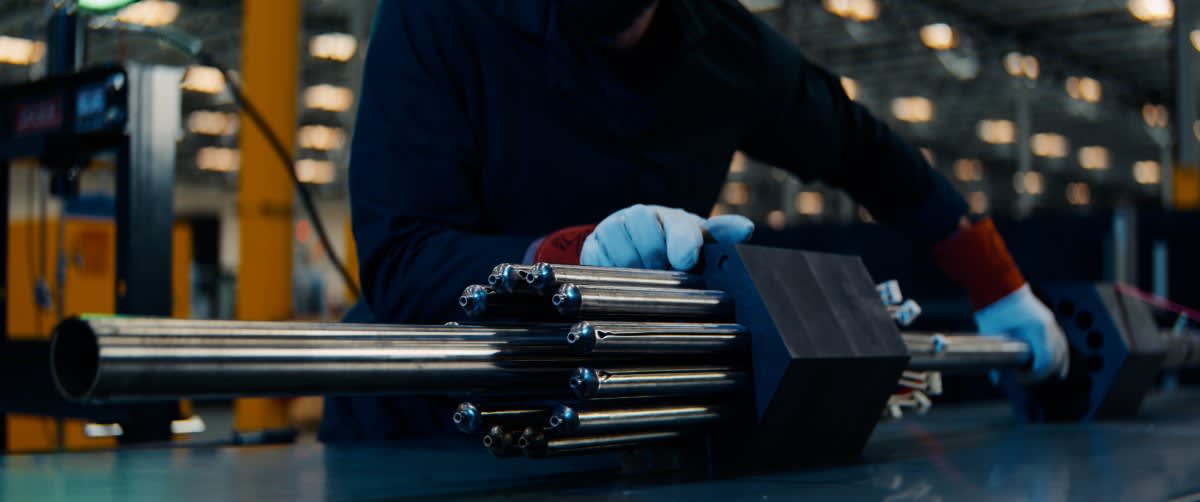
Nuclear startup Antares has secured $470 million in Series C funding to develop small modular reactors for U.S. Air Force bases. These reactors utilize TRISO fuel technology to provide localized power ranging from 100 kW to 1 MW.
The Rise of Compact Nuclear Power
Nuclear power startup Antares has successfully closed a $470 million Series C funding round, marking a significant milestone in the development of small modular reactors (SMRs) designed specifically for U.S. military applications. This substantial injection of capital—comprised of $370 million in equity and $100 million in debt—positions the company to deploy localized energy solutions to U.S. Air Force bases, addressing the critical need for resilient, off-grid power infrastructure.
Investor Confidence and Market Trends
The funding round, led by Paradigm and Caffeinated Capital with contributions from notable firms like Point72 Ventures and Industrious Ventures, highlights a broader financial pivot toward advanced nuclear energy. This surge in venture interest is not isolated; it is being driven by the dual pressures of an AI-driven data center expansion and the urgent requirement for reliable, carbon-free energy sources that can operate independently of traditional, vulnerable power grids.
Technical Specifications and Utility
Antares is focusing its engineering efforts on reactors capable of producing between 100 kilowatts and 1 megawatt of electricity. To put this capacity into perspective, a single 1-megawatt unit is sufficient to power approximately 750 homes. By scaling reactors to this micro-level, the military can achieve energy security at individual installations, ensuring that mission-critical operations remain powered regardless of external grid failures or cyber threats.
The Role of Advanced Materials
A core component of the Antares technological strategy is the utilization of TRISO (Tri-structural Isotropic) fuel. This advanced fuel type encapsulates uranium within protective layers of carbon and ceramic, significantly enhancing the safety profile of the reactor. By preventing the release of radioactive fission products even under extreme temperatures or physical damage, TRISO-based reactors are uniquely suited for deployment in sensitive or remote military environments where safety and durability are paramount.
Strategic Implications for National Security
The move to integrate SMRs into military bases represents a strategic shift toward energy decentralization. By moving away from reliance on centralized utility grids, the U.S. Air Force can enhance its operational readiness. This project serves as a pilot for how modular nuclear technology can be adapted to support critical infrastructure across the country, potentially paving the way for wider adoption in commercial and industrial sectors that require high-density, reliable power.
Future Outlook
Looking ahead, the success of the Antares project will likely serve as a bellwether for the advanced nuclear industry. As the demand for clean, consistent base-load power continues to climb, the ability of startups to successfully deploy modular, safe, and efficient reactors will dictate the speed at which nuclear energy integrates into the modern smart grid. With the support of major venture firms, Antares is well-positioned to lead the transition toward a more resilient, decentralized energy future.