The computer that helped win World War II
Source Entity
Hacker News
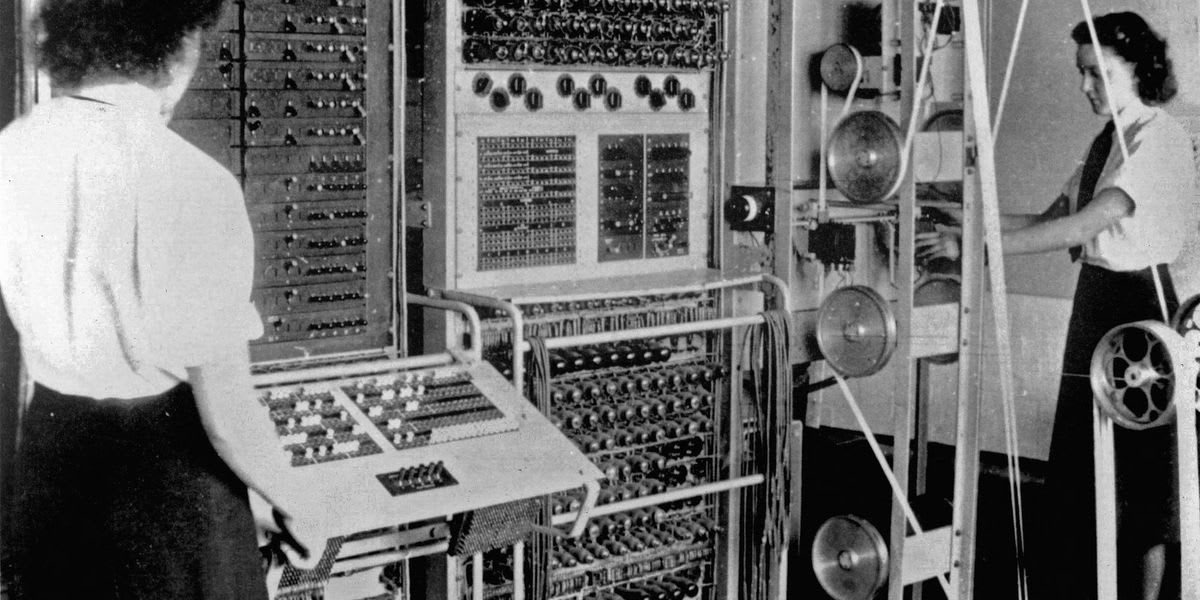
During WWII, the discovery of a sophisticated German encryption system led engineer Tommy Flowers to build Colossus. This machine became the world's first large-scale programmable electronic digital computer, proving essential in breaking Nazi codes.
The Birth of Electronic Computing: Breaking the 'New Music'
In the summer of 1941, the course of World War II intelligence shifted dramatically when a British radio operator intercepted a rhythmic, high-speed binary signal. Unlike the familiar, predictable patterns of the German Enigma machine—a device patented in 1920—this "strange new music" signaled the deployment of a far more sophisticated encryption and transmission system. This discovery forced British intelligence to confront a technological leap that rendered their existing codebreaking methods insufficient, necessitating a radical shift in engineering strategy.
The Limitations of Enigma and the Rise of Colossus
While Alan Turing had achieved significant success in deciphering Enigma-based communications, the new German system required a machine capable of processing data at speeds and complexities that mechanical devices could not match. Enter Tommy Flowers, an engineer with a background in telephone switching systems. Drawing on his previous collaboration with Turing on codebreaking equipment, Flowers undertook the Herculean task of designing a solution that moved beyond the limitations of purely electromechanical hardware.
Engineering a Digital Revolution
To meet the challenge, Flowers built Colossus, recognized today as the world’s first large-scale programmable electronic digital computer. By utilizing vacuum tubes rather than mechanical switches, Colossus achieved a level of processing speed that was previously unimaginable. This transition from mechanical to electronic computation was not merely a tactical victory for the Allied forces; it served as the foundational moment for the modern digital age, proving that electronic logic could tackle the most complex cryptographic puzzles of the era.
The Strategic Impact on WWII
The deployment of Colossus provided the Allies with a decisive advantage in the European theater. By successfully breaking the high-level German ciphers, British intelligence gained unprecedented insight into the strategic movements and logistical planning of the German military. This intelligence was instrumental in shortening the war and saving countless lives, demonstrating that the battle for information was as critical as the battles fought on the front lines.
A Legacy of Innovation
The development of Colossus remains a testament to the power of interdisciplinary collaboration between mathematicians like Turing and engineers like Flowers. This historical milestone highlights how existential threats can act as an accelerant for technological progress. The Colossus project not only changed the trajectory of the Second World War but also laid the conceptual and physical groundwork for the electronic computers that would eventually define the 20th and 21st centuries.
Conclusion
The story of Colossus is a powerful reminder of the intersection between human ingenuity and technological necessity. From the interception of a "rhythmic warble" in 1941 to the construction of the world's first electronic computer, the efforts of those involved in the project fundamentally altered the landscape of modern science. As we continue to advance in fields like quantum computing and artificial intelligence, the legacy of Flowers and his team remains the cornerstone of our digital heritage.