Anthropic just launched tools to show companies what their AI spending is buying
Source Entity
Tim Fernholz
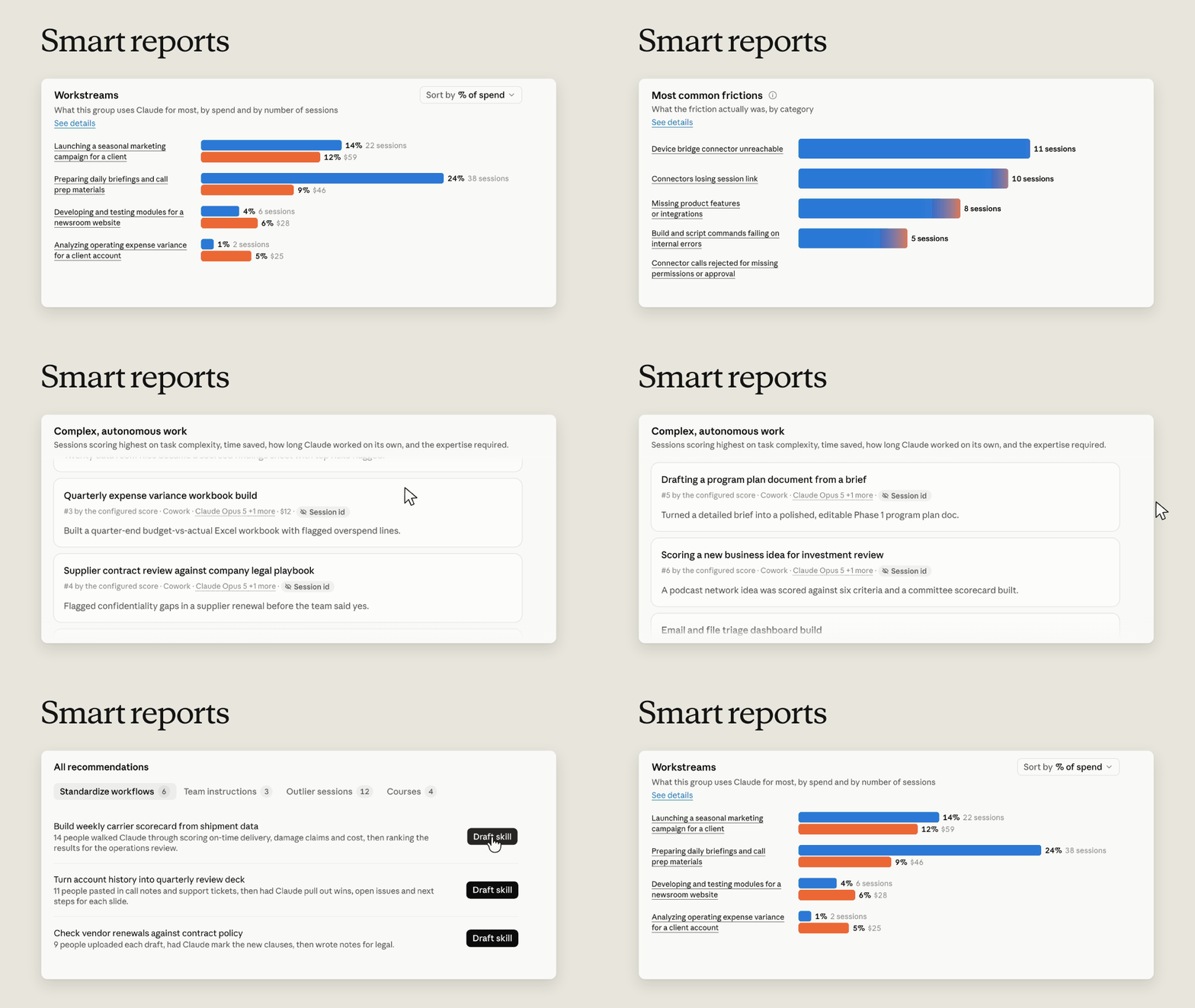
Anthropic is introducing granular analytics tools for enterprise customers to track AI spend and ROI as it prepares for a potential IPO. Despite strong revenue growth, the company faces scrutiny regarding its complex share voting structure ahead of public listing.
Anthropic's Strategic Pivot Toward Enterprise Transparency
Anthropic has officially launched a new suite of reporting tools designed to provide enterprise clients with unprecedented visibility into their AI expenditures. By allowing managers to track token spend alongside specific project outputs, production metrics, and workflow bottlenecks, Anthropic is addressing a critical pain point in the corporate adoption of generative AI: proving return on investment (ROI). This move is particularly timely, as the company prepares for an anticipated initial public offering (IPO) and seeks to demonstrate long-term fiscal sustainability to prospective shareholders.
Financial Performance and Customer Retention
The timing of these tools coincides with a period of robust financial performance for the frontier lab. Recent disclosures indicate that Anthropic recorded an operating profit in the second quarter, a significant milestone for a company in the capital-intensive AI sector. Furthermore, the firm reported a staggering 900% net revenue retention, meaning that existing customers increased their spending ninefold between Q3 2025 and Q3 2026. This data suggests that products like Claude Code are effectively driving deep integration within enterprise workflows, moving beyond experimental usage into essential business infrastructure.
The Data-Driven Enterprise
The new reporting suite bridges the gap between raw computational consumption and tangible business value. By integrating internal analytics with employee feedback, Anthropic is offering a comprehensive dashboard that contextualizes AI spend. This granular approach is designed to mitigate 'AI fatigue'—the phenomenon where organizations pull back on spending due to an inability to quantify the impact of LLM integration. By proving that their models are not just cost centers but drivers of efficiency, Anthropic is securing its place as a cornerstone of the modern enterprise tech stack.
Governance and Valuation Concerns
Despite this operational success, Anthropic's path to the public markets is not without controversy. Prominent valuation experts, including observers from NYU, have voiced significant concerns regarding the company’s internal governance. Specifically, the firm's share voting structure has been criticized for being overly concentrated, with some analysts drawing extreme comparisons to authoritarian regimes to highlight the lack of shareholder democracy. This governance hurdle, combined with valuation projections that remain well below the $1.5 trillion mark even in optimistic scenarios, suggests that investors may demand structural concessions before the IPO proceeds.
The Road to IPO
As Anthropic moves toward a public listing, the tension between its rapid revenue growth and its unconventional corporate structure will likely define the narrative. The company is successfully proving that its models provide substantial value to enterprise users, yet it must now prove that its governance model is compatible with the rigors of public equity markets. Future trends will likely see Anthropic doubling down on transparency tools to maintain its high retention rates, while simultaneously facing pressure from institutional investors to modernize its voting architecture. The coming months will be a litmus test for whether the market values the company’s technological lead over its complex internal controls.