Assam’s out-of-school children dream of becoming MLAs, teachers
Source Entity
India Latest News: Top National Headlines Today & Breaking News | The Hindu
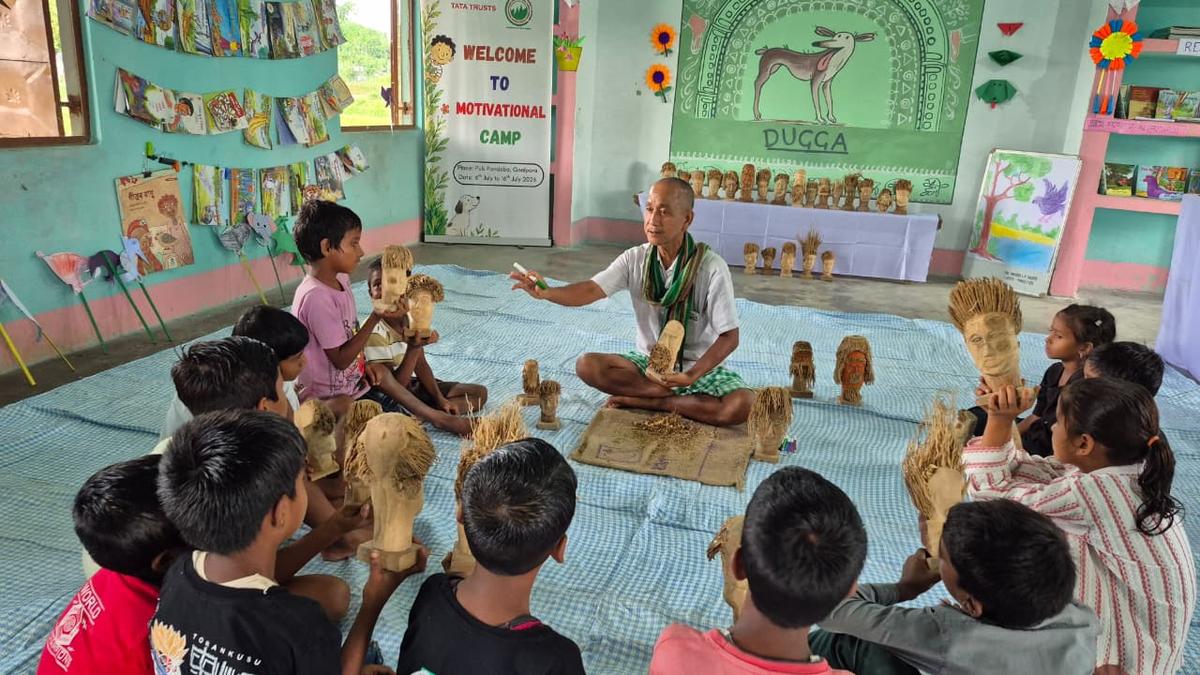
Forty-five out-of-school children in Assam participated in a series of 10-day motivational camps, sparking ambitions to become teachers and legislators to drive positive change in their communities.
Empowering the Marginalized: Analyzing the Impact of Motivational Interventions in Assam
The recent initiative in Assam, where 45 out-of-school children participated in a series of 10-day motivational camps, represents a critical intersection between social welfare and psychological empowerment. For children who have drifted away from the formal education system, the barrier to reentry is often not just financial or logistical, but psychological. By focusing on "motivation" rather than immediate curriculum, these camps address the internal deficit of hope and ambition that often accompanies systemic poverty. The fact that these children are now envisioning themselves as leaders and educators suggests that the program successfully shifted their self-perception from being victims of circumstance to potential agents of change.
The Socio-Economic Context of Out-of-School Children
To understand the significance of these camps, one must look at the broader challenges facing education in Assam. The state often grapples with geographic isolation, seasonal flooding, and economic instability, all of which contribute to high dropout rates. Children in these regions frequently enter the workforce prematurely to support their families, leading to a cycle of low literacy and limited economic mobility. When children are removed from a classroom environment, they lose not only academic knowledge but also the social framework that encourages dreaming of a professional future. These motivational camps act as a bridge, reconnecting marginalized youth with the idea that professional success is an attainable goal.
The Drive Toward Political Representation
One of the most striking outcomes of these camps is the aspiration of some participants to become Members of the Legislative Assembly (MLAs). This specific ambition is deeply telling; it indicates that the children recognize the systemic nature of their struggles. By aspiring to enter politics, they are not merely seeking a job, but are expressing a desire to influence the policy-making processes that govern their lives and the lives of their peers. This suggests that the motivational training encouraged critical thinking about governance and the role of leadership in community development, transforming their frustration with their current status into a constructive political ambition.
The Cycle of Pedagogy and Community Impact
Equally significant is the desire among the participants to become teachers. Education is often viewed as the primary tool for social liberation, and for a child who has been "out-of-school," the teacher represents the gatekeeper to a better life. The desire to "impact lives around them" reveals a strong sense of empathy and a commitment to communal growth. This "pay-it-forward" mentality is a powerful indicator of the camp's success; it shows that the children do not just want to escape their current circumstances, but want to return to their communities as mentors to ensure others do not face the same educational voids.
Future Trends and Policy Implications
Looking forward, the success of these small-scale motivational interventions could signal a shift in how the state approaches the "out-of-school" crisis. Rather than relying solely on infrastructure and enrollment drives, there is a growing need for psychosocial support systems that prepare children mentally for the rigors of returning to school. If these 45 children are successfully integrated back into the education system, they could serve as peer ambassadors, proving to other marginalized youth that their backgrounds do not define their destinations. This model of "aspiration-first" intervention could potentially be scaled across other districts in Assam to tackle chronic absenteeism.
Conclusion
While the number of participants—45 children—is relatively small, the qualitative shift in their aspirations is profound. By fostering dreams of leadership and education, these motivational camps have provided more than just a temporary distraction; they have provided a roadmap for social mobility. The transition from being a statistic of the "out-of-school" population to aspiring to be a teacher or an MLA is a testament to the power of targeted emotional and motivational support in breaking the cycle of poverty.
Verification Required?