Australian PM caught making genital joke with climate minister at COP31 - watch
Source Entity
PRISHA PATNAIK
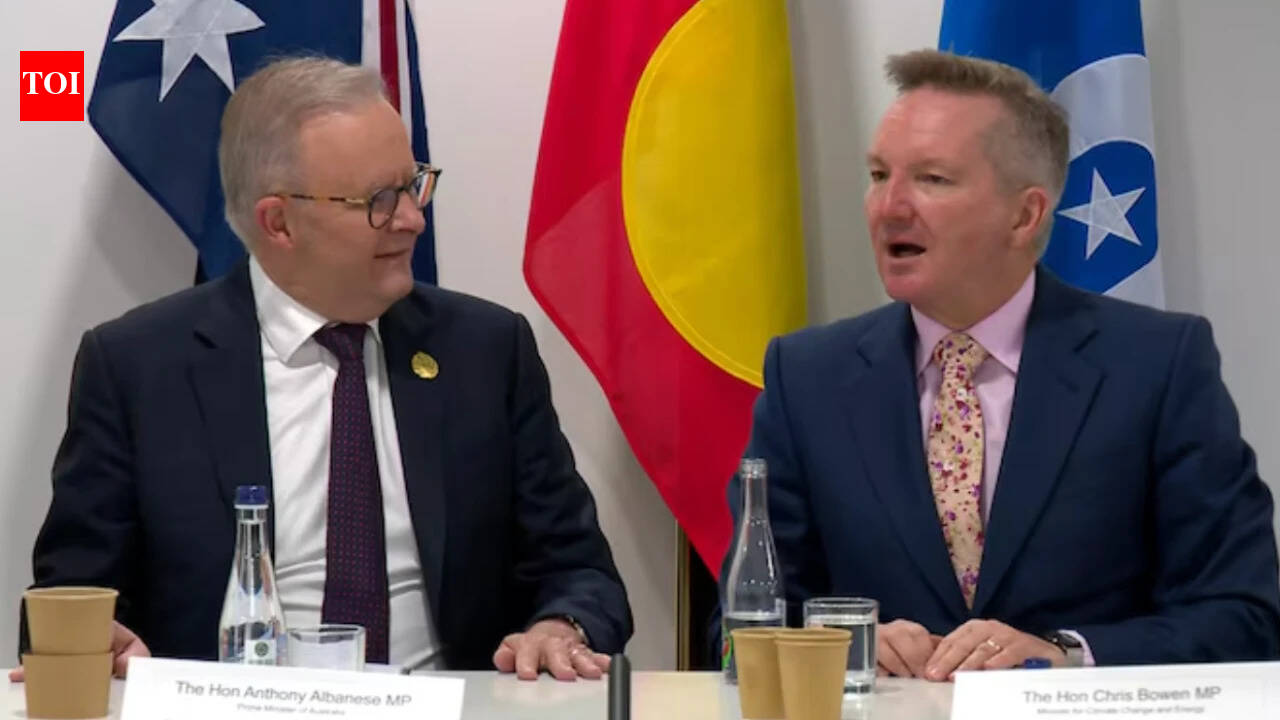
Australian PM Anthony Albanese and Climate Minister Chris Bowen were captured on a hot mic at COP31 in Türkiye making an inappropriate joke regarding phone radiation and male anatomy. The incident has drawn sharp criticism from the Coalition, who labeled the exchange as unprofessional and inappropriate.
Hot Mic Incident at COP31 Sparks Political Controversy
During the recent COP31 climate summit held in Antalya, Türkiye, an unintended breach of professional decorum occurred involving Australian Prime Minister Anthony Albanese and Minister for Climate Change and Energy Chris Bowen. As the two high-ranking officials prepared for a business roundtable focused on renewable energy investment, a nearby news camera microphone captured a private, lighthearted conversation. The exchange, which focused on a joke regarding phone radiation and male anatomy, was subsequently broadcast by Channel 7, bringing a moment of private levity into the public spotlight.
The Context of International Diplomacy
International summits like COP31 are high-pressure environments where global leaders and ministers are under constant scrutiny. While such gatherings are designed for serious geopolitical negotiation regarding climate targets and energy transitions, the reality of these events involves long hours and significant downtime. The capture of this exchange highlights the persistent challenge of modern media coverage, where the ubiquity of recording technology means that 'private' moments are increasingly susceptible to becoming public fodder, regardless of the setting or the intent of the participants.
Political Fallout and Opposition Response
The political ramifications of this incident were swift. The Australian Coalition, currently in opposition, has characterized the remarks as 'weird and gross.' By framing the language used by the Prime Minister and the Climate Minister as unprofessional, the opposition aims to cast doubt on the seriousness of the government's demeanor on the world stage. This type of criticism is a standard feature of political discourse, where personal lapses in judgment are often leveraged to question the broader competence or professional standards of an administration.
Media Ethics and the 'Hot Mic' Phenomenon
This incident serves as a modern case study in media ethics and the 'hot mic' phenomenon. In the digital age, news organizations face the constant tension between broadcasting content that is in the public interest and respecting the privacy of individuals, even those in public office. While the broadcast of this exchange has provided fodder for political debate, it also raises questions about the threshold for what constitutes 'newsworthy' content when it involves private conversations that were never intended for public consumption.
Broader Implications for Government Image
Ultimately, this event underscores the precarious nature of public life. For leaders like Albanese and Bowen, the incident serves as a reminder that their public image is subject to the scrutiny of both political rivals and the media landscape. As the Australian government continues to navigate complex climate policies and international relations, such distractions—however minor in the grand scheme of climate policy—can complicate their narrative and provide ammunition for political opponents seeking to highlight perceived lapses in decorum.