They Decide, Revoke, Reimpose: Belgium PM Takes Dig At Trump On Tarrifs
Source Entity
NDTV News Search Records Found 1000
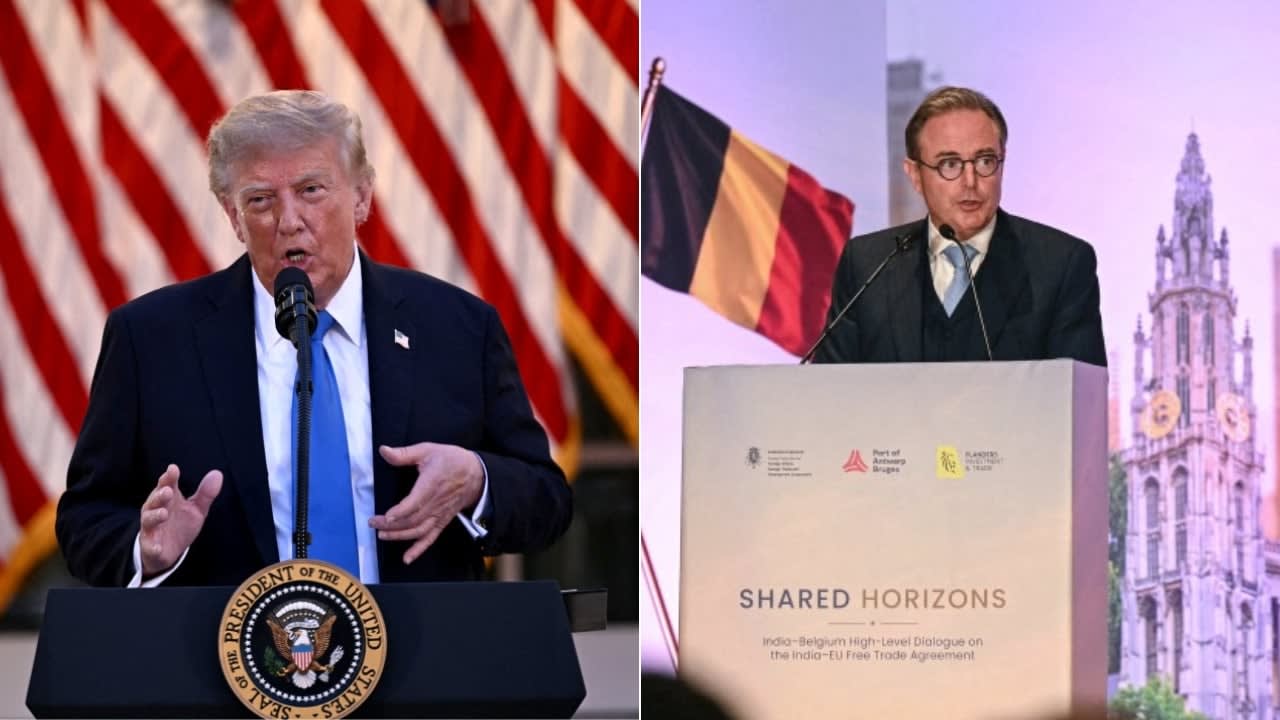
Belgian PM Bart De Wever acknowledged that India’s prior warnings regarding trade dependencies on China were correct. During his visit to India, he advocated for an India-EU Free Trade Agreement to counter global economic coercion and bolster trade resilience.
A Strategic Realignment: India and Belgium Forge Deeper Ties
Acknowledging Past Missteps
Belgian Prime Minister Bart De Wever’s recent visit to India has served as a critical moment for European geopolitical reflection. In candid remarks made during his bilateral engagements in New Delhi, De Wever admitted that Europe is experiencing a "rude awakening" regarding its over-reliance on single-source trade dependencies. Crucially, he noted that Prime Minister Narendra Modi had previously warned European leaders about these very risks—warnings that, at the time, were not fully heeded. This acknowledgment signals a shift in the European diplomatic perspective, moving toward a more cautious and strategic approach to global trade.
The Weaponization of Dependency
At the heart of the dialogue between the two leaders is a shared concern over the weaponization of economic dependencies. De Wever highlighted that both India and Europe face similar challenges from dominant power blocks that seek to exert influence through economic leverage. By identifying these dependencies as a shared vulnerability, the Belgian Prime Minister has effectively moved the India-Belgium relationship from a purely commercial partnership to a strategic alliance focused on collective economic security.
The Port of Antwerp-Bruges: A Gateway to Europe
Beyond the geopolitical discourse, the visit focused on tangible economic infrastructure. Prime Minister De Wever pitched the Port of Antwerp-Bruges as the primary gateway for Indian exports into the European market. This logistics hub is positioned to facilitate growth in high-value sectors, including diamonds, pharmaceuticals, food processing, and the burgeoning green hydrogen industry. By strengthening this maritime link, both nations aim to create a more robust supply chain that can withstand global volatility.
Countering Arbitrary Protectionism
During the high-level dialogue in Mumbai, which included Union Commerce Minister Piyush Goyal and Maharashtra Chief Minister Devendra Fadnavis, De Wever took a sharp, veiled swipe at the current trend of protectionist trade policies. Referring to the "arbitrary" nature of recent tariff impositions—specifically alluding to policies associated with the US administration—he argued that such volatility necessitates a more stable framework. The proposed India-EU Free Trade Agreement (FTA) is framed as the antidote to this unpredictability, aiming to eliminate or reduce tariffs on over 95% of goods.
Future Implications for the India-EU FTA
The push for the India-EU FTA is not merely about market access; it is a structural play to ensure economic autonomy. Minister Piyush Goyal emphasized that the agreement would create widespread opportunities for MSMEs, startups, farmers, and women entrepreneurs. As the two regions negotiate, the focus remains on creating a resilient economic bloc that can resist coercion. If successful, this partnership could set a global precedent for how democratic nations can insulate themselves from the whims of unilateral trade barriers and geopolitical bullying.
Conclusion
The diplomatic exchanges between Prime Minister De Wever and Indian leadership mark a pivotal transition in EU-India relations. By validating India’s foresight and actively working toward a comprehensive FTA, Belgium is positioning itself as a key partner in India’s quest for global trade diversification. This cooperation, rooted in the lessons of recent economic history, suggests a future where both India and Europe prioritize strategic stability over fragile, state-controlled supply chains.
Multiple Citing Sources
Verification Required?