From shorshe ilish to aloo posto: Why Bengali food tastes different when ground on a shil nora
Source Entity
The Indian Express
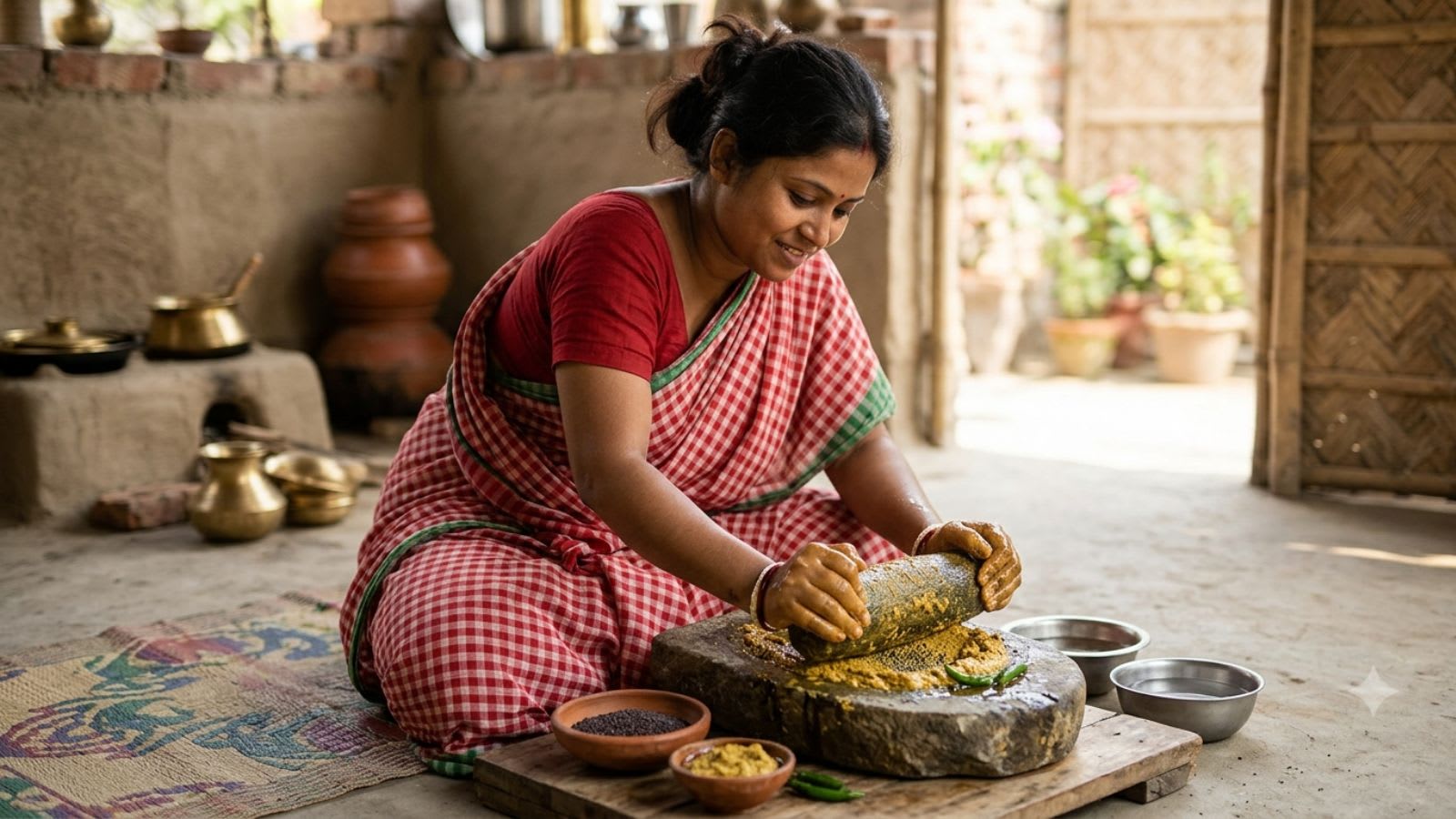
The traditional Bengali shil nora grinding stone offers a distinct flavor profile for dishes like shorshe ilish that modern mixer-grinders cannot replicate. Despite the convenience of modern appliances, culinary experts emphasize the superior texture and taste achieved through manual stone grinding.
The Culinary Soul of Bengal: Shil Nora vs. Modern Appliances
In the contemporary Bengali kitchen, the high-speed mixer-grinder has effectively replaced manual labor, offering an unparalleled level of convenience. As lifestyles accelerate and the demand for time-efficient cooking grows, the 'mixie' has become the default tool for grinding spices, preparing mustard pastes for shorshe ilish, and creating posto bata for aloo posto. While these appliances are undeniably effective at pulverizing ingredients, a growing segment of culinary enthusiasts and traditionalists argue that they fundamentally alter the chemical and physical integrity of the food.
The Mechanics of Taste: Why Texture Matters
The shil nora—a traditional flat grinding stone paired with a hand-held stone roller—operates on a principle of slow friction and crushing rather than the high-speed centrifugal force of a mixer blade. According to cookery columnist and author Rukma Dakshy, this manual process yields a sharper, more rounded flavor, particularly when it comes to mustard paste. The slow crushing motion ensures that the essential oils are released gradually and integrated into the paste without being overheated by the rapid friction of metal blades.
Preserving Culinary Heritage
Beyond the mere mechanics of grinding, the shil nora represents a connection to a slower, more deliberate era of Bengali cooking. When preparing posto (poppy seed paste), the stone ensures a specific, fine consistency that is difficult to replicate with electric blades, which often leave the seeds slightly gritty or uneven. The shil nora allows the cook to exert control over the texture, which is critical for the delicate balance required in traditional dishes like dal bora.
The Hidden Cost of Convenience
While the mixer-grinder is an indispensable companion in the modern household, its reliance on speed often comes at the cost of nuance. The heat generated by high-speed blades can sometimes 'cook' the spices during the grinding process, potentially muting the volatile aromatics that are essential to authentic Bengali flavors. This trade-off between convenience and quality is a central tension in modern Indian home cooking, where time-saving technology often clashes with the preservation of traditional flavor profiles.
Future Trends in Traditional Cooking
As interest in 'slow food' and authentic regional cuisines continues to rise, there is a visible trend toward reclaiming traditional tools. We are likely to see a shift where home cooks reserve the shil nora for special occasions or signature dishes where the quality of the spice paste is paramount. This hybrid approach—utilizing modern appliances for daily tasks while retaining traditional methods for flavor-critical components—seems to be the path forward for preserving the authentic taste of Bengali cuisine in an increasingly automated world.