Binance, Deribit revoke SignalPlus API keys after fake Teams invite attack
Source Entity
Cointelegraph by Nate Kostar
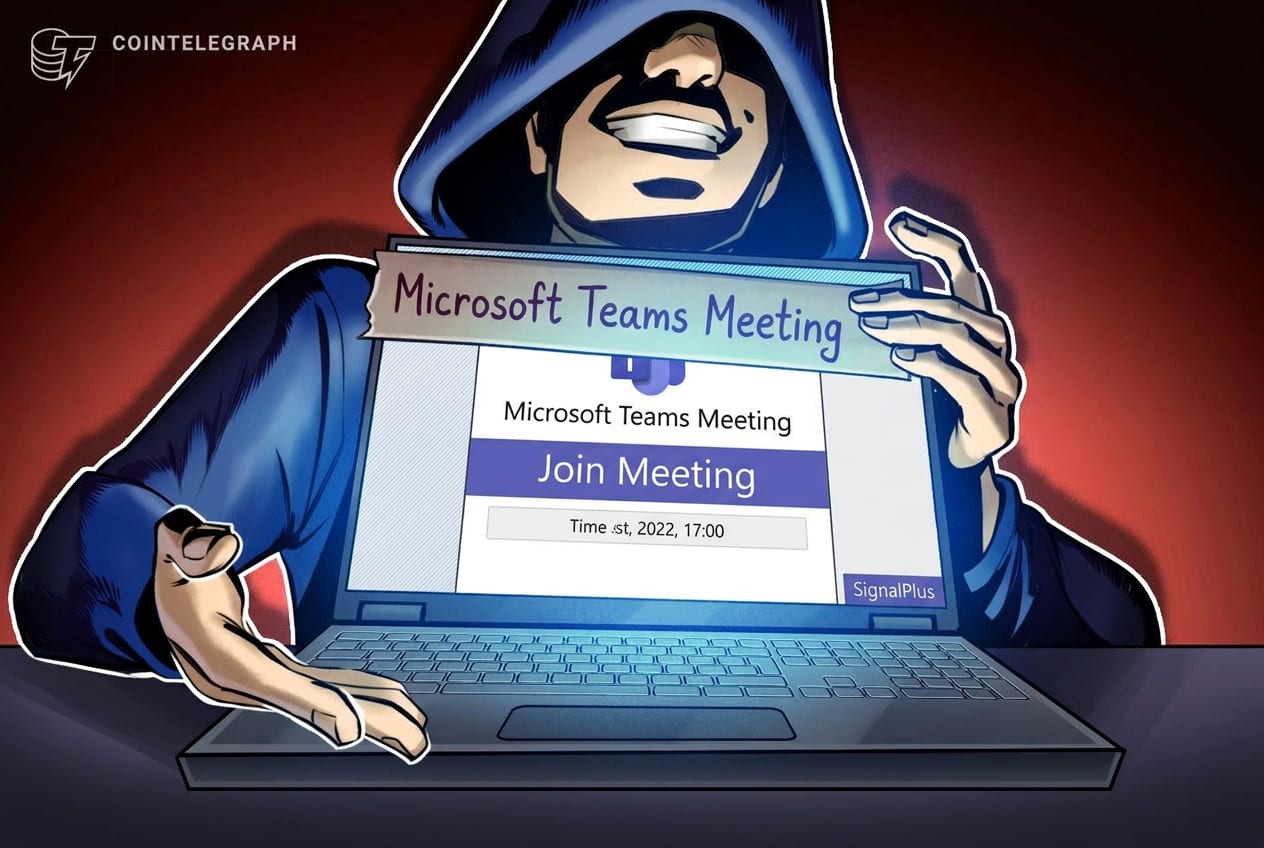
Binance and Deribit have revoked API keys for SignalPlus following a security breach involving a fake Microsoft Teams invite. SignalPlus has pledged to reimburse the less than $82,000 lost, while exchanges urge heightened security for third-party integrations.
Security Breach Targets SignalPlus API Infrastructure
A significant security incident recently struck the cryptocurrency derivatives platform SignalPlus, leading to a coordinated response from major exchanges Binance and Deribit. The breach, which was initiated via a malicious Microsoft Teams invite sent to an engineer, allowed attackers to gain unauthorized access to the platform's infrastructure. While the immediate financial impact was relatively contained, with reported losses totaling less than $82,000, the incident highlights the ongoing vulnerabilities inherent in interconnected trading ecosystems.
The Anatomy of the Attack
The attack vector—a compromised engineer’s computer via a fake Teams invite—serves as a stark reminder that even sophisticated financial technology platforms remain susceptible to classic social engineering tactics. By gaining entry to a developer's workstation, the threat actors were able to intercept or manipulate API keys that serve as the bridge between SignalPlus and major exchanges. This incident underscores a critical security reality: the weakest link in a decentralized trading network is often the human element within the third-party service provider.
Exchange Response and System Integrity
In the wake of the discovery, both Binance and Deribit acted swiftly to revoke all API keys associated with SignalPlus. It is important to emphasize that both exchanges confirmed their internal systems remained entirely unaffected by the breach. By preemptively severing the connection, the exchanges sought to prevent further unauthorized trading or data exposure. For customers of Deribit, this resulted in an immediate cessation of automated trading, monitoring, and position management capabilities, illustrating the high cost of third-party security failures.
The Growing Risks of Third-Party Integration
Binance co-founder Yi He issued a stern warning following the breach, urging all third-party platforms integrated with the exchange to conduct rigorous security audits. This call to action reflects a broader industry trend where exchanges are increasingly wary of the risks posed by external tools that hold elevated permissions. As institutional traders rely more heavily on platforms like SignalPlus to manage complex options strategies across multiple venues, the potential for a cascading failure increases, making security hygiene a paramount concern for the entire crypto sector.
Implications for Institutional Crypto Trading
SignalPlus occupies a niche but vital role in the crypto market by providing infrastructure for derivatives, specifically options trading. Because these tools facilitate high-frequency and institutional-grade trading, any disruption to their services has immediate consequences for market participants. The company’s pledge to reimburse the losses is a necessary step toward maintaining market trust, but the incident will likely force a industry-wide re-evaluation of how API keys are stored, rotated, and monitored by third-party intermediaries.
Future Trends in Cybersecurity
Moving forward, we can expect exchanges to implement stricter compliance standards for third-party integrations. This will likely include mandatory multi-factor authentication for API management, automated monitoring for anomalous trading patterns, and more frequent security certification requirements. The SignalPlus breach serves as a case study for why decentralized finance must pair its innovative trading capabilities with centralized, ironclad cybersecurity protocols to prevent future compromises.