Bombay High Court to hear PIL against Marathi rule for drivers
Source Entity
India Latest News: Top National Headlines Today & Breaking News | The Hindu
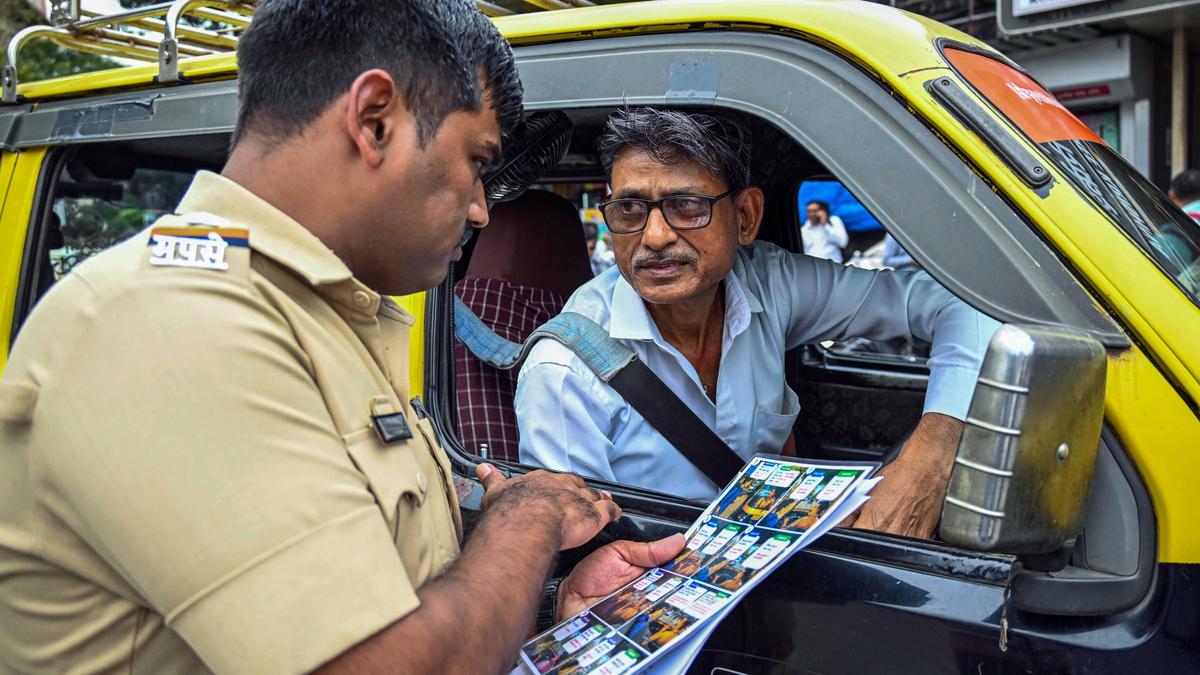
Four app-based drivers have challenged a new Maharashtra mandate requiring taxi and auto drivers to possess working knowledge of Marathi. The legal petition argues the rule violates constitutional rights and conflicts with the central Motor Vehicles Act, 1988.
Legal Challenge to Maharashtra’s Marathi Language Mandate
The Core Conflict
A significant legal battle is brewing in the Bombay High Court following the Maharashtra government’s August 12 notification, which amended the Maharashtra Motor Vehicles Rules, 1989. The amendment mandates that all auto-rickshaw, taxi, and app-based cab drivers must possess a working knowledge of the Marathi language to secure or renew their licenses and permits. In response, four Mumbai-based Uber drivers have filed a Public Interest Litigation (PIL) to challenge the constitutionality of this requirement, arguing it creates an arbitrary barrier to employment.
Constitutional and Legal Arguments
The petitioners, represented by advocate Vivek Shukla, contend that this notification infringes upon fundamental rights guaranteed by the Constitution of India. Specifically, the plea cites Article 14 (right to equality), Article 19 (freedom to carry on trade and profession), and Article 21 (right to life). By imposing language-based restrictions on professional licensing, the petitioners argue the state is effectively discriminating against citizens from other states, labeling them as outsiders and limiting their mobility and economic freedom under Articles 19(1)(d) and 19(1)(e).
Conflicts with Central Legislation
A critical component of this legal challenge is the alleged conflict with the Motor Vehicles (MV) Act, 1988. As a Central Act, the MV Act provides a uniform regulatory framework for transport across India. The petitioners argue that the state government’s amendment oversteps its authority by introducing criteria that are not present in the central legislation, potentially creating a legal inconsistency that the judiciary will now have to resolve.
The Ground Reality: Language and Service
While the government has established training centers and helplines to assist drivers in meeting this new requirement, the implementation has had unintended consequences on the ground. Reports indicate that instead of improving customer service, some drivers are utilizing their newly acquired Marathi vocabulary to craft elaborate excuses to refuse rides. Phrases such as "mala jevayla jayche aahe" (I need to eat) or "mala gas bharaychay" (I need to refill CNG) are reportedly being used by drivers to decline passengers, creating a paradoxical situation where the language policy intended to aid commuters is being used to bypass them.
Future Implications and Judicial Outlook
The PIL is scheduled for mention before a bench led by Acting Chief Justice Ravindra Ghuge. The outcome of this case will set a significant precedent for how states can regulate professional requirements for service providers. If the court upholds the rule, it could encourage other states to introduce similar linguistic mandates for public transport, potentially fragmenting the national labor market. Conversely, a strike-down would reinforce the primacy of central transport laws and protect the rights of migrant workers to operate freely across state lines. The judiciary’s balancing act between regional linguistic identity and national constitutional mandates remains the focal point of this developing story.
Multiple Citing Sources
Verification Required?