Uttarakhand BJP chief defends ‘purification’ of Congress president Mallikarjun Kharge’s rally venue
Source Entity
India Latest News: Top National Headlines Today & Breaking News | The Hindu
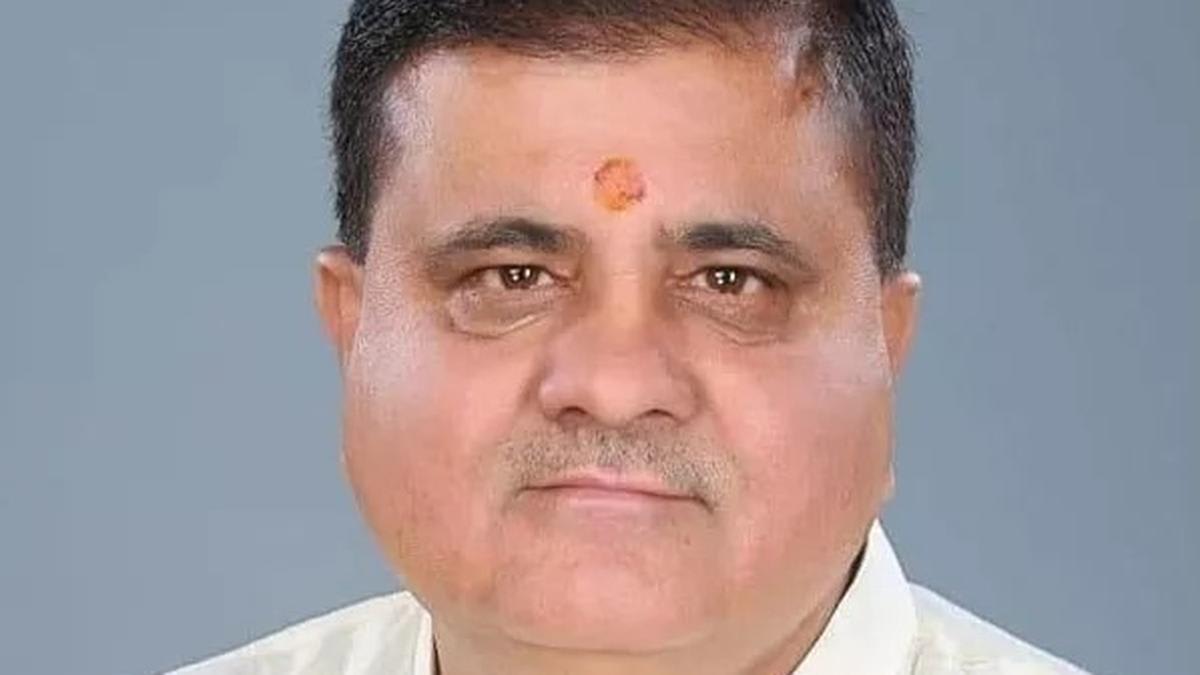
Uttarakhand BJP President Mahendra Bhatt has defended a controversial purification ritual performed at a site previously used by Congress leader Mallikarjun Kharge. The incident has triggered a heated political standoff, with the Congress party labeling the act as an anti-Dalit display.
The Haldwani Ritual Controversy: A Clash of Ideologies
The political landscape in Uttarakhand has been ignited by a contentious incident following the 'Vijay Shankhnaad' rally held by Congress president Mallikarjun Kharge on August 8, 2026. The subsequent performance of a shuddhikaran havan (purification ritual) by members of the Shri Ram Sena at the Ramlila ground has sparked a fierce debate over religious symbolism, political decorum, and social sensitivity in public spaces.
The BJP's Stance and Justification
Uttarakhand BJP president Mahendra Bhatt has emerged as a vocal defender of the ritual. His justification centers on the claim that the venue, located near a Ram temple, was 'polluted' by slogans raised during the opposition rally. By framing the act as a defensive measure for sanctity rather than a political attack, the BJP is attempting to align its actions with the sentiments of its core constituency, emphasizing the protection of religious sites from perceived ideological desecration.
Congress Allegations of Discrimination
Conversely, the Congress leadership, including Mallikarjun Kharge, Kumari Selja, and PCC chief Ganesh Godhiyal, has characterized the purification ritual as a targeted act of caste-based prejudice. By labeling the event as an 'anti-Dalit' display, the Congress is elevating the incident beyond a local dispute into a national narrative regarding social justice and the marginalization of Dalit leadership within the Indian political framework.
The Intersection of Religion and Politics
This incident highlights the increasingly blurred lines between religious practice and political mobilization in India. When political rallies are held in proximity to religious landmarks, the potential for friction is high. The fact that a shuddhikaran ritual was deemed necessary by activists suggests that the political discourse has reached a point where ideological opposition is being treated as a form of ritual impurity, a trend that threatens to further polarize the electorate.
Implications for Political Discourse
As Mr. Kharge continues to demand legal action against those who performed the ritual, the incident underscores the fragility of political civility. The demand for arrests signals a shift toward using judicial and administrative mechanisms to resolve ideological conflicts, which may set a precedent for how future political gatherings are managed in sensitive areas.
Conclusion: A Path Toward Polarization
The Haldwani incident serves as a microcosm of the broader ideological battle currently unfolding in Indian politics. With both major parties doubling down on their positions—the BJP defending the sanctity of religious spaces and the Congress highlighting the exclusionary nature of such acts—the discourse is likely to remain hostile. The future trend suggests a deepening of these cultural divides, where the physical space of a rally ground becomes a battleground for competing visions of national identity.
Verification Required?