What building Shippy taught us about building agents
Source Entity
Hugging Face - Blog
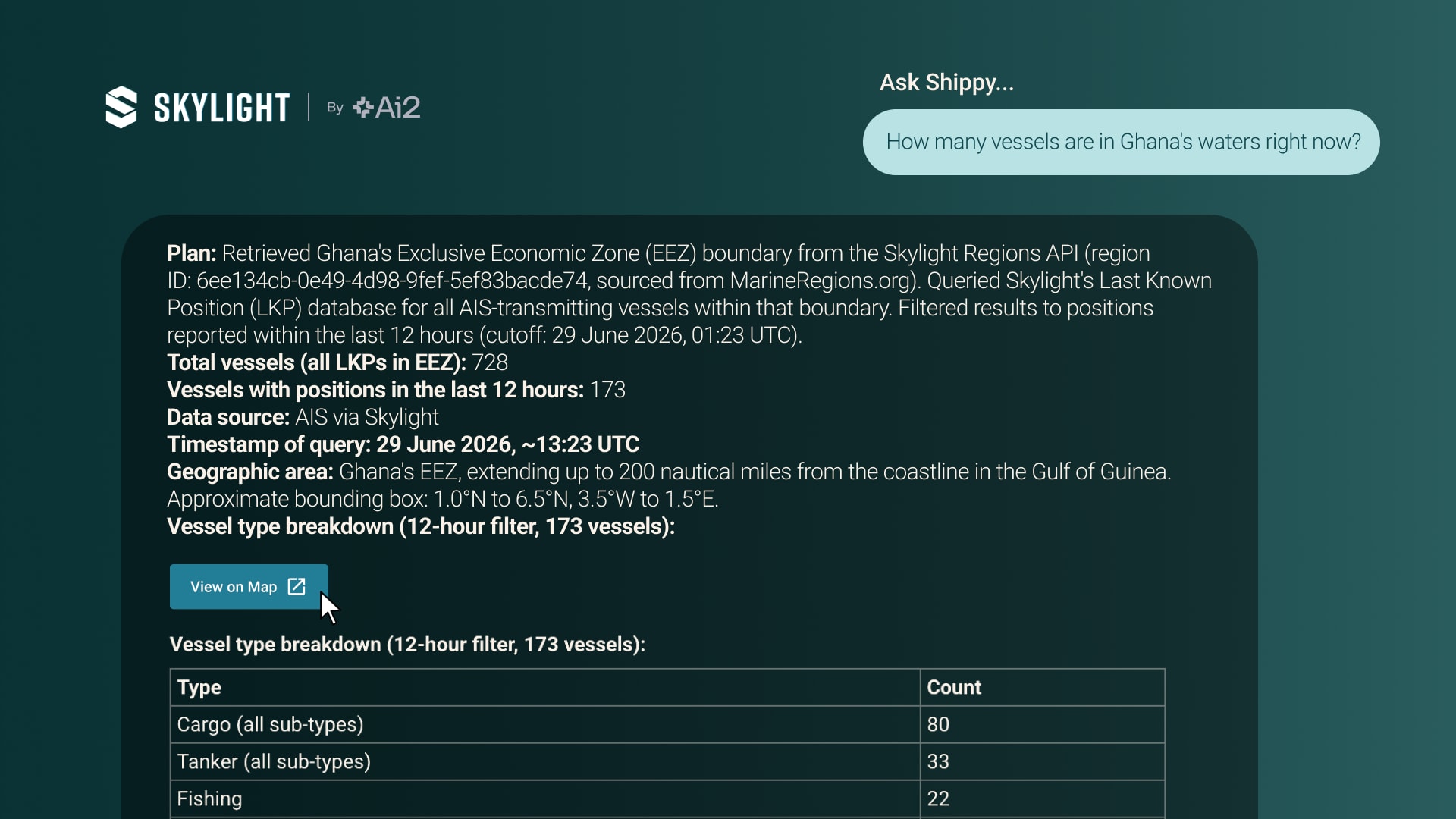
Shippy is a specialized maritime AI agent developed by Ai2 for high-stakes ocean protection decisions. It employs a unique 'soul, skills, and config' architecture to ensure reliability and transparency for maritime analysts.
The Architecture of Reliability: Analyzing the Shippy Maritime AI Agent
In the realm of artificial intelligence, the transition from general-purpose chatbots to specialized autonomous agents represents a significant leap in utility, particularly for critical infrastructure. Shippy, a maritime AI agent developed by Ai2, exemplifies this shift by focusing on high-stakes operational domains where the cost of error is not merely a hallucination but a tangible loss of resources. Designed specifically for ocean protection, Shippy is engineered to assist maritime analysts in making decisions where accuracy is paramount, such as determining Exclusive Economic Zones (EEZ) and coordinating patrol vessel deployments.
The "Soul, Skills, and Config" Framework
At the core of Shippy's design is a tripartite anatomy consisting of a "soul," "skills," and "config." This structural approach allows the developers to decouple the core reasoning capabilities of the agent from its specific operational tools and its environmental configuration. By utilizing the Skylight CLI, this complexity is collapsed into a predictable interface, allowing for a more streamlined deployment and management process. This modularity is essential for maintaining an agent that can be updated or scaled without destabilizing the core logic that governs its decision-making process.
Solving the Reliability Gap in High-Stakes Domains
Reliability is the primary challenge when deploying AI in maritime security. As noted in the technical details, a single incorrect answer could lead a patrol vessel miles off course, wasting critical fuel and manpower. To mitigate this risk, the Ai2 team implemented a bespoke evaluation system. Rather than testing the LLM in isolation, they score the entire agent ecosystem—including the model, its integrated skills, and the sandbox environment—against live data. This holistic approach to evaluation ensures that the agent's output is grounded in operational reality rather than theoretical probability.
Transparency and Verifiable Intelligence
To foster trust among analysts, Shippy is built with a "show your work" philosophy. When answering complex queries—such as those involving Ghana's EEZ—the agent provides comprehensive citations, including the boundary source, the data cutoff timestamp, and the exact time of the query. Most importantly, it provides deep links back to the Skylight map. This allows human analysts to verify every numerical value and boundary line independently, transforming the AI from a "black box" into a transparent tool for verification, which is a non-negotiable requirement for legal and sovereign maritime disputes.
Persistent Memory and Operational Context
Beyond immediate query response, Shippy is evolving to include persistent memory. This allows the agent to carry forward critical facts, such as an analyst's specific jurisdiction or their preferred data sources, applying them automatically to future interactions. This personalization reduces the cognitive load on the user and ensures that the agent's outputs are always aligned with the specific legal and operational constraints of the user's region, further enhancing the efficiency of maritime monitoring and enforcement.
Broader Implications for Environmental AI
The lessons learned from building Shippy are being integrated into other Ai2 environmental platforms, suggesting a broader trend toward "domain-specific agents." The shift toward integrating sandboxes, custom eval systems, and transparent sourcing indicates that the future of AI in science and governance will not rely on larger models, but on more tightly controlled and verifiable architectures. As these tools scale, they will likely become the standard for managing global commons, from protecting biodiversity to monitoring illegal fishing activities.
Conclusion
Shippy represents a sophisticated synthesis of AI reasoning and domain-specific rigor. By prioritizing reliability over versatility and transparency over simplicity, Ai2 has created a blueprint for how AI can be safely integrated into high-stakes environments. The integration of persistent memory and a holistic evaluation framework ensures that Shippy is not just a tool for information retrieval, but a dependable partner in the critical mission of ocean protection.