A shark went astray and captured Korea's heart - will she finally make it back to sea?
Source Entity
BBC News
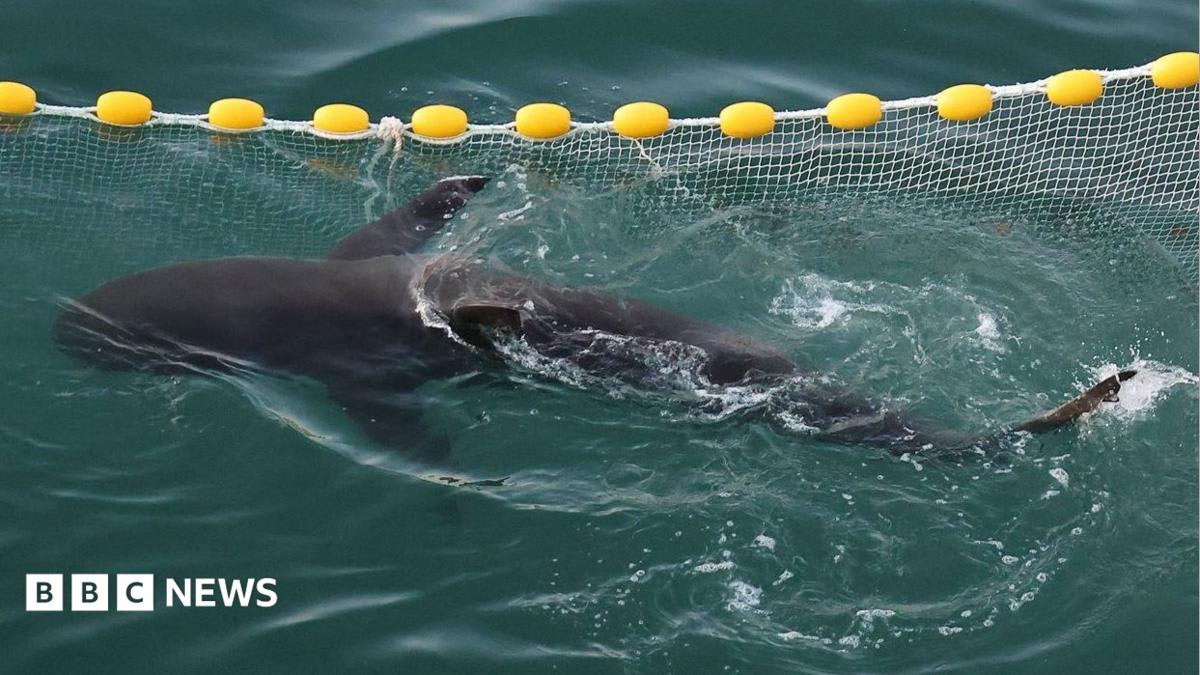
A stranded dusky shark named Bukangi captured public attention after appearing in a Busan canal. Marine biologist Kim Hyun-woo is leading efforts to rescue and safely return the shark to the ocean.
The Unlikely Visitor: Busan's Dusky Shark Phenomenon
In an unprecedented event that has captivated the nation of South Korea, a large female dusky shark—affectionately dubbed 'Bukangi' by the public—has become the center of a massive rescue operation in Busan. The shark was discovered stranded within a shallow, concrete canal located in the heart of the city’s bustling shipping district, a location entirely atypical for a marine predator of this size. The presence of such a large shark in a canal near one of the world's busiest ports has transformed a standard marine rescue into a major cultural and environmental event, drawing over a million spectators to the waterfront.
Scientific Intervention and Challenges
Marine biologist Kim Hyun-woo, a leading expert at the National Institute of Fisheries Science, was abruptly drafted into the rescue mission in mid-September. Kim, who typically spends his time tracking mackerel shoals to support the South Korean fishing industry, found himself facing an unprecedented challenge: rescuing a shark from a man-made urban waterway. The logistical difficulty of navigating a large, stressed animal within the confines of a concrete canal required immediate, specialized action to ensure the safety of both the shark and the local community.
The Intersection of Urbanization and Marine Life
Busan, South Korea’s south-eastern maritime hub, is well-acquainted with the ocean, but the appearance of a dusky shark in such a confined, shallow space has highlighted the fragile intersection between industrial activity and marine migration. While South Korean waters are home to various shark species, the occurrence of this specific individual in an industrial canal is historically unheard of. This anomaly suggests potential disruptions in migratory patterns or navigational errors that warrant further scientific scrutiny by the National Institute of Fisheries Science.
The Public Spectacle
Beyond the biological imperative, the incident has turned into a social phenomenon. The fact that more than a million people have flocked to the site reflects a growing public fascination with marine wildlife in South Korea. This massive influx of onlookers creates significant crowd control challenges for local authorities and the coastguard, who must balance public interest with the delicate task of extracting the shark without causing it further physical trauma or distress.
Future Implications and Conservation
The rescue of Bukangi represents more than just a single animal's survival; it serves as a case study for future marine incident management in heavily developed port cities. As climate change and industrial noise continue to impact marine habitats, the likelihood of stray wildlife entering human-dominated spaces may increase. The collaborative effort between the coastguard and marine experts provides a blueprint for how authorities can manage such crises, emphasizing the need for rapid identification and specialized intervention protocols.
Concluding Thoughts
As the operation to safely return Bukangi to the open sea continues, the event serves as a poignant reminder of our proximity to the natural world. The success of this rescue will depend on the continued precision of the scientific team and the cooperation of the public. Ultimately, the story of Bukangi highlights the importance of maintaining ecological awareness even within the most industrialized urban centers, ensuring that our progress does not come at the cost of the marine life that shares our coastal borders.