Guest lecturers also entitled to maternity pay, rules Chhattisgarh High Court
Source Entity
Vineet Upadhyay
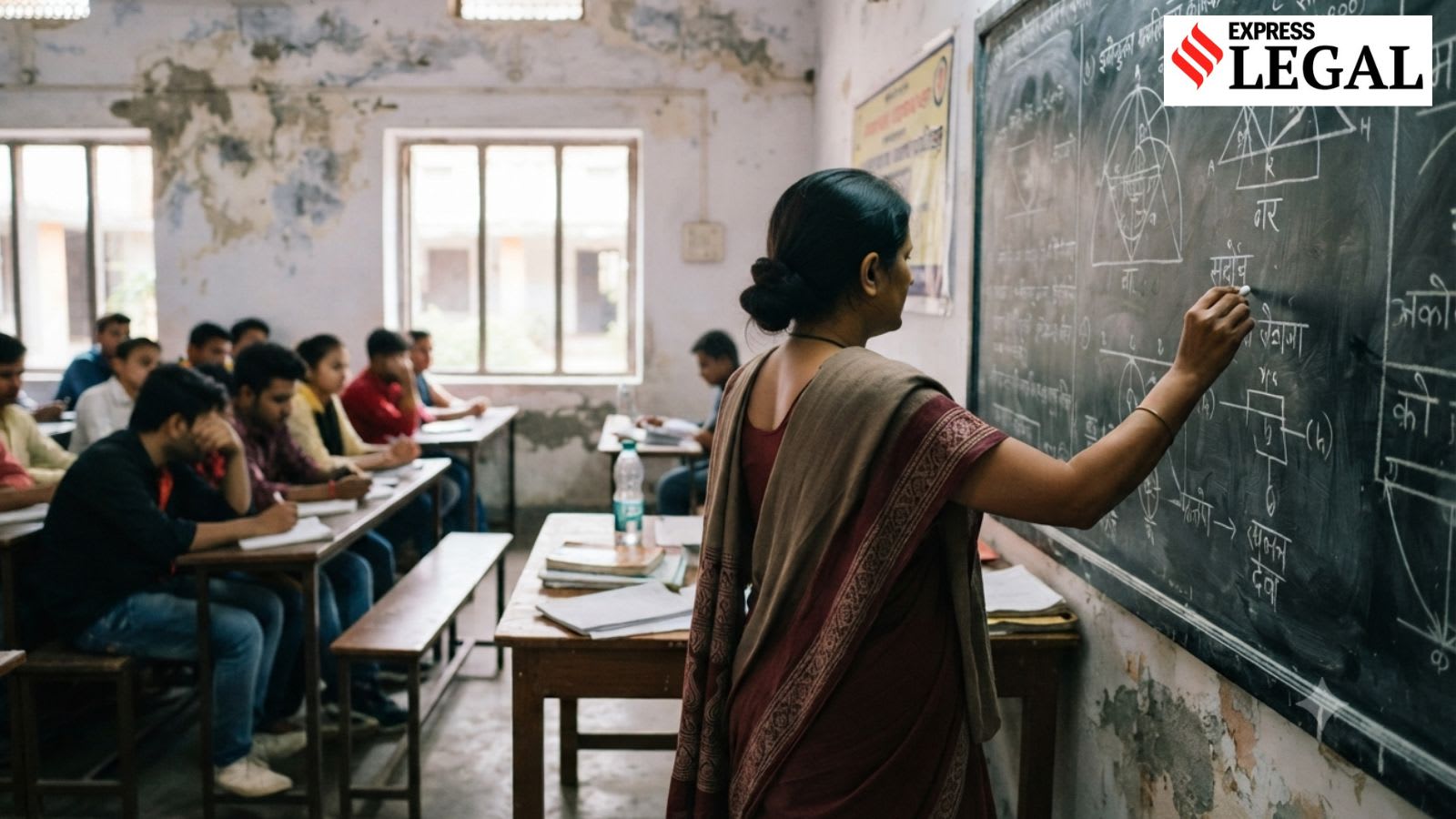
The Chhattisgarh High Court has ruled that guest lecturers are entitled to maternity benefits, asserting that temporary employment status cannot be used to deny women their legal right to maternity pay.
Landmark Ruling on Maternity Rights for Guest Lecturers
In a significant victory for labor rights and gender equality in the academic sector, the Chhattisgarh High Court has ruled that guest lecturers are entitled to maternity pay. The court explicitly stated that a woman cannot be denied these benefits simply because she is employed as a guest lecturer rather than a permanent staff member. This decision addresses a critical gap in the application of labor laws, where contractual or temporary employees are often stripped of social security benefits that are readily available to their permanent counterparts.
Challenging the 'Permanent Status' Paradigm
The core of the court's reasoning lies in the rejection of the argument that permanent employment is a prerequisite for maternity benefits. For too long, institutional frameworks have used the distinction between 'permanent' and 'guest' staff to avoid financial obligations related to social welfare. By ruling that the protection under the Maternity Benefit Act extends to guest lecturers, the High Court has affirmed that the right to maternity leave and pay is a fundamental entitlement linked to the act of motherhood and employment, not a perk reserved for a specific class of employees. This shift ensures that the precarious nature of guest lecturing does not leave women vulnerable during one of the most critical periods of their lives.
The Legal Framework: The Maternity Benefit Act
This ruling is deeply rooted in the spirit of the Maternity Benefit Act, 1961, which was designed to protect the dignity of motherhood by providing for the health of the mother and child. The Act aims to ensure that women do not have to choose between their professional career and their maternal responsibilities. By extending these protections to guest lecturers, the Chhattisgarh High Court is aligning regional judicial interpretation with the broader national goal of gender-inclusive workplaces. The court's decision recognizes that the biological and social needs of a mother remain the same regardless of the terms of her employment contract.
The Socio-Economic Context of Contractual Academia
To understand the gravity of this ruling, one must look at the systemic reliance on guest lecturers in the Indian higher education system. Many institutions rely heavily on a workforce of temporary educators who perform the same duties as permanent faculty—teaching, grading, and mentoring—but without the security of tenure or benefits. This 'contractualization' of labor often creates a tiered system of rights. The court's intervention serves as a corrective measure against this disparity, signaling that the state and its institutions cannot bypass statutory obligations by simply labeling an employee as a 'guest.'
Broader Implications and Legal Precedents
This judgment is likely to have a ripple effect across other states and sectors. It sets a powerful precedent for other contractual workers—including those in healthcare and administration—who have historically been denied maternity benefits. As more courts adopt this interpretation, we can expect a broader judicial push toward treating social security benefits as universal human rights rather than employment-specific privileges. This may force government bodies to rethink their hiring models and ensure that the 'gig' or contractual nature of public sector work does not result in the erosion of basic human rights.
Conclusion and Future Outlook
In summary, the Chhattisgarh High Court's ruling is a pivotal step toward dismantling the systemic discrimination faced by temporary female employees. By decoupling maternity benefits from permanent employment status, the court has reinforced the principle that maternal health and job security are non-negotiable rights. Moving forward, this decision will likely encourage more women in precarious employment to seek legal redress, ultimately leading to a more equitable and supportive professional environment for women across the Indian academic landscape.