Before Taiwan war, can China stop manoeuvring missiles? HQ-9B drill tests split-second decisions |Xi
Source Entity
Latest News: Todays Latest News Headlines from India & World | Hindustan Times
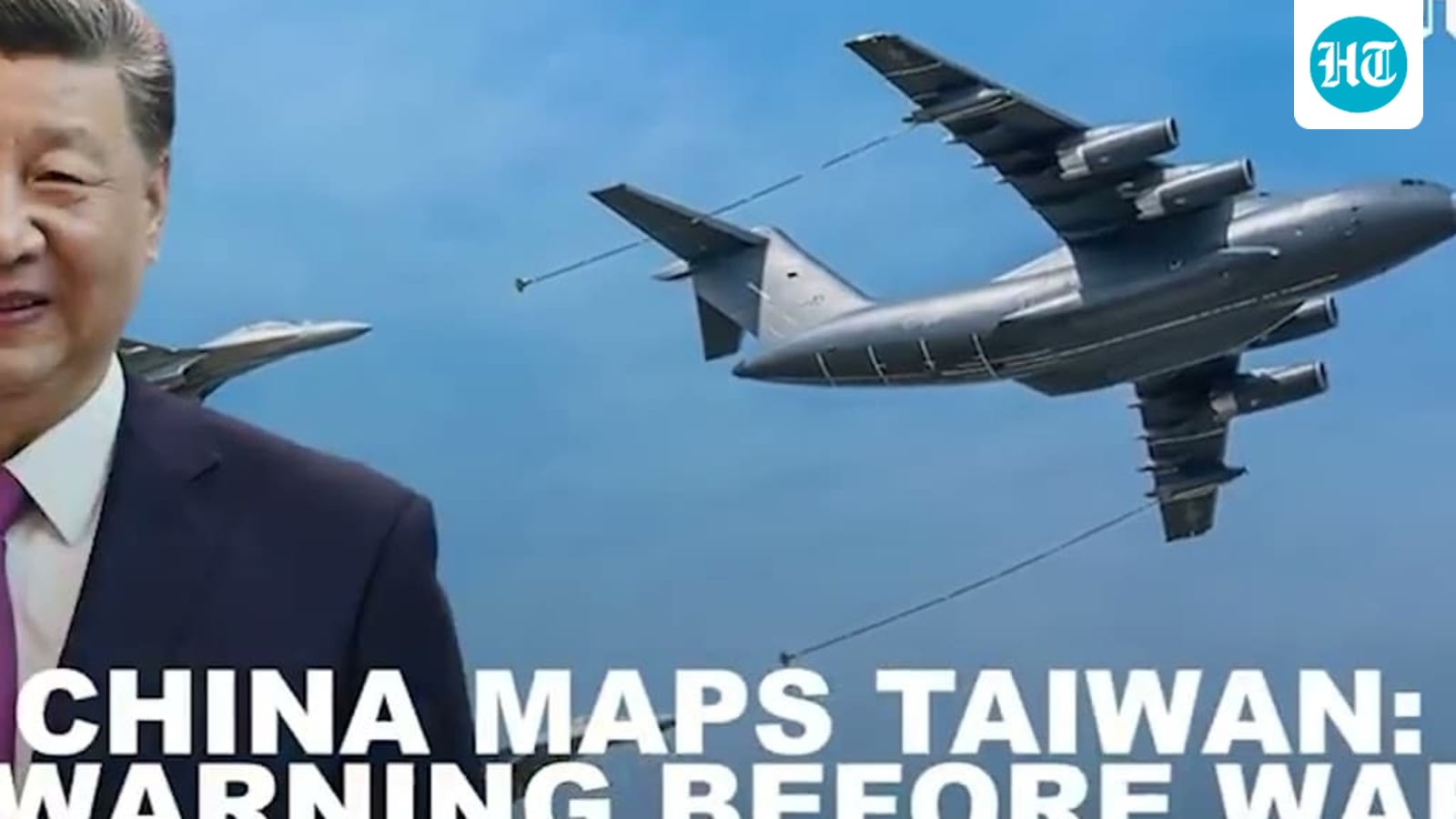
China has successfully tested its HQ-9B air defense system against maneuvering ballistic missiles. This development signals a significant advancement in China's military capabilities amidst rising tensions over Taiwan.
Assessing China's Advanced Missile Defense Capabilities
Recent military exercises conducted by the People's Liberation Army Air Force (PLAAF) have highlighted a significant leap in China's defensive posture, specifically through the successful interception of two ballistic missile targets by the HQ-9B air defense system. Most notably, one of these targets performed a sharp mid-flight course correction, a maneuver designed to simulate modern, evasive offensive weaponry. This test underscores the increasing sophistication of the HQ-9B, which serves as a cornerstone of China's long-range, multi-layered air defense network.
The Technical Challenge of Interception
The ability to intercept a maneuvering ballistic missile requires split-second decision-making and extreme precision from ground crews and radar systems. By testing the HQ-9B against targets that deviate from predictable trajectories, the PLAAF is essentially refining its ability to counter advanced strike capabilities. For the crews involved, this drill was a stress test of their reaction times, proving that the system can process target data and engage threats within a window of only seconds, a critical requirement in modern electronic warfare environments.
Geopolitical Context and Taiwan Tensions
This military drill does not exist in a vacuum; it occurs against the backdrop of heightened volatility in the Taiwan Strait. As the United States continues to bolster Taiwan’s defensive capabilities through the sale of Patriot and NASAMS missile systems, Beijing is clearly prioritizing the development of its own counter-measures. The HQ-9B system is central to China's efforts to ensure it can effectively neutralize incoming threats, effectively creating an 'anti-access/area-denial' (A2/AD) bubble that aims to deter foreign intervention.
Strategic Implications for the Indo-Pacific
The advancement of China's missile shield presents a complex puzzle for American military planners. If the HQ-9B can reliably intercept sophisticated, maneuvering ballistic threats, it necessitates a recalibration of U.S. regional military strategy. Washington’s reliance on precision-strike weaponry as a deterrent may face new hurdles if China’s interceptors prove consistently capable of mitigating these strikes. This creates a classic 'offense-defense' arms race dynamic, where each technological leap by one side is met with an urgent technological response from the other.
Future Trends in Regional Security
Looking forward, the integration of such advanced air defense systems suggests that the Indo-Pacific theater is becoming increasingly saturated with high-end military technology. As China continues to refine its multi-layered network, we can expect further testing of these systems in increasingly complex simulated environments. This evolution will likely drive continued U.S. investment in hypersonic and stealth technologies to ensure their strike packages remain viable in a contested airspace, effectively maintaining the precarious balance of power in the region.
Verification Required?