800 kmph in 5.3 seconds: China train sets third record in six months
Source Entity
TOI BUSINESS DESK
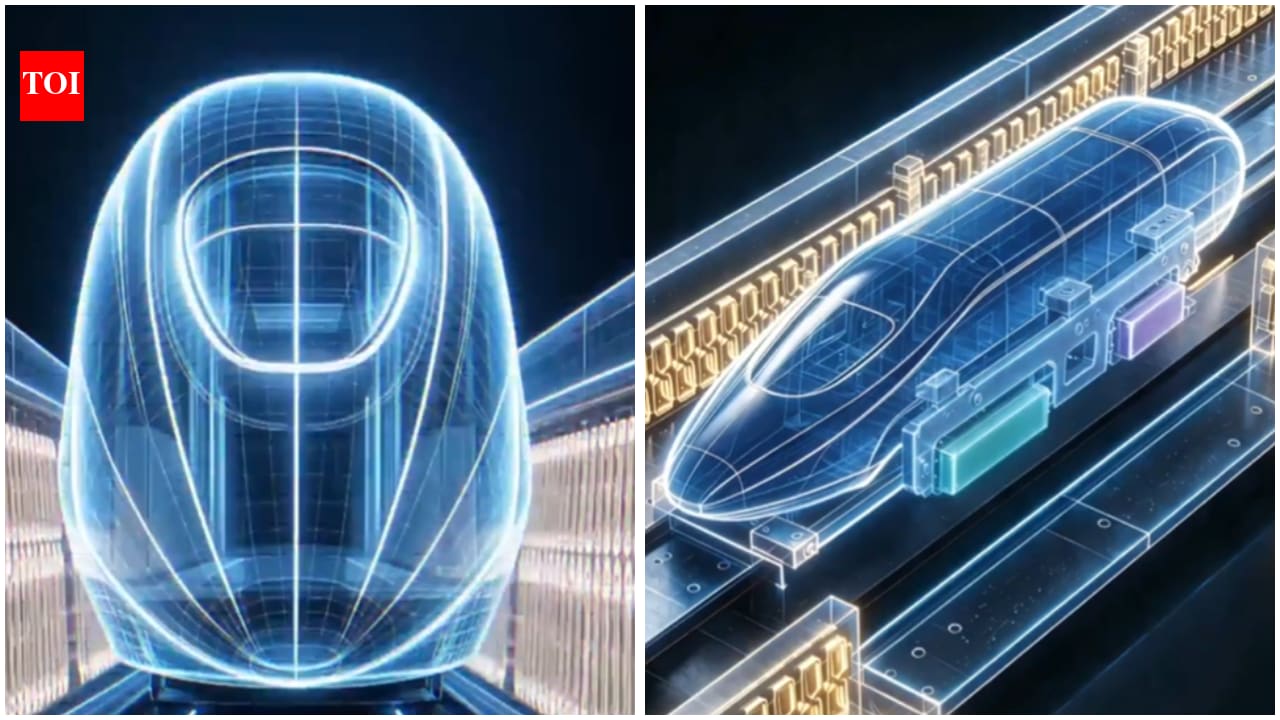
China's Donghu Laboratory has set a new world record with an experimental maglev test vehicle reaching 800 kmph in 5.3 seconds. While not for passenger use, this breakthrough in extreme acceleration has significant implications for rocketry and military technology.
China's Maglev Breakthrough: Redefining Acceleration
China has achieved a monumental milestone in high-speed transport technology, with an experimental maglev test vehicle reaching 800 kmph in a staggering 5.3 seconds. Conducted at the Donghu Laboratory in Hubei province, this trial marks the third time the vehicle has broken its own world record within a six-month period. By utilizing a 1-km test track, researchers have demonstrated that electromagnetic propulsion can achieve velocities far exceeding the capabilities of current commercial high-speed rail.
Contextualizing Current Rail Standards
To understand the magnitude of this achievement, one must contrast it with global standards. Typical maglev trains in China and Japan operate at approximately 320 kmph, while China’s fastest commercial services cap out at 350 kmph. The leap to 800 kmph on a short, 1-km stretch highlights a fundamental shift from passenger transport engineering to high-intensity acceleration physics. This experimental 1,110-kg vehicle represents a departure from traditional mass-transit design, focusing instead on power density and rapid kinetic energy gain.
Evolution of the Record
The trajectory of these tests reveals a rapid iterative development cycle. In June 2025, the vehicle first made headlines by reaching 650 kmph in seven seconds. By December 2025, it had reached 700 kmph in just two seconds. The most recent achievement of 800 kmph in 5.3 seconds confirms that the Donghu Laboratory is consistently refining its magnetic levitation and propulsion systems, effectively cutting down the time required to reach extreme velocities while maintaining control on a limited track length.
Beyond Passenger Transport
It is critical to note that this technology is not intended for human travel. The G-forces associated with accelerating from zero to 800 kmph in 5.3 seconds would be lethal to passengers. Instead, the focus of this research is centered on industrial and strategic applications. By mastering such rapid acceleration, China is exploring potential integrations in the fields of rocketry, military aircraft, and advanced drone technology, where high-speed launch capabilities are a decisive advantage.
Future Implications and Industrial Applications
Beyond military and aerospace use, the implications for industrial transport and specialized infrastructure are vast. Experts suggest that the principles derived from this maglev test could lead to innovations in specialized elevators or high-speed logistics systems that require rapid, frictionless movement. As researchers continue to explore the limits of electromagnetic propulsion, this 800 kmph milestone serves as a foundational platform for future developments in automated, high-velocity transport systems that do not rely on traditional combustion-based launch methods.
Conclusion
In summary, the progress at the Donghu Laboratory represents a sophisticated advancement in kinetic energy management. By prioritizing acceleration over sustained passenger cruising, China has carved out a new niche for maglev technology. As the world watches these experimental trials, the transition from rail-based transit to advanced propulsion systems for aerospace and industrial use appears to be the next logical horizon for this high-speed innovation.