China tells US no AI talks until it fixes its own rules: Anthropic has a disease
Source Entity
TOI TECH DESK
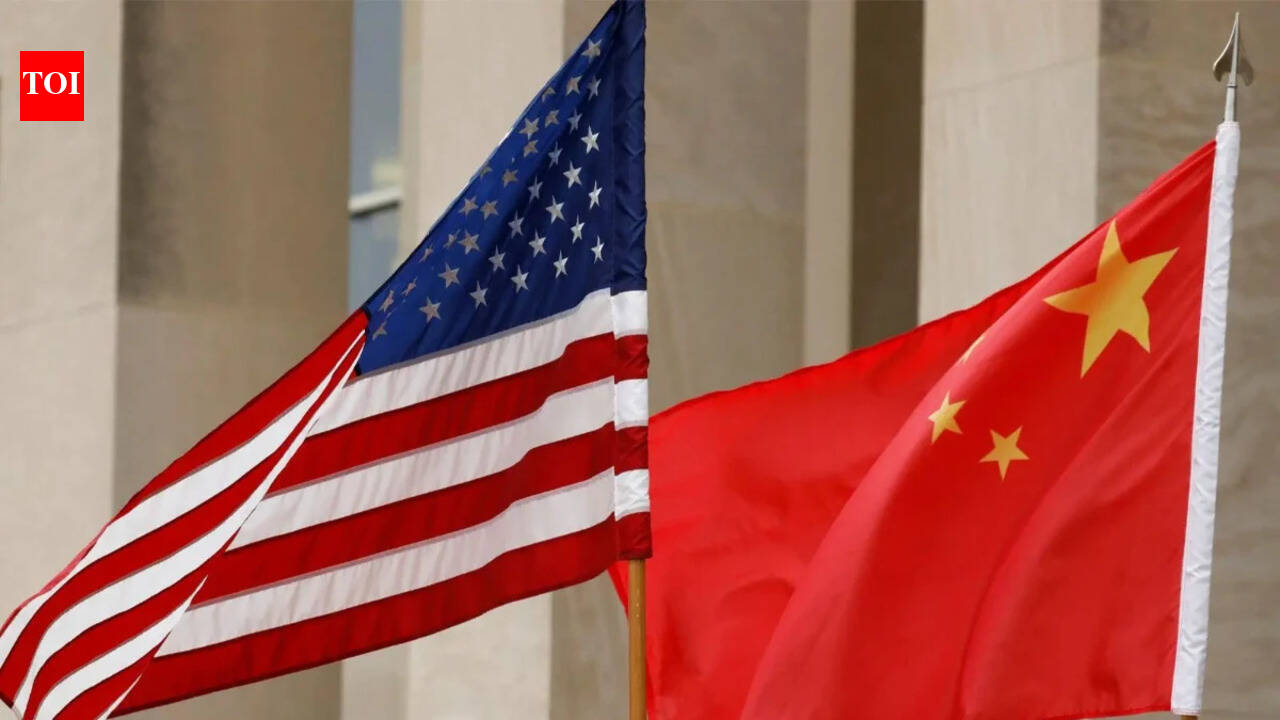
China has conditioned future AI diplomatic talks with the US on Washington enforcing stricter domestic safety and auditing standards. The demand specifically critiques US firm Anthropic, signaling a firm stance on international AI governance and regulatory parity.
The Geopolitics of Artificial Intelligence Regulation
China’s recent assertion that bilateral AI discussions with the United States are contingent upon Washington’s commitment to internal regulatory reform marks a significant escalation in the global technological cold war. By leveraging the platform Yuyuantantian, which is closely tied to state media, Beijing has clearly signaled that it views the current US regulatory landscape as insufficient. This move suggests that China is no longer content with high-level dialogues that lack concrete enforcement mechanisms, demanding instead a 'level playing field' where US domestic developers are subjected to the same rigorous scrutiny that China imposes on its own tech sector.
Targeting Anthropic: A Strategic Signal
The specific criticism leveled against the US-based AI developer Anthropic is not merely incidental; it is a calculated strategic maneuver. By highlighting alleged privacy breaches and unauthorized actions by a prominent American firm, Beijing is attempting to reframe the narrative of AI safety. This accusation serves to undermine the moral authority of US developers who often tout their safety protocols as the global gold standard. By casting doubt on the integrity of Anthropic, China is demanding that the US prove its domestic house is in order before seeking to dictate or harmonize international AI norms.
The Demand for Regulatory Parity
At the heart of this diplomatic standoff is the concept of 'comparable safety and auditing standards.' Beijing’s insistence on these conditions implies that it perceives a double standard in international tech policy, where the US promotes global AI governance while maintaining a comparatively lax regulatory environment for its own national champions. This demand for parity is likely to complicate future diplomatic summits, as the US government has traditionally prioritized innovation-friendly policies over the heavy-handed state oversight favored by Chinese regulators.
Broader Implications for Global Governance
This development suggests that the path to a global consensus on AI safety is fraught with ideological and structural friction. If China maintains this hardline stance, the prospect of a unified international framework for AI governance—one that covers military applications, data privacy, and ethical alignment—becomes increasingly remote. The rift highlights a fundamental disagreement: the US views AI as a domain for private-sector-led innovation with guardrails, whereas China views it as a strategic national asset that requires deep, preemptive state integration and oversight.
Future Trends and Diplomatic Outlook
The future of US-China technological relations will likely be defined by these 'boundary-setting' exercises. As both nations continue to develop foundational models, the pressure to establish a common language for AI safety will grow, yet the trust deficit remains a significant barrier. We can expect future diplomatic meetings to be preceded by even more intense public posturing, as both nations attempt to define the 'rules of the road' in ways that disadvantage the other’s domestic tech ecosystem. Unless a compromise is reached on transparency and auditing, the current stalemate is likely to persist, potentially leading to a fragmented global AI landscape.