The Chinese robot army transforming the UK's retail industry
Source Entity
BBC News
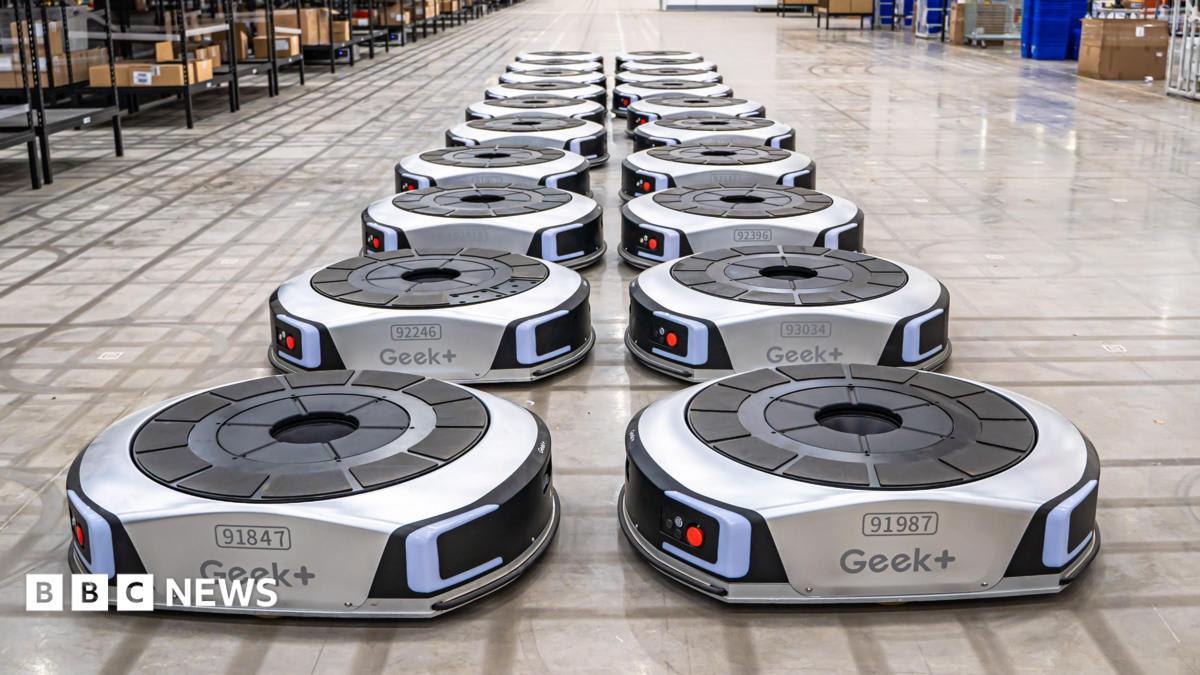
Chinese robotics firm Geek+ is increasingly automating UK retail warehouses to combat labor shortages and low productivity. Major retailers like Tesco and Asda are adopting these silver floor robots to streamline order processing and improve storage efficiency.
The Automated Revolution in British Retail
The landscape of British retail is undergoing a profound transformation driven by the integration of sophisticated robotics. As the United Kingdom grapples with persistent challenges regarding weak productivity growth and significant labor shortages, the logistics sector has turned toward innovative solutions. Central to this shift is the deployment of autonomous mobile robots (AMRs) manufactured by Chinese firms, most notably Geek+, which are increasingly becoming the backbone of modern warehouse operations.
The Mechanics of Efficiency
At the heart of this transition is a departure from stationary automation toward highly mobile, flexible systems. The process is deceptively simple yet transformative: when a customer completes an online purchase, a squat, silver floor robot glides beneath a storage rack, lifts the entire unit, and transports it directly to a human worker. By automating these repetitive, physically demanding journeys, retailers can drastically increase picking speeds, minimize human error, and utilize vertical or hard-to-reach storage spaces that were previously inefficient to manage.
Strategic Partnerships with UK Retail Giants
This technological influx is not merely experimental; it is being scaled by some of Britain’s largest retail entities. Major corporations, including Tesco, Asda, and Next, have integrated Geek+ technology into their distribution networks. By sourcing these advanced systems from the company's manufacturing hub in Hefei, China, these retailers are signaling a strategic pivot toward high-tech logistics to maintain profitability and meet the consumer demand for rapid, near-instantaneous order processing.
Addressing Structural Economic Challenges
The adoption of Chinese robotics is a direct response to the UK's long-term economic hurdles. Labor shortages have historically constrained the retail sector's ability to scale operations during peak demand periods. Furthermore, the UK’s stagnant productivity growth has necessitated a shift toward capital-intensive investment. These robots serve as a force multiplier, allowing a smaller human workforce to manage a significantly higher volume of inventory with greater precision than traditional manual picking methods.
Future Trends and Market Implications
Looking ahead, the reliance on such automated infrastructure is likely to expand as e-commerce continues to dominate the retail landscape. As these robotics systems become more sophisticated, we can expect a shift in the nature of warehouse employment, moving from manual labor toward technical roles focused on system maintenance and software management. While this offers a pathway to solving productivity deficits, it also places the UK retail supply chain in a position of dependency on international robotics manufacturers, a trend that may influence future trade and industrial policy regarding domestic automation capabilities.
Conclusion
The integration of Geek+ robots into the UK retail sector represents a critical intersection of global manufacturing prowess and domestic economic necessity. By leveraging these autonomous systems, British retailers are successfully navigating labor constraints and optimizing their supply chains. As this trend accelerates, the efficiency gains achieved will likely set a new baseline for competitive retail operations across the nation.