CJI Surya Kant widens case allocation across Supreme Court benches in new roster
Source Entity
Latest News: Todays Latest News Headlines from India & World | Hindustan Times | Hindustan Times
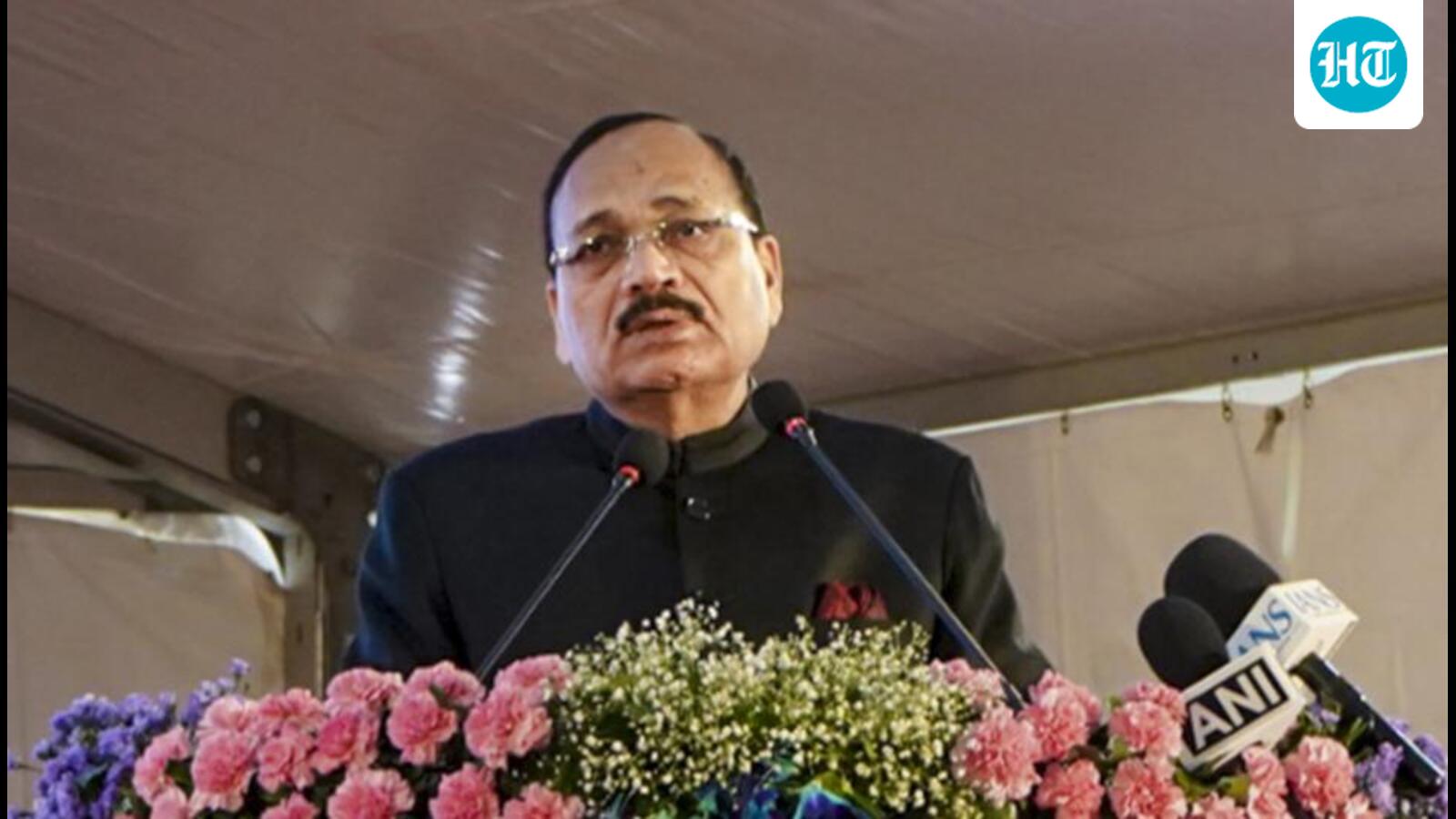
Chief Justice of India Surya Kant has implemented a new Supreme Court roster to diversify case distribution among benches. Former SC judge Abhay S. Oka has critiqued this move, citing concerns over transparency and the potential for manual intervention in case allocation.
Evolution of the Supreme Court Roster System
The Supreme Court of India recently underwent a significant procedural shift as Chief Justice of India (CJI) Surya Kant notified a revised roster on Monday, effective October 26. This administrative change reshuffles the distribution of case categories—ranging from taxation and commercial disputes to family law and environmental litigation—across various benches. By broadening the scope of subjects handled by individual benches, the judiciary aims to move away from the narrower, more specialized assignments that characterized the previous roster introduced on July 13.
The Rationale Behind the Reshuffle
The primary objective of the new roster is to ensure a more balanced workload across the Supreme Court. By diversifying the types of cases assigned to each bench, the administrative leadership seeks to prevent the concentration of specific legal domains in the hands of a limited number of judges. This approach is intended to foster judicial breadth, allowing judges to engage with a wider cross-section of civil and criminal matters, thereby ensuring that the court remains versatile in its adjudicatory functions.
Criticisms Regarding Transparency
Despite the administrative intent, the new system has faced immediate scrutiny from within the legal fraternity. Former Supreme Court judge Abhay S. Oka, speaking at a recent event organized by the Campaign for Judicial Accountability and Reforms (CJAR), highlighted significant concerns regarding the transparency of the current allocation process. Justice Oka argued that the existence of a roster should act as a definitive barrier against external or discretionary interference, asserting that once a roster is established, the Chief Justice should not have the authority to alter or intervene in the assignment process.
The Problem of 'Manual Intervention'
Central to Justice Oka’s critique is the ambiguity surrounding how cases are assigned when multiple benches are authorized to hear the same subject category. He pointed out that this overlap creates a scenario where litigants cannot predict which bench will hear their case, a lack of clarity he believes leaves the system vulnerable to "manual intervention." According to Oka, the fundamental purpose of a roster is to eliminate human discretion in listing, yet the current structure—where subjects are shared across benches—potentially undermines this objective.
Implications for Judicial Accountability
Justice Oka’s comments underscore a growing discourse on judicial accountability within the Indian legal system. By questioning whether the Registry or the Chief Justice holds the ultimate power to override the roster, he is challenging the traditional "Master of the Roster" doctrine. The debate highlights the tension between the administrative necessity of flexibility and the democratic requirement for a predictable, non-arbitrary system of justice delivery.
Future Trends in Court Administration
As the Supreme Court navigates these procedural changes, the pressure for technological integration in case allocation is likely to grow. The concerns raised by Justice Oka suggest that for the judiciary to maintain public trust, it must move toward an automated, algorithm-based listing system that leaves no room for human bias. Whether the current administration will address these calls for an overhaul remains a critical point of observation for legal scholars and civil society groups alike.
Multiple Citing Sources
Verification Required?