'Just came to thank Didi': Dipke meets Mamata, says CJP won't join INDIA bloc rally
Source Entity
KANCHAN YADAV
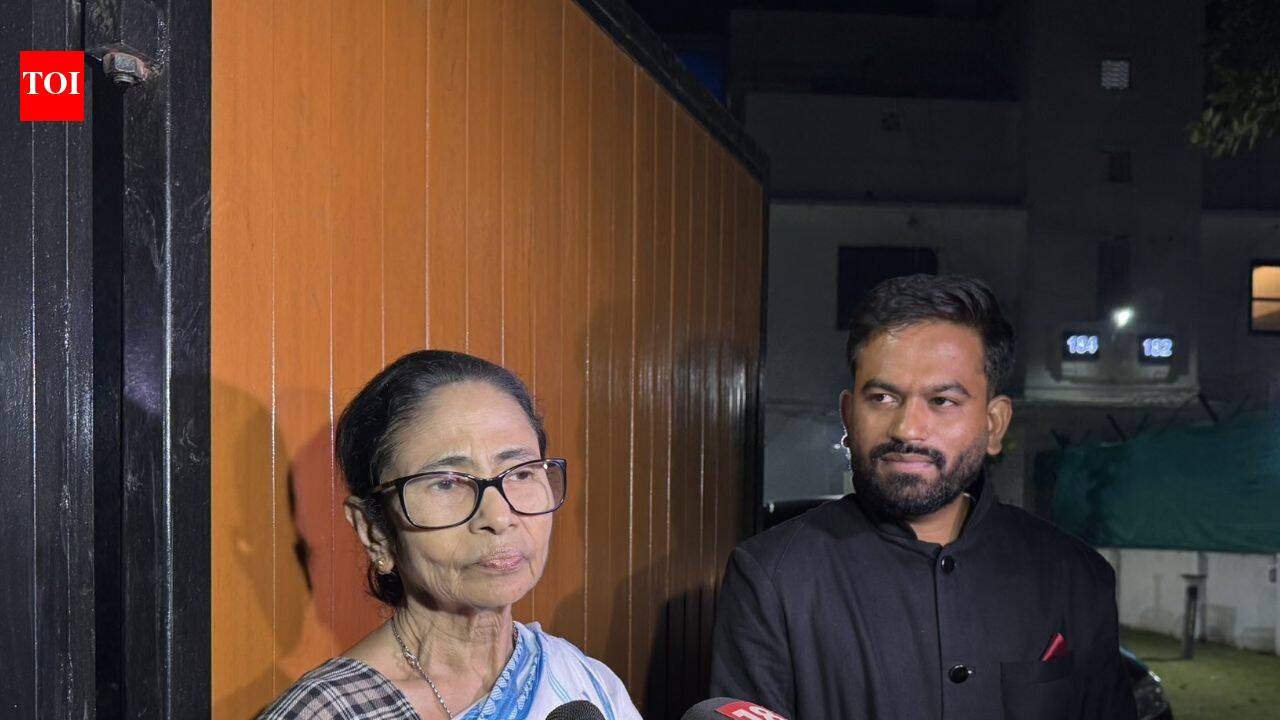
CJP founder Abhijeet Dipke met with TMC chief Mamata Banerjee in Delhi, expressing gratitude while confirming that his organization will not join the INDIA bloc rally. Despite opting out of the rally, Dipke affirmed his support for the broader cause represented by the opposition grouping.
Strategic Engagement: CJP and TMC Dynamics
The Meeting in Delhi
The recent meeting between Abhijeet Dipke, founder of the CJP, and Trinamool Congress (TMC) chief Mamata Banerjee in Delhi marks a significant moment of political alignment and signaling. While the interaction was framed as a gesture of personal gratitude—with Dipke stating he 'just came to thank Didi'—the optics of such a high-profile encounter ahead of a major opposition rally are inherently political. Mamata Banerjee’s public expression of pride in Dipke underscores a deepening rapport between the TMC leadership and various civil society actors who remain engaged in the national discourse.
Navigating the INDIA Bloc
Despite the cordial nature of the meeting, the clarification that the CJP will not formally join the INDIA bloc rally highlights the complex navigation required by non-political organizations within India's polarized landscape. By choosing not to be physically present at the rally, the CJP appears to be maintaining a degree of organizational autonomy. This move is indicative of a broader trend where civil society groups seek to support the ideological objectives of a political coalition without necessarily being subsumed by the partisan machinery of the INDIA bloc.
The Significance of 'Support for the Cause'
Dipke’s explicit statement that he supports the 'cause' of the INDIA bloc, even while distancing his organization from the rally itself, serves as a nuanced political stance. It suggests that while there is ideological alignment regarding the fundamental issues the opposition is raising against the ruling establishment, the CJP aims to preserve its distinct identity. This strategy allows the organization to exert influence and advocate for its specific agenda without being restricted by the internal power dynamics and electoral pressures that define political coalition building.
Historical Context and Political Alliances
The history of Indian politics is replete with instances where civil society organizations have served as critical allies to mainstream political parties. Mamata Banerjee, known for her roots in grassroots movements, has historically cultivated strong ties with various activists and non-governmental entities. The meeting with Dipke reinforces her image as a leader who remains connected to diverse voices, effectively leveraging these relationships to broaden the appeal of her party's national agenda against the incumbent government.
Future Implications and Trends
Looking ahead, this development signals a potential shift in how civil society groups interface with the INDIA bloc. As the political climate intensifies leading up to major electoral milestones, the ability of opposition leaders to maintain support from peripheral groups—without demanding total integration—will be crucial. If other organizations adopt the CJP’s model of 'ideological support without formal participation,' the opposition may find itself bolstered by a wider network of influence that is less susceptible to centralized criticism or accusations of partisan bias.
Conclusion
In summary, the interaction between Abhijeet Dipke and Mamata Banerjee is a microcosm of the current political realignment in India. It balances personal respect and ideological synergy with the practical necessity of maintaining institutional independence. By navigating this delicate path, both the CJP and the TMC demonstrate a sophisticated approach to political coalition building that prioritizes long-term thematic alignment over short-term, optics-heavy demonstrations.
Multiple Citing Sources