CJP protest in Bengaluru urges more participation, sustained questioning
Source Entity
India Latest News: Top National Headlines Today & Breaking News | The Hindu
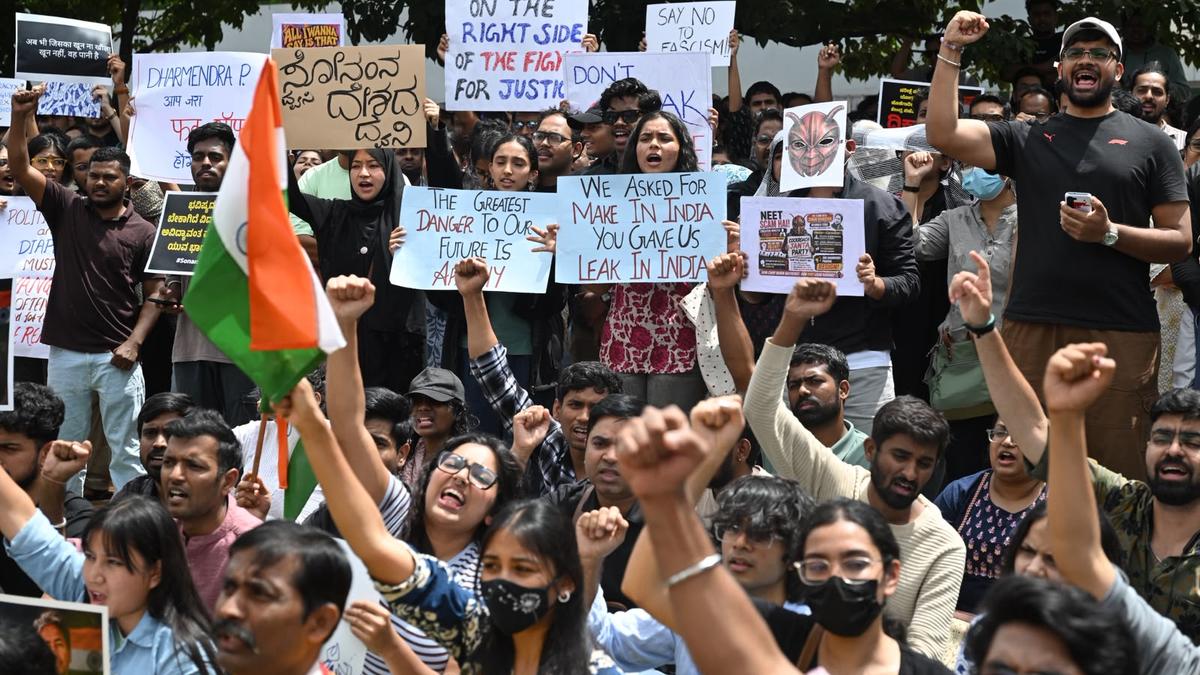
Over 1,000 people gathered at Freedom Park in Bengaluru for a Cockroach Janta Party protest against the NEET paper leak and democratic decline. Protesters demanded the resignation of Union Education Minister Dharmendra Pradhan and criticized the treatment of activist Sonam Wangchuk.
Civic Unrest in Bengaluru: Analyzing the Cockroach Janta Party Protest
On Sunday, July 19, Central Bengaluru's Freedom Park became the epicenter of a significant civic demonstration organized by the Cockroach Janta Party (CJP). What began as a modest gathering of a few hundred individuals at 10 a.m. rapidly expanded, eventually drawing a crowd of over 1,000 participants. This surge in attendance underscores a growing appetite for public dissent and a refusal to remain passive in the face of systemic grievances, encapsulated by the protest's central mantra: "Nothing is more dangerous than ‘mere bolne se kya hoga’ [What can be achieved by my speaking up]."
Accountability and the NEET Paper Leak
A primary driver of the protest was the controversy surrounding the NEET paper leak, an issue that has sparked nationwide outrage among students and educators. The protesters explicitly demanded the resignation of Union Education Minister Dharmendra Pradhan, signaling a demand for high-level accountability within the government. By centering the protest on the NEET scandal, the movement highlights a perceived failure in the administration of national competitive exams, which are critical gateways for medical education in India. The demand for resignation suggests that the public views the leak not as an isolated administrative error, but as a systemic failure requiring leadership changes.
Concerns Over Democratic Erosion
Beyond the specific grievances regarding education, the CJP protest framed its struggle within a broader narrative of a "deteriorating democratic system." This framing elevates the demonstration from a single-issue protest to a wider critique of governance and civil liberties. The use of slogans and posters emphasizing the danger of silence indicates that the movement is attempting to combat political apathy. By urging more participation and sustained questioning, the organizers are attempting to revitalize the role of the citizen as an active watchdog in a democratic framework, arguing that silence is the greatest threat to institutional integrity.
Solidarity with Sonam Wangchuk
The Bengaluru protest also demonstrated an intersectional approach to dissent by addressing the situation of activist Sonam Wangchuk. Participants questioned the forced removal of Wangchuk from Jantar Mantar in Delhi, where he had been conducting a hunger strike, to a hospital. By linking the local Bengaluru protest to Wangchuk's struggle in the capital, the CJP movement illustrates a growing network of solidarity across different regions and causes. This connection suggests that the protesters view the suppression of hunger strikes and peaceful protests as part of the same "deteriorating democratic system" they are fighting against.
Growth and Momentum of the Movement
The dynamics of the event—starting with a few hundred people and growing to over a thousand—reflect a momentum that is characteristic of organic, grassroots movements. The gradual increase in participation throughout the day suggests that the issues of educational fairness and democratic rights are resonating deeply with the urban population of Bengaluru. This pattern of growth indicates that the movement's messaging is successfully penetrating the public consciousness, transforming individual frustration into collective action.
Conclusion and Future Implications
In summary, the Cockroach Janta Party's protest at Freedom Park serves as a potent reminder of the volatility of public sentiment regarding education and governance. By synthesizing the NEET scandal, the plight of Sonam Wangchuk, and general democratic decline into a single platform, the movement has created a comprehensive critique of the current political climate. Moving forward, the success of such protests will likely depend on their ability to maintain this momentum and translate street demonstrations into sustained policy pressure on the Union government.
Verification Required?