Dipke claims foul play after 'Chalo Sansad' turns violent as JP Nadda talks to CJP leaders
Source Entity
Latest News: Today's Latest News Headlines from India & World | Hindustan Times | Hindustan Times
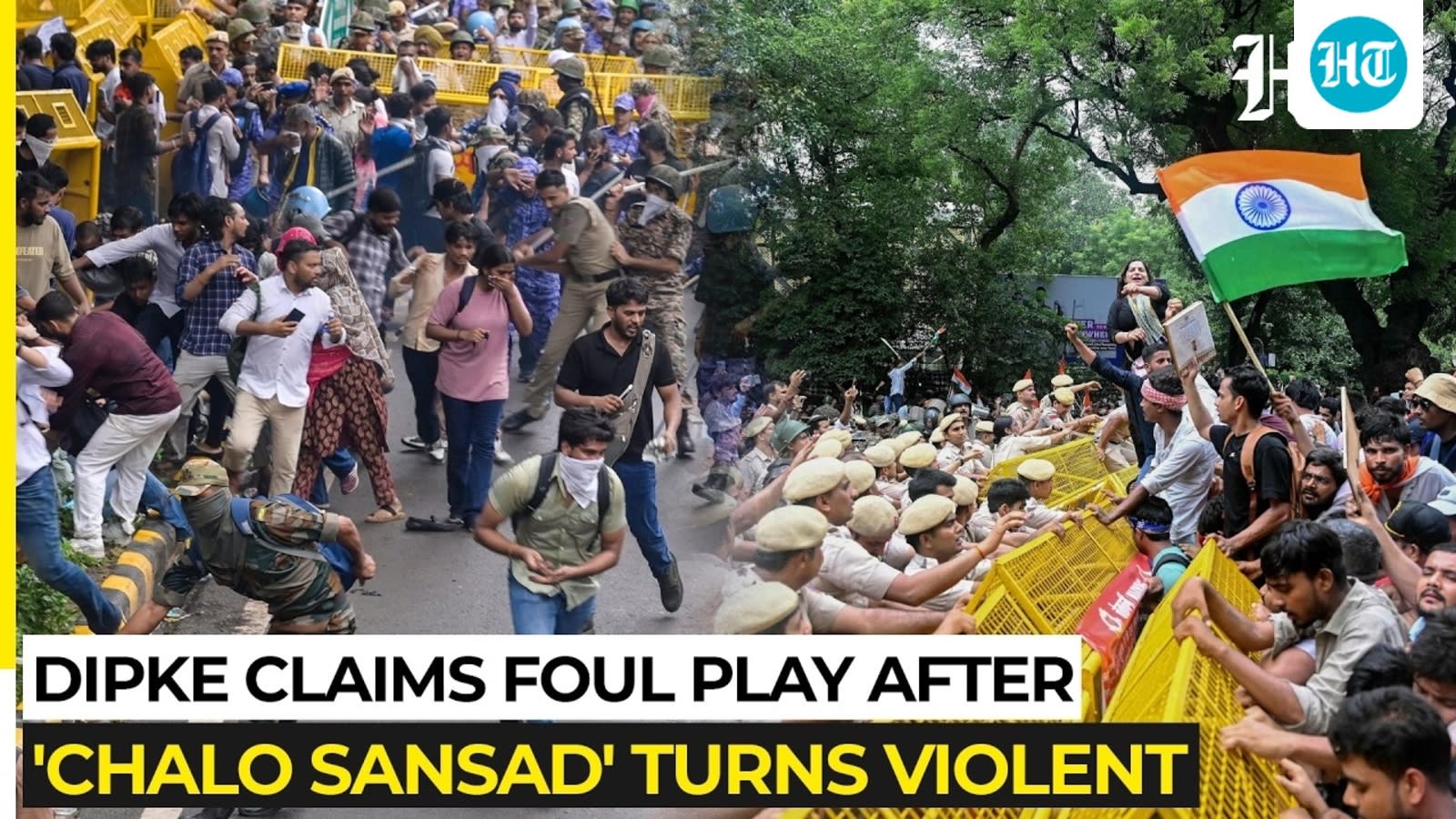
Violent clashes erupted in Delhi as the Cockroach Janta Party marched to Parliament demanding Education Minister Dharmendra Pradhan's resignation over the NEET controversy. Despite CJP leaders meeting with JP Nadda, protesters remain defiant, with Sonam Wangchuk continuing his fast amid reports of widespread injuries.
Turmoil in the Capital: The Chalo Sansad Protest
On July 20, 2026, the national capital witnessed one of its most significant civil demonstrations in recent years as the Cockroach Janta Party (CJP) organized the 'Chalo Sansad' march. Thousands of protesters converged at Jantar Mantar, channeling widespread public frustration regarding the ongoing NEET controversy. The march, which aimed to reach Parliament, demanded the immediate resignation of Union Education Minister Dharmendra Pradhan, citing systemic failures in the examination process that have disenfranchised the nation's youth.
Escalation and Police Intervention
The situation deteriorated rapidly as the march progressed toward Parliament Street. Security forces responded with a significant crackdown, deploying tear gas and conducting a lathi charge to disperse the swelling crowds. The intensity of the confrontation resulted in scores of injuries, with at least 38 individuals treated at Lady Hardinge Medical College and 65 at Dr. Ram Manohar Lohia Hospital. Victims suffered from fractures, head and eye injuries, and respiratory distress caused by tear gas exposure, marking a violent turn in what participants described as a peaceful assembly.
The Role of Sanctuaries and Civil Resistance
As the chaos unfolded, the historic Gurdwara Bangla Sahib became a critical refuge for protesters fleeing the police action. The imagery of demonstrators rushing into the gurdwara, clutching damp handkerchiefs to mitigate the effects of tear gas, underscores the severity of the police response. This mobilization highlights a growing disconnect between the administration and a youth-led movement that feels increasingly marginalized by current educational policy outcomes.
Political Negotiations and Deadlock
Amid the unrest, a delegation of CJP leaders, including Saurav Das and Ashutosh Ranka, held high-level talks with BJP President J.P. Nadda to formally present their demand for the Education Minister’s ouster. Despite these diplomatic efforts, the agitation has shown no signs of abating. The protesters have rejected the outcome of the meeting, maintaining that their core grievances remain unaddressed by the current political leadership.
The Stance of Sonam Wangchuk
Environmentalist and activist Sonam Wangchuk has emerged as a central figure in this movement. Having pledged to continue his fast until the government engages directly with youth leaders or himself, Wangchuk has framed the police response as a brutal assault on the country's children. His steadfast position has become a rallying point for the protesters, further complicating the government’s attempt to restore order through traditional political channels.
Broader Implications and Future Outlook
The 'Chalo Sansad' march is indicative of a deeper, systemic crisis regarding governance and public accountability in India’s education sector. By coupling the NEET controversy with a demand for ministerial accountability, the CJP has successfully galvanized a cross-section of the youth demographic. As the internet remains restricted in parts of New Delhi and the protest continues, the government faces a precarious challenge: balancing the necessity of maintaining law and order with the democratic imperative to address the legitimate grievances of its citizens. The outcome of this standoff will likely set a precedent for how the state handles large-scale youth-led movements in the future.
Multiple Citing Sources
Verification Required?