ExplainSpeaking: Share of education Budget has shrunk under Modi govt. Here is where it stands, and what this means
Source Entity
Udit Misra
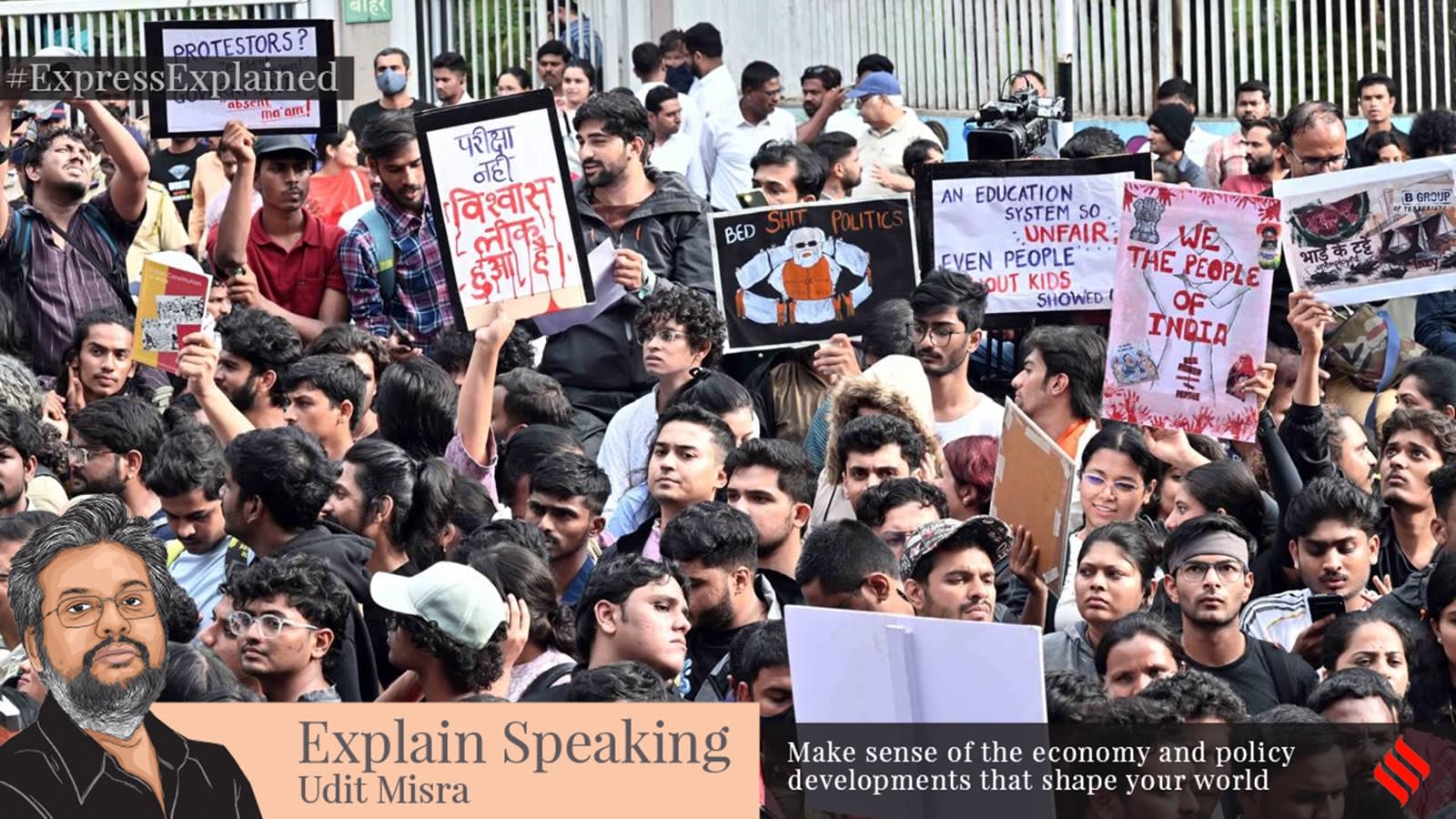
The first day of the Monsoon Session was disrupted by widespread protests over the NEET paper leak and Ayodhya temple donation theft. Parliamentary proceedings were halted repeatedly, resulting in a washout despite the introduction of a bill to increase Supreme Court judges.
Parliamentary Gridlock: Monsoon Session Erupts in Protest
The commencement of the Monsoon Session of Parliament on July 20, 2026, was marked by significant legislative paralysis. As the Lok Sabha and Rajya Sabha convened, the proceedings were immediately overwhelmed by a concerted effort from the Opposition to spotlight critical governance failures. The primary catalysts for this disruption were the alleged NEET paper leak and reports of donation theft at the Ram Temple, issues that have triggered both public outcry and intense friction within the legislative chambers.
The Impact of Public Unrest on Legislation
Beyond the walls of Parliament, the streets of Lutyens’s Delhi bore witness to a massive mobilization of citizens. An estimated 50,000 protesters, led by the Cockroach Janta Party (CJP), attempted to march toward the legislative complex, demanding the resignation of Union Education Minister Dharmendra Pradhan. The scale of this unrest necessitated a heavy security response, involving lathicharges, tear gas, and water cannons across major thoroughfares like Ashoka Road and Janpath. This external volatility directly fueled the internal parliamentary deadlock, as Opposition members from the Congress, SP, and Trinamool parties descended into the Well of the House in solidarity with the protesters.
Legislative Business and Adjournments
Despite the chaotic environment, the government managed a singular, albeit brief, legislative action. Union Law Minister Arjun Ram Meghwal introduced a Bill aimed at replacing an Ordinance that seeks to increase the number of Supreme Court judges from 34 to 38, including the Chief Justice of India. This move highlights the government's attempt to focus on judicial infrastructure even while facing a hostile legislative floor. However, the recurring adjournments—six in total throughout the day—underscored the difficulty of maintaining routine governance when high-stakes public grievances remain unaddressed.
Complex Dynamics and Strategic Disunity
While the Opposition presented a united front on issues like the NEET exam, cracks in the coalition were evident. The DMK, for instance, prioritized the Mekedatu water issue, choosing to skip a Congress-led coordination meeting. Furthermore, internal political maneuvering was on display, as evidenced by the attention given to the changed seating arrangements for rebel Trinamool Congress (TMC) MPs. These nuances suggest that while the Opposition is unified in its intent to disrupt, their long-term legislative strategy remains fragmented by regional priorities.
Future Implications and Trends
Looking ahead, the government faces a precarious balance. The demand for the Education Minister's resignation, coupled with the sensitivity of religious trust issues like the Ram Temple donations, indicates that the session will likely remain volatile. If the government fails to address the NEET paper leak concerns effectively, the momentum of the protests, currently involving tens of thousands of young activists, may continue to spill over into the national capital. The session’s success will depend on whether the administration can pivot from reactive security measures to a substantive debate on these pressing national concerns.
Multiple Citing Sources