Several hurt in crackdown on CJP Parliament march
Source Entity
India Latest News: Top National Headlines Today & Breaking News | The Hindu
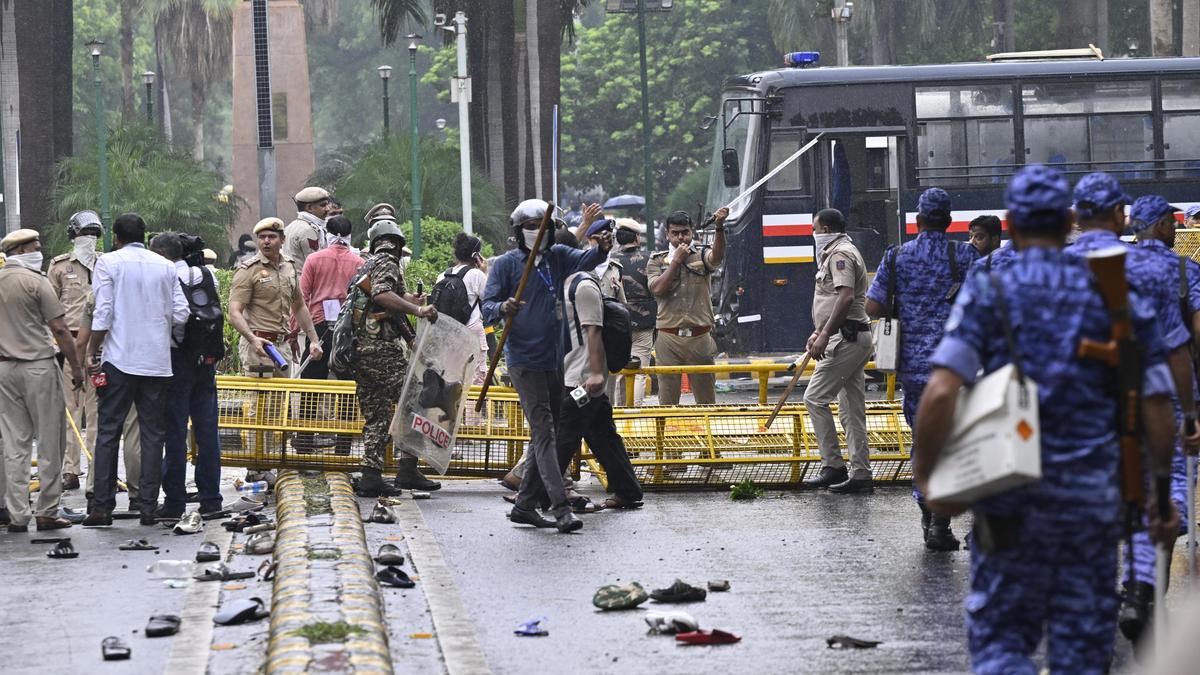
A massive protest led by the Cockroach Janta Party in Delhi resulted in widespread injuries to both demonstrators and police. The unrest, which included a demand for the Education Minister's resignation, led to significant public disruption and a local internet shutdown.
The Delhi Crackdown: An Analysis of the CJP Parliament March
On July 20, 2026, the national capital witnessed one of its most significant protests in recent years as the Cockroach Janta Party (CJP) led a march toward Parliament. The event, which quickly descended into chaos, highlighted deep-seated tensions between organized political dissent and state security measures. The protest, centered on a demand for the resignation of Education Minister Dharmendra Pradhan, saw thousands converge on the city, ultimately leading to a violent confrontation that paralyzed parts of New Delhi.
The Human Cost of the Conflict
The physical toll of the demonstration was significant on both sides. Reports indicate that over 100 individuals were hospitalized, with dozens admitted to Lady Hardinge Medical College and Dr. Ram Manohar Lohia Hospital for fractures, head injuries, and complications from tear gas exposure. Simultaneously, the Delhi Police reported that 118 of their personnel were injured, alleging that protesters employed stones and other objects during the scuffle. This mutual escalation underscores a volatile breakdown in communication between the agitators and law enforcement.
Strategic Escalation and Institutional Response
As the situation unfolded, the CJP leadership, represented by Saurav Das and Ashutosh Ranka, sought to formalize their grievances by meeting with Union Minister J.P. Nadda. This move indicates a two-pronged strategy: maintaining pressure on the streets while simultaneously attempting to engage in high-level political negotiation. The demand for the Education Minister’s resignation suggests that the party is positioning itself as a challenger to the current educational policy framework, utilizing the protest as a platform to amplify these systemic concerns.
The Role of Sanctuary and Public Safety
The protest saw an unusual intersection of public space and political refuge. As police deployed tear gas and lathi-charges, many protesters sought shelter in the iconic Gurdwara Bangla Sahib. This act of seeking sanctuary highlights the desperation of the demonstrators and the intensity of the police action. The use of an religious site as a temporary haven during a civil disturbance adds a complex layer to the narrative, reflecting the gravity of the day’s events for the participants.
Broader Implications and Future Trends
With Sonam Wangchuk declaring a continued fast until the government engages with youth leaders, the protest is unlikely to dissipate immediately. The government's decision to implement an internet shutdown in the New Delhi district signals a zero-tolerance approach toward large-scale mobilizations that threaten to breach security perimeters. As the political standoff continues, the incident serves as a bellwether for future civil engagement in the capital, potentially leading to stricter protest regulations and heightened security protocols in the sensitive Parliament area.
Multiple Citing Sources
Verification Required?