CJP activists getting police notices, being pressured not to join October 10 Delhi protest: Abhijit Dipke
Source Entity
India Latest News: Top National Headlines Today & Breaking News | The Hindu
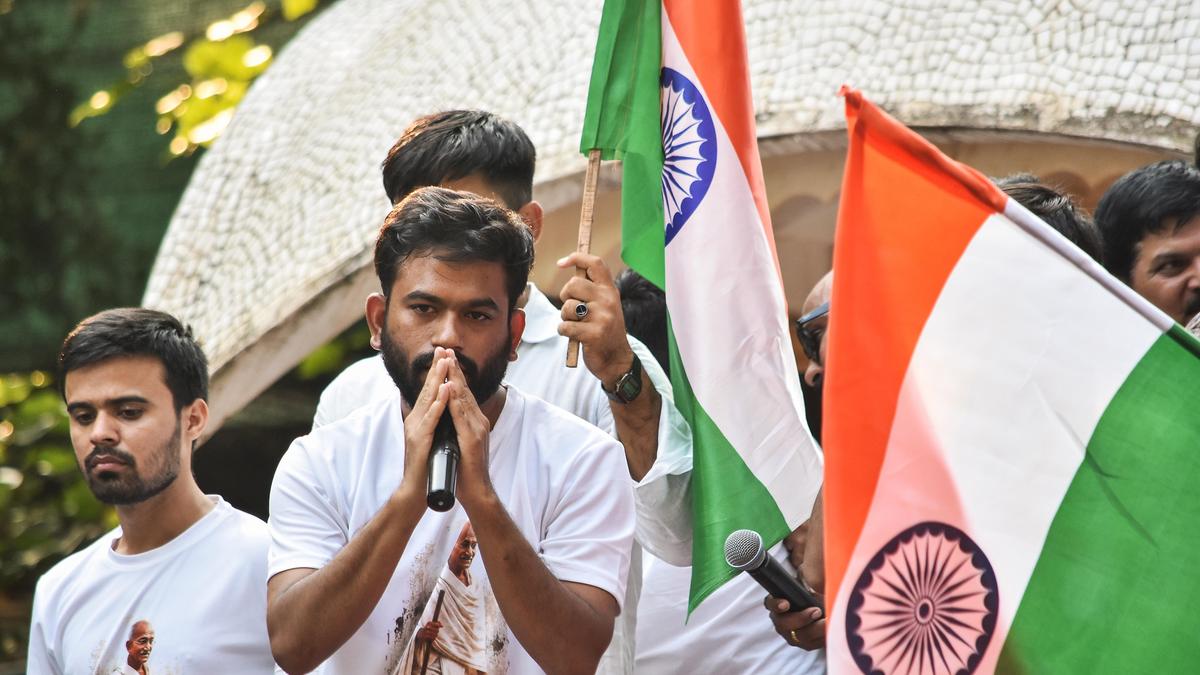
Cockroach Janta Party founder Abhijeet Dipke has accused police of harassing activists ahead of a planned October 10 protest in Delhi. The group intends to demonstrate at Jantar Mantar to demand the resignation of CEC Gyanesh Kumar.
Allegations of Political Suppression Ahead of Delhi Protest
On October 6, 2026, Abhijeet Dipke, the founder of the Cockroach Janta Party (CJP), leveled serious allegations against state authorities, claiming that party members are facing systematic police harassment. According to Dipke, who spoke at a press conference in Chhatrapati Sambhajinagar, Maharashtra, activists have received official notices from police, specifically in districts like Chandrapur, questioning the funding and travel arrangements for their planned journey to the national capital.
The Context of the October 10 Agitation
The CJP has mobilized its base for a high-profile agitation scheduled for October 10 at Jantar Mantar in New Delhi. The primary objective of this protest is to demand the resignation of Chief Election Commissioner (CEC) Gyanesh Kumar. By framing these police interventions as a form of "dictatorship," the party leadership is attempting to highlight what they perceive as an encroaching restriction on the democratic right to peaceful assembly and dissent.
Scrutiny of Political Funding and Logistics
The police notices cited by Dipke focus on the logistics of the protest, specifically scrutinizing travel subsidies and expenses incurred by party activists. While law enforcement agencies often monitor large-scale movements to maintain public order, the CJP leadership argues that this level of scrutiny is being weaponized to intimidate grassroots workers and stifle participation in the upcoming Delhi demonstration.
Broader Political Critique: 'One Nation, One Election'
Beyond the immediate logistical hurdles, Dipke utilized the platform to critique the central government's legislative agenda. He specifically targeted the 'One Nation, One Election' proposal, characterizing it not as a genuine reform for administrative efficiency, but as a political maneuver. He argued that the underlying intent of the ruling BJP-led government is to move toward a system of "one nation, one political party," thereby undermining the pluralistic foundations of Indian democracy.
Implications for Democratic Discourse
The friction between the CJP and state authorities reflects a growing tension regarding the space available for opposition groups to organize. By challenging the legitimacy of the Election Commission—an institution traditionally held as the arbiter of electoral fairness—the CJP is positioning itself as a vocal critic of the current constitutional and political trajectory. As the October 10 deadline approaches, the situation underscores the volatile relationship between emerging political entities and established state machinery.
Conclusion and Future Outlook
The success of the October 10 protest will likely hinge on the CJP's ability to navigate these legal and bureaucratic pressures. The party's decision to bring these allegations into the public eye serves as both a defensive strategy and a rallying cry for its supporters. Whether this confrontation leads to a significant shift in the political landscape or remains an isolated incident of administrative friction, it remains a critical point of analysis for those monitoring the health of political expression and the conduct of electoral oversight in India.
Verification Required?