'Rahul's offer to debate still stands': Tharoor challenges BJP amid SIR row
Source Entity
AADRITA HALDER
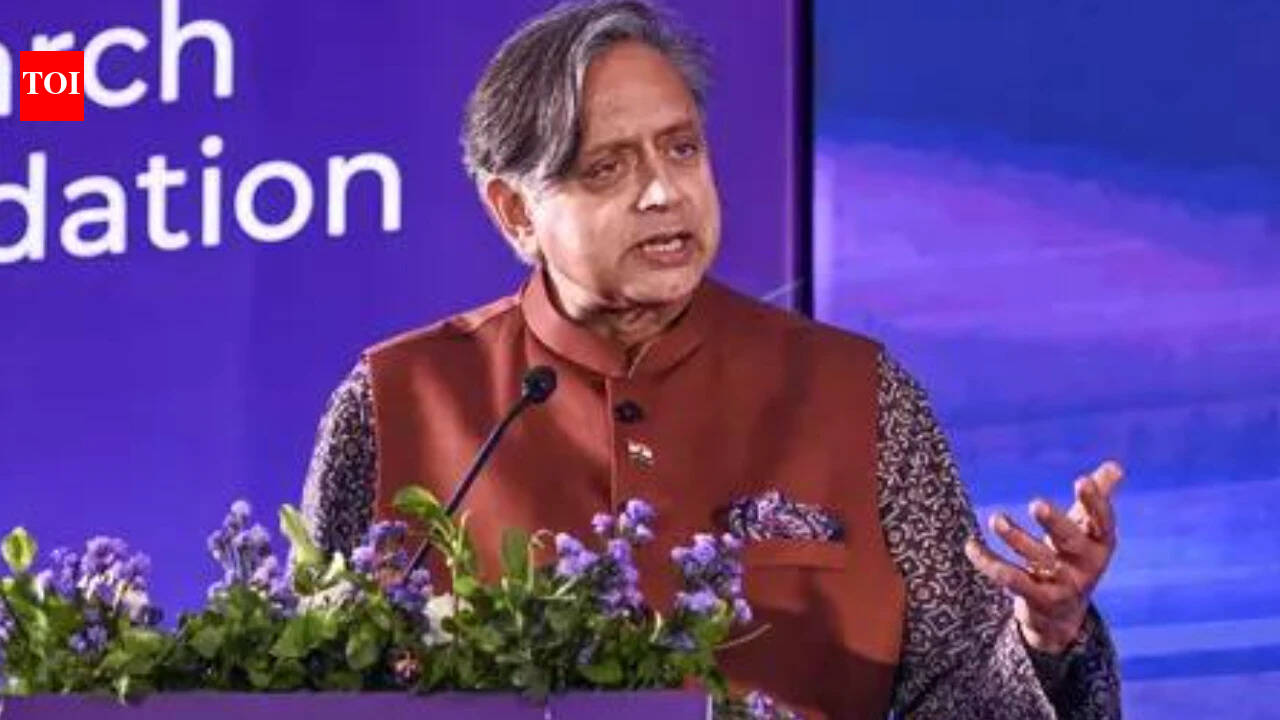
Congress leader Shashi Tharoor has reiterated Rahul Gandhi's open challenge to debate the BJP amidst ongoing political controversies. Simultaneously, the Youth Congress has taken disciplinary action by suspending 300 members for failing to attend a recent rally in Delhi.
Political Turbulence and Internal Discipline in the Congress Party
The Challenge to Debate
The political landscape in India remains volatile as Shashi Tharoor, a prominent leader of the Indian National Congress, has publicly reiterated Rahul Gandhi’s standing offer to engage in a formal debate with the Bharatiya Janata Party (BJP). This challenge, which emerged amidst the heated 'SIR' (Systematic Institutional Reform) row, underscores a strategic push by the Congress to force a direct confrontation on policy and governance issues. By insisting on this debate, the party aims to shift the national narrative toward institutional concerns, challenging the ruling party to defend its record in a public forum.
Implications of the 'SIR' Row
The 'SIR' row has become a focal point for political discourse, serving as a catalyst for deeper arguments regarding institutional integrity and administrative transparency. Tharoor’s insistence on this debate highlights the Congress party's attempt to leverage these specific controversies to gain electoral and public traction. This move is indicative of a broader strategy to position the opposition as a viable alternative that is willing to confront the status quo directly, thereby attempting to contrast their platform with the BJP’s current governance model.
Internal Organizational Challenges
While the party seeks to project a unified front on the national stage, internal organizational discipline remains a significant hurdle. The recent decision by the Youth Congress to suspend 300 members for failing to attend Rahul Gandhi’s rally in Delhi reveals cracks in the party’s grassroots mobilization efforts. This mass suspension highlights the challenges the leadership faces in ensuring that its cadre remains active and responsive to the party’s central directives, especially during high-stakes political demonstrations.
The Impact of Mobilization Failures
The failure of 300 Youth Congress members to show up at a crucial rally is more than a mere administrative oversight; it reflects potential fatigue or disillusionment within the lower rungs of the party hierarchy. For a party looking to revitalize its image and challenge a dominant political force like the BJP, the ability to command attendance and demonstrate organizational strength is paramount. These suspensions suggest that the leadership is adopting a 'zero-tolerance' policy to enforce discipline and ensure that future rallies carry the necessary political weight.
Future Trends and Political Outlook
Looking ahead, the tension between the Congress party's external public challenges to the BJP and its internal struggle for discipline will likely define its short-term efficacy. If the leadership can successfully bridge the gap between its national-level rhetoric and its grassroots organizational capacity, it may regain lost ground. However, if internal disarray continues to manifest in poor rally turnouts, the party’s attempts to frame the national debate may be undermined by perceptions of organizational weakness, ultimately affecting their influence in upcoming political cycles.
Multiple Citing Sources