Can students be punished for protesting? Here's what the Constitution says
Source Entity
Latest News: Todays Latest News Headlines from India & World | Hindustan Times | Hindustan Times
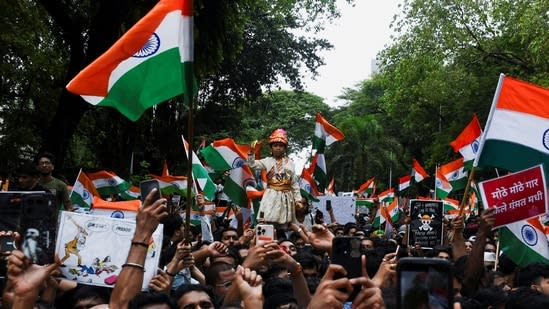
The debate over student protests centers on balancing constitutional rights with public order regulations. While freedom of assembly is protected, authorities may invoke the BNSS to manage demonstrations that threaten stability.
The Constitutional Framework of Student Protests in India
In the wake of recent demonstrations by CJP students, a significant legal debate has emerged regarding the boundaries of student activism. While the Indian Constitution does not explicitly codify a singular 'right to protest,' the judiciary has long interpreted Articles 19(1)(a) and 19(1)(b) as the foundational pillars for such activities. These articles guarantee freedom of speech and expression and the right to assemble peacefully, respectively, forming the bedrock upon which democratic dissent is practiced.
The Intersection of Rights and Restrictions
Despite these constitutional protections, the right to assemble is not absolute. The state maintains the authority to impose reasonable restrictions to preserve public order and national security. This is where the legal landscape becomes complex for students. When a protest transitions from a peaceful assembly to an event that authorities deem a threat to public order, the legal protections afforded by the Constitution face significant challenges, often leading to concerns among students regarding potential disciplinary or criminal repercussions.
The Role of the Bharat Nagarik Suraksha Sanhita (BNSS)
An emerging factor in the management of public demonstrations is the application of the Bharat Nagarik Suraksha Sanhita (BNSS). Authorities are increasingly utilizing provisions within this framework to preemptively or reactively address protests that carry the potential for public disorder. The shift toward utilizing the BNSS represents a broader trend in administrative governance, where the state seeks to maintain stability by curtailing gatherings that might escalate into civil unrest.
Navigating Legal Repercussions
For students, the central question remains: what are the concrete legal consequences post-protest? The analysis of whether a student can be punished hinges entirely on the conduct during the demonstration. If the assembly remains strictly peaceful, it falls under protected speech. However, if any laws are broken—such as vandalism, obstruction of public thoroughfares, or incitement—the protections of Article 19 are often superseded by penal statutes and administrative codes like the BNSS.
Future Trends in Campus Activism
Looking forward, the tension between academic freedom and public order is likely to intensify. As digital mobilization facilitates larger and faster-organized student movements, the state is expected to continue refining its use of the BNSS to manage these gatherings. Students must navigate a dual reality: exercising their democratic right to dissent while remaining acutely aware of the evolving legal thresholds that define the difference between protected expression and punishable public disorder.
Verification Required?