Cyclone Arnab: Odisha prepares to airlift people stranded by floodwater
Source Entity
India Latest News: Top National Headlines Today & Breaking News | The Hindu
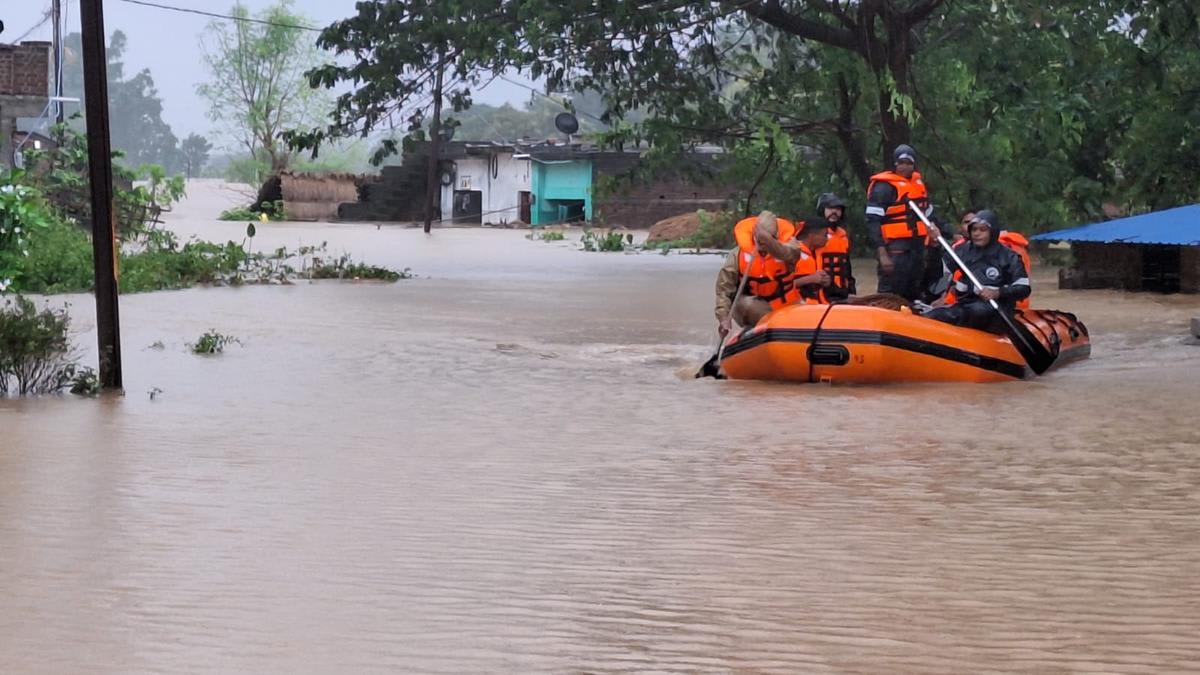
Cyclone Arnab has made landfall in Andhra Pradesh, bringing destructive winds of 125-135 kmph and heavy rainfall to coastal districts. The storm, which intensified from a low-pressure area in the Bay of Bengal, has caused significant power disruptions and structural damage.
The Progression and Impact of Cyclone Arnab
The India Meteorological Department (IMD) recently tracked a weather system that originated as a low-pressure area over the east-central Bay of Bengal. Initially identified on Friday, this system underwent a rapid intensification process, transitioning into a depression by Saturday and a deep depression by Sunday. By Monday morning, the system had evolved into a cyclonic storm, setting the stage for a significant meteorological event along the eastern coast of India.
Anticipated Path and Scientific Projections
Meteorological experts, including K. Naga Ratna of the Amaravati Meteorological Centre, closely monitored the storm as it tracked west-northwestwards. The system was projected to cross the North Andhra Pradesh and South Odisha coasts. Early models suggested the potential for a severe to very severe cyclonic storm, with wind speeds estimated to reach up to 145 kmph. Authorities had issued red warnings for extremely heavy rainfall between October 27 and 29, anticipating the severe impact of this weather pattern.
Landfall and Immediate Consequences
Cyclone Arnab officially made landfall early Wednesday morning between Kakinada and Yanam. The landfall process, which began Tuesday night, brought devastating environmental conditions to the districts of Kakinada, Konaseema, and West Godavari. With the "eye" of the storm positioned near Narsapuram, the region experienced sustained, destructive winds ranging from 125 to 135 kmph, leading to widespread disruption of essential services.
Infrastructure and Human Impact
Following the landfall, reports confirmed significant damage to public and private infrastructure. The high-velocity winds resulted in the uprooting of numerous trees, which in turn caused widespread power supply outages across the affected coastal districts. The AP State Disaster Management Authority, led by chairman Prakhar Jain, has been actively monitoring the situation as the storm continues to impact coastal Andhra Pradesh with torrential rainfall.
Disaster Management and Future Trends
Historically, the Bay of Bengal remains one of the world's most cyclone-prone regions, necessitating constant vigilance and advanced early warning systems. The proactive measures taken by the IMD—including early sea warnings for fishermen and the issuance of red alerts—are critical in mitigating the loss of life during such severe events. As climate patterns evolve, the intensity and frequency of these storms underscore the ongoing need for robust disaster management infrastructure in coastal India to withstand increasingly volatile weather cycles.
Multiple Citing Sources
Verification Required?