When the smoke settles, what remains? The unseen health and environmental risks
Source Entity
AYUSH PANDEY
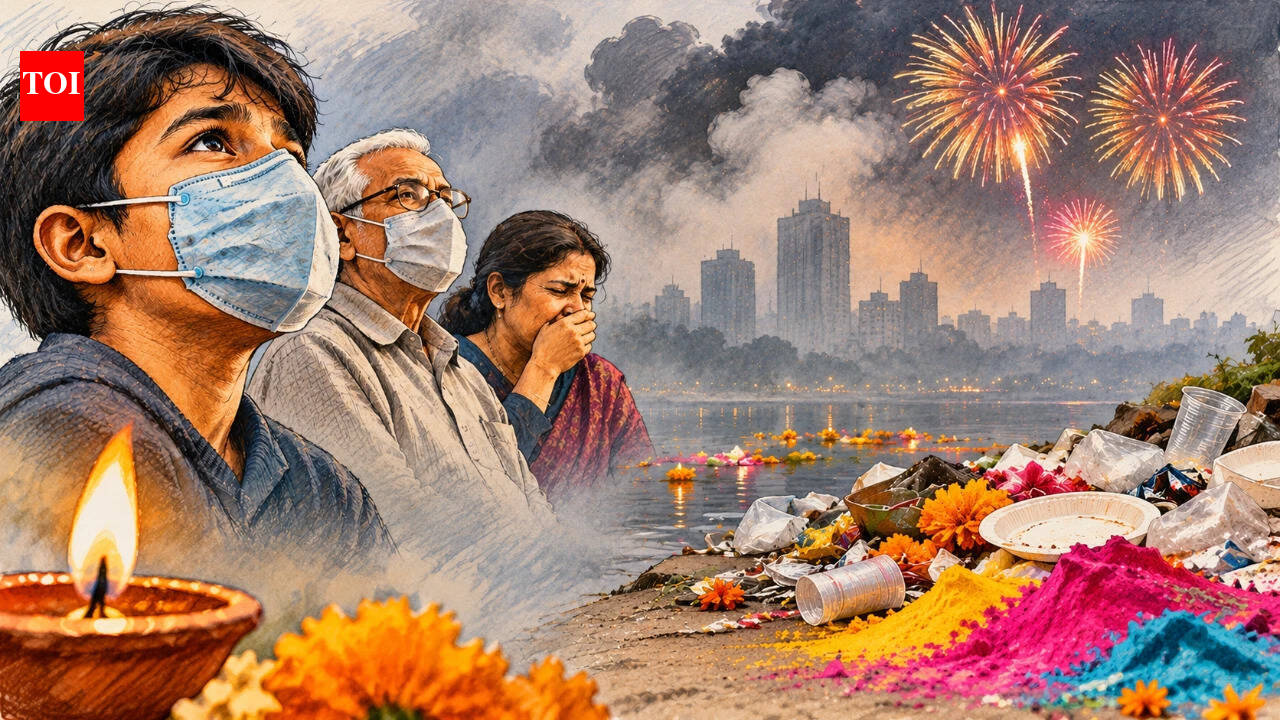
Delhi Chief Minister Rekha Gupta highlights government efforts to mitigate post-Diwali pollution using technological interventions and public participation. Despite recent improvements in air quality, experts warn of the lingering health risks posed by particulate matter and chemical residues.
Addressing the Post-Diwali Air Quality Crisis in Delhi
Diwali, a festival deeply rooted in light, togetherness, and celebration, has historically presented a significant environmental challenge for India’s capital. As the smoke from festivities settles, the Delhi government, under the leadership of Chief Minister Rekha Gupta and aligned with Prime Minister Narendra Modi’s vision, has intensified efforts to manage the city's air quality. The current strategy emphasizes a blend of technological deployment and the concept of Jan-Bhagidari (people's participation), reflecting the principles of the Prime Minister’s 'Mission LiFE'—a movement aimed at making environmental protection a daily commitment rather than a seasonal concern.
Technological Interventions and Infrastructure
To combat the perennial issue of smog, the administration has moved beyond passive policy-making toward active mechanical intervention. The deployment of 337 anti-smog guns, 260 water sprinklers, and 102 mechanical road-sweeping machines represents a targeted approach to managing pollution hotspots. By focusing on dust suppression and road cleaning, the government aims to mitigate the secondary suspension of particulate matter, which often exacerbates the poor air quality typically observed in the winter months following the festival.
Statistical Gains and Environmental Trends
There is evidence of progress in the broader air quality trajectory. Delhi recorded an average Air Quality Index (AQI) of 167 for October, a notable improvement compared to the 224 recorded in the same period in 2025. This figure represents the lowest October average since 2018, suggesting that pre-emptive measures and evolving public awareness are beginning to yield tangible, measurable results. However, maintaining these gains requires a sustained commitment that extends well beyond the immediate post-festival period.
The Hidden Costs of Festive Pollution
While air quality metrics show promise, the scientific community warns of the persistent, unseen risks associated with festive celebrations. Beyond the visible haze, the combustion of firecrackers and the accumulation of plastic waste and chemical residues create a multi-faceted environmental hazard. Pollutants do not merely linger in the air; they settle into soil and water sources, potentially entering the food chain and causing long-term ecological damage that remains long after the celebrations conclude.
Health Implications and Future Outlook
The health impacts of these pollutants, particularly PM2.5 particles, are profound. These fine particles are capable of penetrating deep into the lungs, causing systemic inflammation that extends to cardiovascular and respiratory health. The intersection of festive pollution and public health necessitates a shift in how celebrations are conceptualized. As the administration continues to integrate government-led infrastructure with citizen-led environmental stewardship, the future of Delhi’s air quality will likely depend on the success of these dual strategies in curbing both the immediate and long-term consequences of festive activities.