How Delhi Police misjudged the scale of the CJP protest – and struggled to contain it
Source Entity
Alok Singh, Sakshi Chand, Mahender Singh Manral
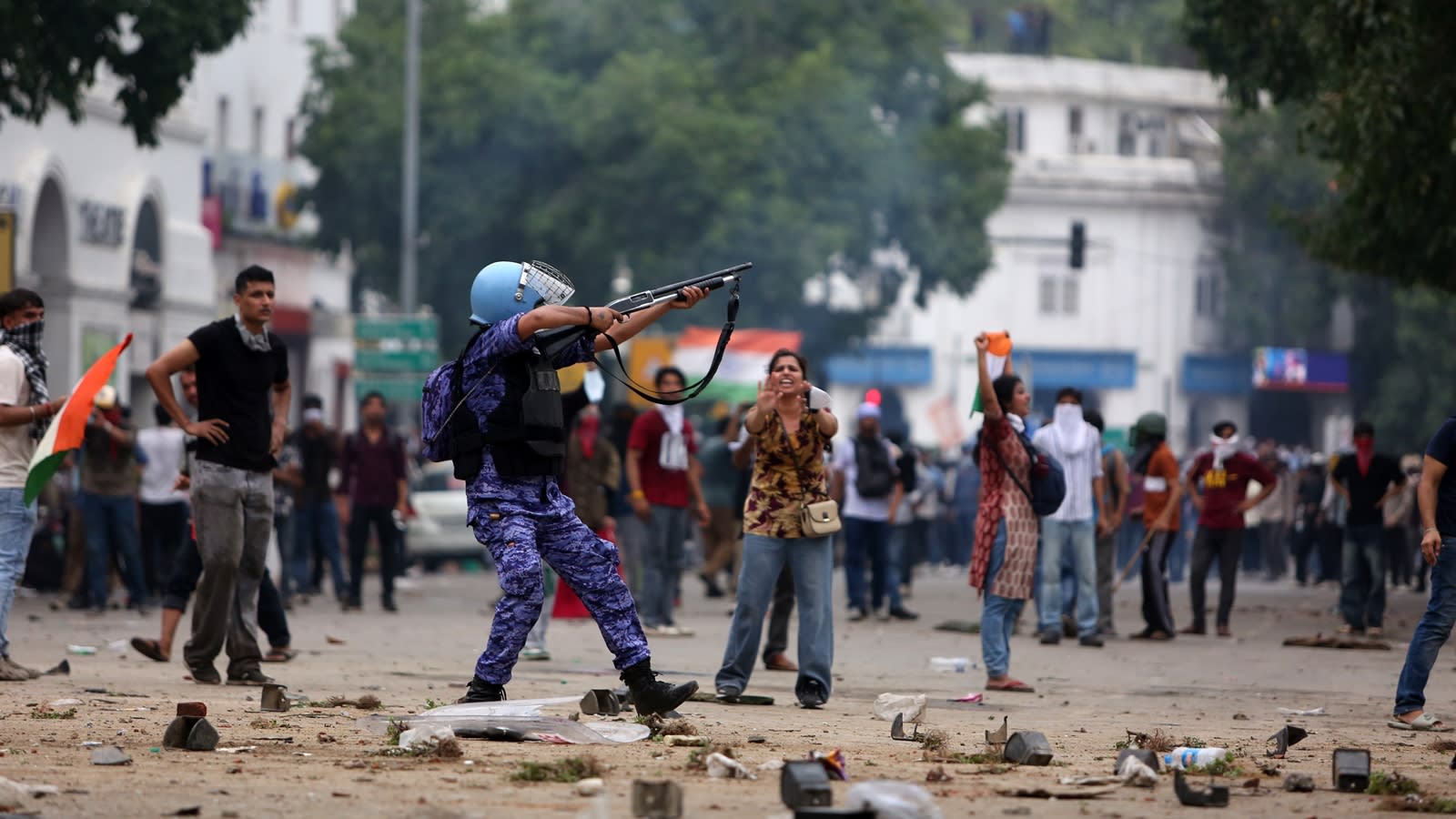
A CJP-led protest march in Delhi demanding the resignation of Education Minister Dharmendra Pradhan turned violent, resulting in injuries to over 118 police personnel and dozens of protesters. The situation escalated into clashes, leading to the detention of 70 individuals and the hospital transfer of activist Sonam Wangchuk.
Turmoil on Parliament Street: An Analysis of the CJP-Led Protest
The recent protest march organized by the CJP (Climate and Justice Protest) in the heart of Delhi has resulted in a significant escalation of civil unrest. What began as a demonstration demanding the resignation of Education Minister Dharmendra Pradhan rapidly devolved into a volatile confrontation between protesters and law enforcement. The chaos, characterized by the sounds of ambulance sirens and the deployment of teargas shells, transformed the vicinity of Parliament Street into a site of intense conflict.
The Human Toll and the Refuge of the Gurdwara
As the situation deteriorated, hundreds of protesters sought sanctuary within the gates of Gurdwara Bangla Sahib to escape the police lathi-charge. Eyewitness accounts describe a scene of desperation, with participants clutching damp handkerchiefs to mitigate the effects of teargas and holding placards expressing solidarity with activist Sonam Wangchuk. The emotional toll was palpable, with many participants viewing the state's response as an aggressive overreach against the citizenry.
Conflicting Narratives of Violence
The Delhi Police have reported a severe escalation in the event, claiming that more than 118 police personnel sustained injuries during the clashes. According to official statements, protesters allegedly utilized stones and various objects to attack officers, breached barricades, and vandalized both public and government property. The authorities maintain that they issued repeated warnings to disperse, asserting that the protesters' refusal to comply necessitated firm action to restore order.
The Detentions and the Fate of Sonam Wangchuk
Amidst the widespread disorder, the police confirmed the detention of 70 protesters. A significant development in the timeline of these events was the removal of activist Sonam Wangchuk from the protest site. Reports indicate that he was subsequently shifted to Safdarjung Hospital by the Delhi Police. His removal marks a critical juncture in the protest, as his presence had served as a central rallying point for the demonstrators.
Broader Implications for Civil Discourse
This incident highlights the growing friction between activist organizations and the state machinery in India. The demand for the resignation of a high-ranking cabinet minister, coupled with the violent nature of the march, suggests a deep-seated dissatisfaction that goes beyond policy disagreements. The scale of the injuries on both sides—the 118 police personnel and an estimated 60 injured protesters—points to a breakdown in communication and a failure of de-escalation tactics, which may have long-term implications for how such protests are managed in the capital.
Predicting Future Trends
Looking ahead, it is likely that the government will tighten security protocols around sensitive areas like Parliament Street to prevent similar breaches of public order. Conversely, the intensity of this protest may embolden other advocacy groups to adopt more confrontational tactics, potentially leading to a cycle of agitation and state suppression. The reliance on religious institutions as temporary refuges for political protesters also underscores the evolving geography of civil disobedience in Delhi, where historic sites are increasingly becoming focal points for political expression and state intervention.
Multiple Citing Sources