Assam Students Protest Over NEET Leak, Seek Dharmendra Pradhan's Resignation
Source Entity
NDTV News Search Records Found 1000
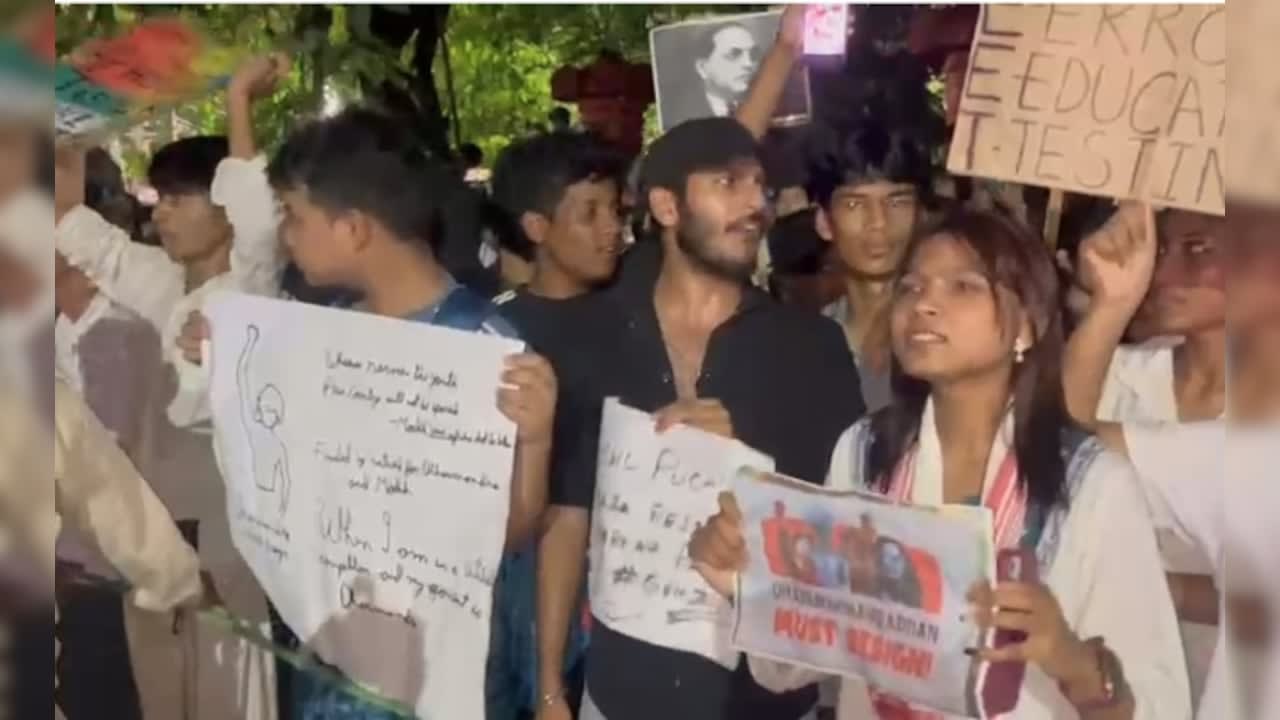
The Delhi High Court has dismissed a PIL seeking an NIA investigation into the Cockroach Janta Party's 'Chalo Sansad' protest. The bench ruled that authorities are already aware of the alleged vandalism and that the referral of such cases to the NIA rests with the Centre, not the judiciary.
Delhi High Court Dismisses Plea for NIA Probe into CJP March
On July 24, 2026, the Delhi High Court delivered a significant ruling regarding the 'Chalo Sansad' march organized by the Cockroach Janta Party (CJP). The march, held on July 20 to protest against the NEET-UG paper leak and broader systemic grievances, resulted in incidents of violence and vandalism that drew immediate public and legal attention. The court’s decision to dismiss the Public Interest Litigation (PIL) seeking an investigation by the National Investigation Agency (NIA) marks a firm stance on the separation of administrative and judicial powers.
The Legal Stance on NIA Intervention
The Bench, presided over by Chief Justice D. K. Upadhyaya and Justice Tejas Karia, underscored a fundamental principle of governance: the judiciary cannot usurp the executive's role in determining the scope of criminal investigations. By noting that it is the Centre's prerogative—not the Court's—to refer matters to the NIA, the bench effectively maintained the boundaries of the legal process. Solicitor General Tushar Mehta’s intervention, which encouraged the petitioner to withdraw the plea, solidified the court's observation that existing authorities were already fully cognizant of the events and empowered to act under the law.
Contextualizing the 'Chalo Sansad' Protest
The protest march from Jantar Mantar to Parliament House was rooted in widespread public anger surrounding the NEET-UG paper leak. As these demonstrations escalated into violence, the resulting police response—including reported lathi charges—became a subject of intense scrutiny. The court's refusal to escalate the investigation to a specialized anti-terror agency like the NIA suggests a judicial preference for standard law enforcement procedures over extraordinary investigative measures for incidents occurring during civil unrest.
Judicial Oversight and Police Accountability
It is important to note that the court’s dismissal of the NIA probe request does not leave the situation in a vacuum. The Delhi High Court had previously sought responses from the Centre and the Delhi Police regarding alleged police excesses during the protests. By framing the Jantar Mantar incidents as not being 'isolated' and issuing notices for the formation of a Special Investigation Team (SIT), the court has demonstrated an intent to monitor the conduct of law enforcement while simultaneously upholding the rule of law regarding protest management.
Broader Implications for Civil Demonstrations
The dismissal of this PIL serves as a precedent for how the judiciary intends to handle petitions seeking the involvement of federal agencies in local law-and-order situations. By directing the focus back to the existing machinery of the Delhi Police and central oversight, the court is signaling that the legal system expects local authorities to resolve internal disturbances through established criminal justice frameworks. This approach balances the need for accountability in protests with the necessity of maintaining operational hierarchy in national security investigations.
Future Trends in Protest Management
Looking forward, this development suggests that judicial intervention in political demonstrations will remain cautious, favoring administrative accountability over the immediate deployment of central investigative bodies. As protests against academic and administrative policy failures continue to occur, the courts are likely to focus on the proportionality of police responses and the adherence to established protest protocols rather than reclassifying civil unrest as matters for specialized terror agencies, unless evidence of a broader conspiracy is definitively presented to the executive branch.
Multiple Citing Sources
Verification Required?