'Every life is precious': Delhi HC urges Centre to regularly examine Wangchuk's health
Source Entity
TOI NEWS DESK
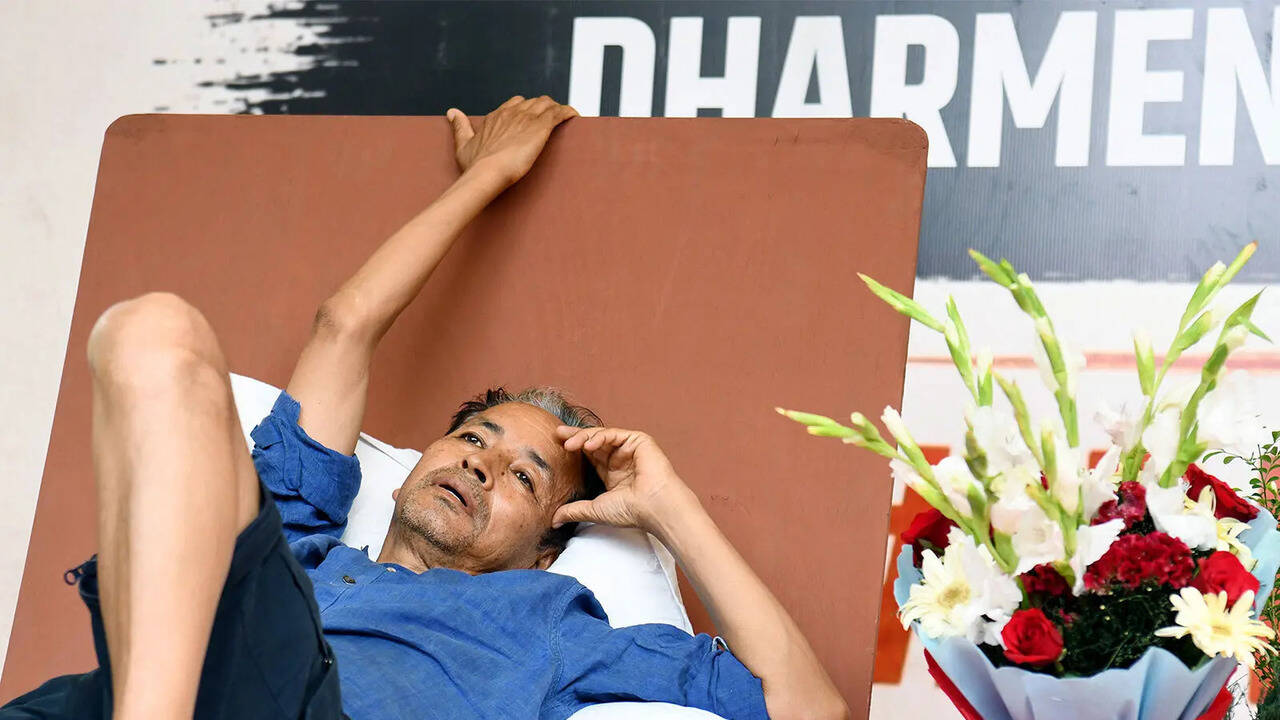
The Delhi High Court has intervened in a Public Interest Litigation (PIL) regarding the deteriorating health of activist Sonam Wangchuk, who is on an indefinite hunger strike. Noting that 'every life is precious,' the court urged both the Central and regional governments to provide necessary medical aid, as doctors have warned that Wangchuk's significant weight loss (over 9kg) could lead to critical organ damage.
Judicial Intervention in the Face of Political Protest
The Delhi High Court's recent directive regarding the health of activist Sonam Wangchuk underscores a critical intersection between the fundamental right to protest and the state's obligation to preserve human life. By stating that "every life is precious," the court has stepped into a high-stakes humanitarian situation where a prominent figure is using his own body as a site of political resistance. This intervention via a Public Interest Litigation (PIL) highlights the judiciary's role as a safety valve in the Indian democratic framework, ensuring that while dissent is permitted, it does not culminate in avoidable tragedy.
The Physiological Toll of Prolonged Fasting
The medical urgency of this case cannot be overstated. Reports indicate that Wangchuk has already lost more than 9 kilograms, a rapid decline that signals the body is moving past the initial stages of ketosis into a more dangerous phase of muscle wasting and metabolic stress. The warning from medical professionals that Wangchuk may soon enter an "alarming" phase involving organ damage is a grave indicator. When the body is deprived of essential nutrients for an extended period, it begins to break down vital organs to maintain glucose levels for the brain, which can lead to irreversible kidney or liver failure. The court's insistence on regular medical examinations is therefore not merely a formality but a life-saving necessity.
The Broader Context: Ladakh's Aspirations
To understand why Sonam Wangchuk has resorted to such an extreme measure, one must look at the geopolitical and environmental anxieties of the Ladakh region. Wangchuk's hunger strike is deeply rooted in the demand for Ladakh to be included under the Sixth Schedule of the Indian Constitution. This legal framework provides for the creation of Autonomous District Councils, granting indigenous tribes significant power to manage their own land, forests, and water resources. For the people of Ladakh, this is not just a political request but a survival strategy to protect their fragile Himalayan ecosystem from unregulated industrialization and to preserve their unique cultural identity in a strategically sensitive border region.
State Responsibility vs. Individual Agency
This case presents a complex legal dilemma: the tension between an individual's agency to fast for a cause and the state's duty to prevent death. By urging both the Central and regional governments to provide medical aid, the Delhi High Court is reminding the executive branch that their responsibility toward a citizen's well-being transcends political disagreements. The court's directive ensures that the government cannot be seen as passive bystanders to a citizen's physical collapse, thereby shifting the burden of care onto the state while the political deadlock over Ladakh's status remains unresolved.
Historical Precedents and Future Trends
India has a long history of hunger strikes as a potent tool for social and political change, most notably pioneered by Mahatma Gandhi. However, in the modern era, the judicial oversight of such protests has become more stringent to prevent the loss of life. The current situation suggests a trend where the courts are increasingly likely to intervene in 'fast-unto-death' scenarios to balance civil liberties with the right to life. As Wangchuk's health continues to decline, the pressure on the Central government to engage in a meaningful dialogue with Ladakhi representatives will likely intensify, as the moral and legal weight of the protest grows in proportion to the activist's physical fragility.
Conclusion
The Delhi High Court's intervention serves as a critical reminder that the sanctity of life remains the highest priority, even amidst intense political struggle. While the court cannot resolve the underlying political demands for the Sixth Schedule, its mandate for medical monitoring ensures that the discourse remains focused on policy and rights rather than mourning a tragedy. The coming days will be pivotal in determining whether the government responds to the court's humanitarian plea with corresponding political concessions to end the strike.